
While most of Europe is digging out scarves and watching the forecast for snow, one stretch of coastline just off the coast of North Africa is quietly doing 21°C (70°F) and sunshine.
Welcome to Corralejo, on the northeastern tip of Fuerteventura, the second-largest of Spain’s Canary Islands.
It’s got turquoise lagoons that look airlifted in from the Caribbean, dunes that roll straight into the Atlantic, and a crowd level that’s still refreshingly thin.
Here’s what an actual January trip there looks like – and why the water is bluer than it has any right to be this far from the tropics.
Wait, Is That Really the Atlantic?
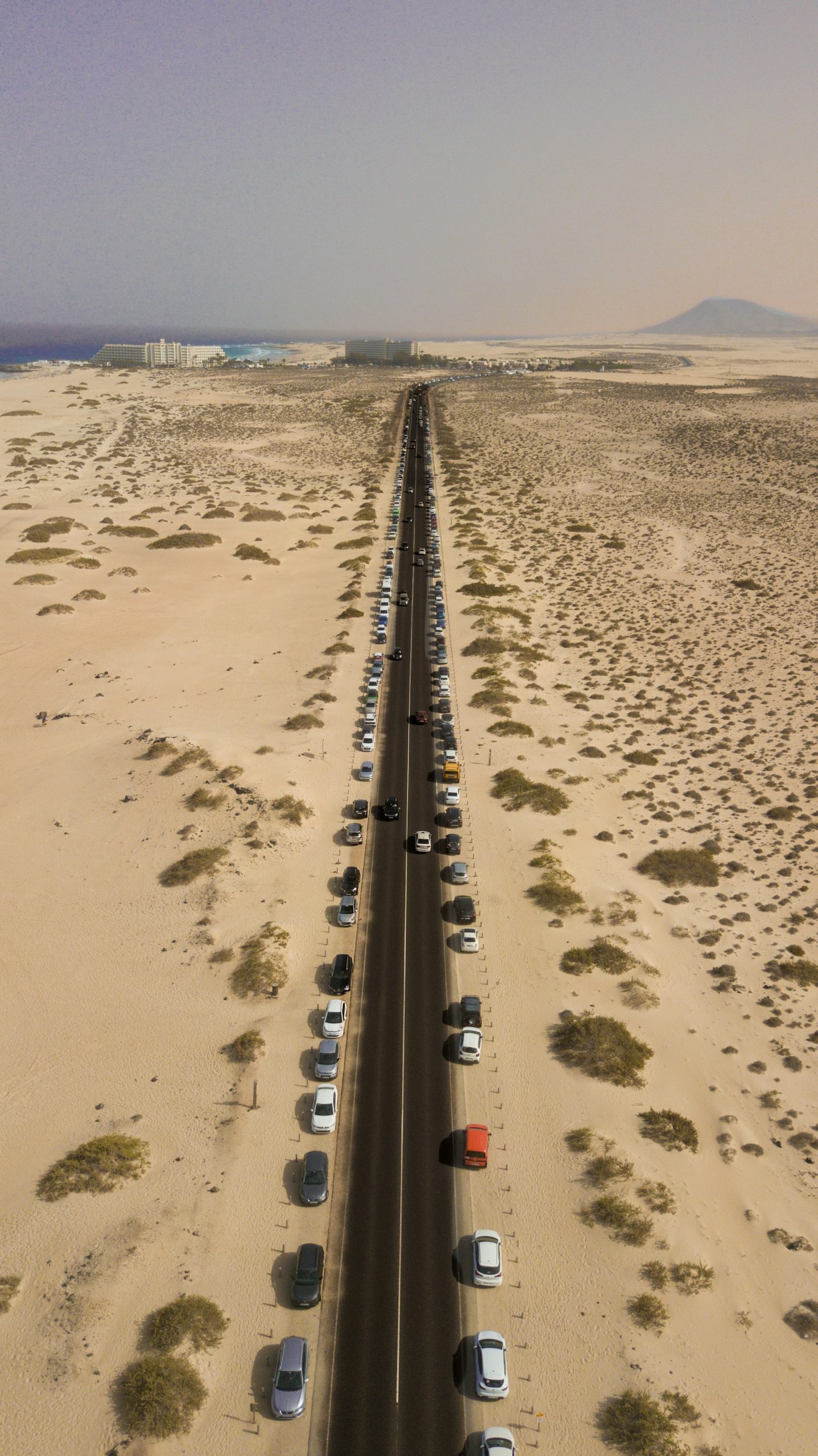
Michael Baccin on Unsplash
The first thing that throws visitors off is the color. The channel separating Corralejo from the tiny offshore island of Lobos – known locally as El Río – is shallow, often just 6 to 30 feet deep, and floored with pale, powder-fine sand made from millions of years of pulverized shells and calcareous algae.
When Canarian sunlight hits that white seabed through shallow water, it bounces back turquoise, the same optical trick that makes Caribbean lagoons and coral atolls look the way they do.
But there’s no coral here – the real architect is volcanic. Submerged ridges of ancient hardened lava run just offshore, acting as a natural breakwater that blunts incoming Atlantic swell before it reaches the beach, the same way a barrier reef would.
The result is a lagoon that’s calm enough for paddleboarding and snorkeling, framed by dunes, on an island famous for wind and waves everywhere else.
So How Warm Are We Actually Talking?
Fuerteventura doesn’t do extremes – that’s precisely the point. Air temperatures hover in a tight, pleasant band nearly all year, and even January rarely dips out of the high teens to low 20s Celsius (roughly 66-72°F) during the day, according to the UK Met Office’s Fuerteventura climate averages. Ocean temperatures follow a gentler curve:
| Season | Sea temperature | What it feels like |
| Late autumn (Sep-Oct) | 22-23°C (72-73°F) | Warmest water of the year |
| Summer (Jul-Aug) | 21-22°C (70-72°F) | Cooler than you’d expect – the Atlantic warms slowly |
| Winter (Dec-Feb) | 18-19°C (64-66°F) | Brisk but swimmable; many wear a light wetsuit for longer sessions |
| Spring (Mar-May) | 18-20°C (64-68°F) | The coldest stretch, even as air temps climb |
In the shallow lagoon between Corralejo and Lobos, the sun works extra hard on that thin layer of knee-to-waist-deep water – so on a sunny afternoon, it can feel noticeably warmer than the open sea just a few hundred meters away, and that’s the most important thing in this case.
One of the Best Beaches, But Not the Only One
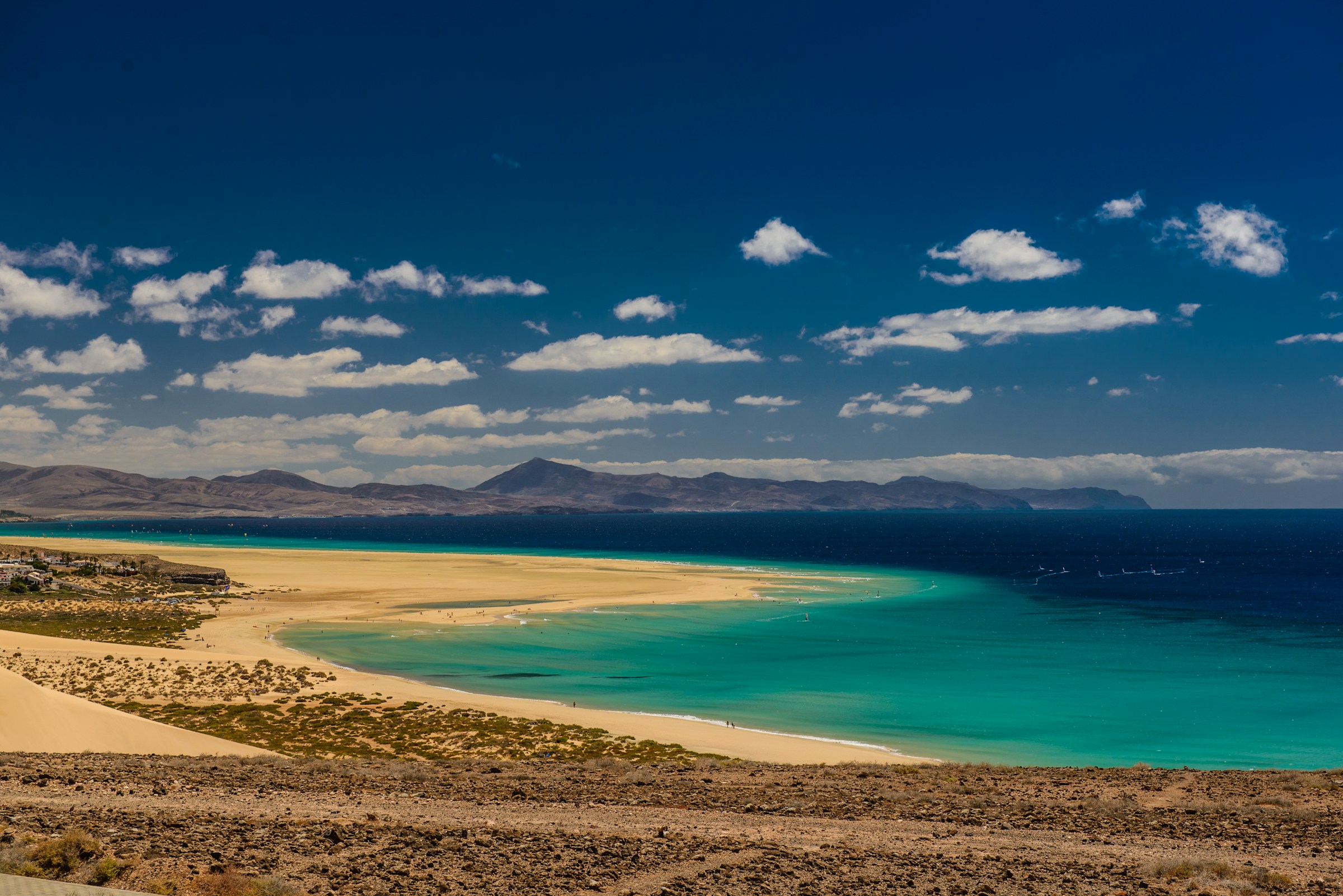
Corralejo’s dune-backed beach regularly gets called the single best beach in the Canary Islands, and it’s easy to see why – miles of pale sand, that Lobos-and-Lanzarote horizon, and a genuine sense of wide-open space that’s harder to find on the archipelago’s more built-up islands.
But Fuerteventura has competition for the crown within its own coastline: Playa de Sotavento in the south forms a three-kilometer tidal lagoon that’s a magnet for windsurfers and kitesurfers, while nearby Gran Canaria, Tenerife, and Lanzarote all field their own contenders (Maspalomas’s desert dunes, the Saharan-gold sand of Las Teresitas, the crescent-shaped Playa de Papagayo).
Corralejo just happens to combine calm water, dramatic scenery, and relatively low crowds in one package – a rarer trifecta than it sounds.
Why the Water Sits So Still
Three things conspire to keep Corralejo’s lagoon glassy while the rest of Fuerteventura earns its reputation as a windsurfing and kitesurfing capital:
1st: Isla de Lobos acts as a breakwater. The small islet sits directly opposite Corralejo and absorbs the brunt of swell rolling in from the north and northeast.
2nd: Submerged lava ridges cut off deeper ocean currents before they reach the shallows.
3rd: Offshore winds dominate locally, meaning the breeze often blows from land toward sea here, which flattens the surface rather than whipping it up – a rare setup for an island nicknamed the “Hawaii of Europe” for its wind sports.
That’s exactly why this pocket of coastline draws paddleboarders, snorkelers, and families, while the island’s wilder west coast (think Cofete and La Pared) stays a magnet for experienced surfers who want the swell Corralejo is missing.
What to Actually Watch Out For
Sharks are essentially a non-issue – the only species regularly seen inshore are angel sharks, bottom-dwelling and harmless unless you step directly on one. The real hazards are more mundane:
- Rip currents in the channel. The tidal exchange between Corralejo and Lobos can generate currents strong enough to pull swimmers out even in apparently calm water. If caught in one, swim parallel to shore rather than fighting it head-on.
- Volcanic rock and sea urchins. Sharp black lava outcrops and black sea urchins (Diadema africanum) lurk between sandy patches – water shoes are worth packing.
- Wind-blown inflatables. Offshore breezes that keep the water flat can also carry paddleboards, inflatable mattresses, and pool floats out to sea alarmingly fast.
- Portuguese man o’ war, an occasional visitor whose sting is genuinely painful; lifeguards raise a red flag when they’re spotted.
- Sun exposure. Fuerteventura sits close to the Tropic of Cancer, and skin burns fast even on breezy, “cool-feeling” days – SPF 50 is non-negotiable.
The January Verdict
Locals call the Canaries “the islands of eternal spring,” and January delivers on that nickname without pretending to be summer.
Expect daytime air around 20-22°C (68-72°F), six to seven hours of sunshine, minimal rain, and sea temperatures around 19°C (66°F) – brisk enough that a thin wetsuit makes sense for snorkeling or surfing, but perfectly fine for a quick dip.
Evenings cool to the mid-teens Celsius, so pack a light jacket for after sunset. If you want a hot ocean to swim laps in for hours, aim for September or October instead.
But if the goal is trading a European winter for guaranteed sun, warm sand, and a laid-back pace, Corralejo in January is close to unbeatable – and for maximum shelter from any wind, the resort towns of Caleta de Fuste (east coast) and Morro Jable/Jandía (south, shielded by the island’s highest mountains) offer even calmer water when the trade winds pick up.
Sources:
UK Met Office holiday-weather climate averages for the Canary Islands and Fuerteventura; Lonely Planet’s guide to Fuerteventura; Thomas Whitmore’s 1996 “Pleasant Weather Ratings” study (Syracuse University / Consumer Travel Publications), which ranked the Canary Islands as having the world’s best climate based on rainfall, air, and water temperature data across more than 600 locations worldwide.


