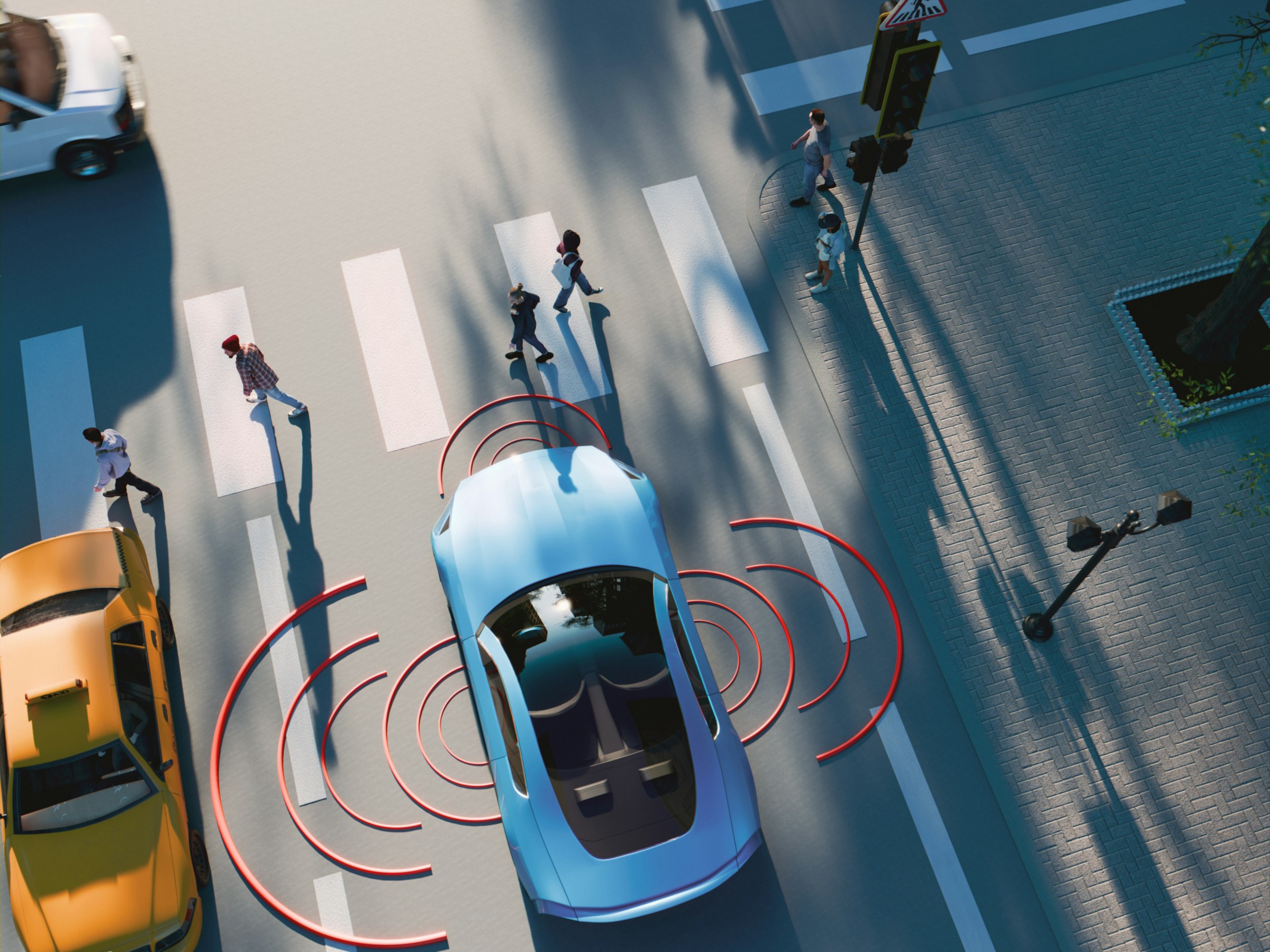
For years, Europe has watched the autonomous-driving race unfold largely from the sidelines. Robotaxis became a familiar sight in Phoenix, San Francisco and Chinese cities long before European passengers could summon one from a smartphone.
That is now changing. From Zagreb to London, Madrid, Munich and Zurich, autonomous vehicles are moving from laboratories and closed test tracks onto public roads.
The rollout is still small, heavily supervised and subject to a patchwork of national rules. But the direction of travel is becoming increasingly clear: Europe is entering its robotaxi era.
The implications go beyond the future of transportation. In a continent where roughly 19,400 people (the equivalent of the population of a small town) were killed on roads in 2025, according to preliminary European Commission data, the biggest promise of autonomous driving may ultimately have less to do with convenience than with safety.
The question is whether autonomous systems can eventually perform one of the most difficult tasks in modern society better than humans do: drive.
Zagreb is an early European test
One of the most significant developments has taken place in Croatia. In August, Uber began allowing passengers in Zagreb to book autonomous rides through its app, in a partnership involving Chinese autonomous-driving company Pony.ai and Croatian startup Verne.
The vehicles initially operate with a licensed human operator monitoring the system, as part of a phased transition toward fully driverless operations.
Zagreb is not an accident of geography. Smaller European markets can offer something the continent’s largest capitals often cannot: a manageable regulatory and operational environment in which companies can accumulate real-world experience.
But the Croatian capital is only one piece of a rapidly expanding European puzzle. London has become another important test case.
Uber and British autonomous-driving company Wayve received authorization to operate a supervised robotaxi service, initially with a safety operator aboard.
Bloomberg reported in August that the London authorization allowed Wayve to operate as many as 15 vehicles on a trial basis.
Other projects are gathering momentum. Waymo, the Alphabet-owned autonomous-driving company that has built one of the world’s most extensive driverless fleets in the United States, is preparing for Germany.
Munich is expected to become an important European market, while Uber and autonomous-driving companies are also pursuing deployments in Madrid and Zurich.
The result is a distinctly European version of the robotaxi race: not one company dominating a single market, but a collection of manufacturers, technology companies and ride-hailing platforms trying to assemble local partnerships city by city.
Europe is finally trying to solve the regulatory problem
Technology is only half the challenge. A robotaxi can theoretically drive through several European countries. Legally, however, that does not mean it can simply cross the border.
Europe’s autonomous-driving industry has long faced a fragmented regulatory landscape, with different national approaches to testing, vehicle approval, insurance and operational permissions.
That may now be changing. In June, 18 European countries signed a declaration supporting large-scale cross-border testbeds for autonomous vehicles.
The initiative is designed to coordinate testing, permitting and approval procedures and to make it easier to deploy autonomous vehicles across borders.
The participating countries include Germany, France, Italy, Greece, Croatia, the Netherlands, Poland and Sweden.
The European Commission has also adopted technical rules for fully driverless Level 4 vehicles, including applications such as robotaxis and automated shuttles.
At the same time, the EU has introduced a broader set of mandatory driver-assistance technologies, including intelligent speed assistance, automated braking, lane-keeping technology and systems designed to detect driver distraction and fatigue.
In other words, Europe is not simply waiting for autonomous vehicles to arrive. It is gradually building the regulatory infrastructure needed to allow them to operate at scale.
The safety argument is potentially the biggest one
There is a simple reason autonomous driving could transform road safety.
Humans are unpredictable. They become distracted. They speed. They fall asleep. They drive while impaired. They misjudge distances, fail to see pedestrians and cyclists, and sometimes simply make the wrong decision in a fraction of a second.
A widely cited analysis of crash causation has found that driver error is the final failure in the causal chain in approximately 94% of crashes. That does not mean autonomous vehicles could prevent 94% of crashes – a distinction that is often lost in public discussions – but it illustrates the enormous theoretical safety opportunity created by removing some forms of human error from the driving task.
The technology is beginning to produce evidence, rather than just promises. A 2026 analysis by the Insurance Institute for Highway Safety compared Waymo’s Level 4 driverless vehicles with human drivers in the same areas and years.
Researchers found that Waymo vehicles had a 68% lower rate of police-reportable crash involvement per vehicle mile travelled. The rate at which the autonomous vehicles rear-ended another vehicle was 91% lower.
That is significant – but it is not the same thing as proving that autonomous vehicles are universally safer.
The study covered Waymo vehicles operating in four US cities. The researchers themselves point to limitations in the way automated-vehicle crashes are currently reported and monitored. Different countries also have different roads, weather conditions, traffic cultures and infrastructure.
The evidence is therefore encouraging rather than conclusive. That distinction will matter enormously as Europe begins deploying autonomous vehicles on a much larger scale.
Why Eastern and Southern Europe could have the most to gain
The potential safety dividend becomes particularly interesting when viewed through Europe’s geographic differences.
The European Union recorded about 19,400 road deaths in 2025, according to preliminary European Commission figures. But the risk is far from evenly distributed.
Romania recorded approximately 68 road deaths per million inhabitants in 2025, Bulgaria 71 and Croatia 67, compared with an EU average of 43.
Greece recorded 50, Portugal 55 and Italy 49. Sweden and Denmark, by contrast, recorded approximately 20 and 23 deaths per million inhabitants respectively.
The differences are striking. They reflect many factors – infrastructure, vehicle fleets, enforcement, speed, road design, emergency response and patterns of travel – rather than a single cause.
The European Commission also notes that rural roads remain particularly dangerous: in 2024, 53% of EU road fatalities occurred on rural roads, compared with 38% in urban areas and 8% on motorways.
Within cities, vulnerable road users such as pedestrians, cyclists and motorcyclists accounted for around 70% of road deaths.
This is where autonomous technology could eventually become more than a premium urban transportation service.
A mature autonomous system does not get tired on a long rural drive. It does not become impatient in traffic. It can continuously monitor its surroundings, maintain a programmed speed and react simultaneously to multiple objects.
If those capabilities prove reliably safer than human driving across a wide range of environments, the effect could be particularly important in countries where road mortality remains substantially above the European average.
But there is a crucial caveat. Putting autonomous cars on dangerous roads does not automatically make those roads safe.
Poor road markings, potholes, unpredictable pedestrian movements, inadequate infrastructure and unusual road layouts can challenge automated systems just as they challenge human drivers.
In some cases, the technology may require substantial investment in mapping, connectivity, signage and road infrastructure before it can operate safely at scale.
Autonomous driving should therefore be viewed as one component of a broader road-safety system, rather than a technological substitute for safer roads and enforcement.
Europe may be approaching an inflection point
The economic model could also accelerate adoption. Robotaxis do not necessarily need to replace privately owned cars overnight. Instead, they can enter the market through fleets.
A single autonomous vehicle can potentially operate for many more hours per day than a privately owned car. It can be summoned through an app, reposition itself between trips and eventually operate without a driver.
That changes the economics of urban mobility. It also explains why Uber has become such an important partner for autonomous-driving companies.
Rather than building a consumer mobility platform from scratch, robotaxi developers can plug their vehicles into an existing network of passengers, payments and routing.
Europe’s emerging model is therefore increasingly collaborative: technology companies provide the autonomous-driving stack, automakers provide vehicles, fleet operators manage them and ride-hailing companies provide the customers.
The road to full autonomy will be gradual
There is also a danger in treating every modern “self-driving” feature as the same technology. A vehicle with advanced driver assistance is not equivalent to a Level 4 robotaxi.
Most cars sold today still require a human driver to remain responsible for the vehicle. Level 4 systems, by contrast, can perform the entire driving task within defined operational conditions without requiring a human driver to take over.
And Level 5 – a vehicle capable of driving anywhere, under all conditions, without human intervention – remains a much more distant proposition.
The International Energy Agency says fully autonomous Level 5 vehicles are not currently in sight, even though Level 4 electric robotaxis are already operating commercially in more than 20 cities worldwide.
That suggests Europe’s near-term future is unlikely to be a world in which every privately owned car suddenly becomes autonomous.
It is more likely to be a world of geofenced, carefully regulated autonomous fleets operating first in particular cities, districts, airports, business parks and transport corridors. From there, the operational boundaries may gradually expand.
And if all goes well, perhaps one day we will be traveling to our dream summer vacation or to visit relatives in the countryside – doing nothing at all, just enjoying the ride.
The safety test Europe cannot afford to avoid
Europe’s roads have become substantially safer over the long term. But progress is slowing. The European Commission says road deaths fell by about 3% in 2025, while the European Transport Safety Council estimates that deaths remain roughly 15% below the 2019 baseline – well short of the reduction required to meet the EU’s target of halving road deaths by 2030. More than 100,000 people are estimated to suffer serious road injuries every year.
That creates a powerful argument for testing technologies that could reduce human error. But it creates an equally powerful argument for testing them rigorously.
Autonomous vehicles should not be judged by how impressive a demonstration looks on a sunny afternoon in a controlled environment.
They should be measured against human drivers across millions of kilometres – in rain, darkness, snow, congested city streets, rural roads, roadworks and situations involving pedestrians, cyclists and motorcyclists.
The relevant question is not whether a machine can drive. It is whether it can drive more safely, consistently and predictably than a human being.
Europe is now beginning to conduct that experiment on public roads. Zagreb is an early chapter. London is another. Munich, Madrid and Zurich may soon add their own.
If autonomous systems eventually deliver the safety improvements their strongest evidence suggests are possible, the most important consequence may not be that Europeans can summon a car without a driver.
It may be that fewer people fail to come home because somebody was driving.
Sources and Editorial References:
- European Commission – EU road deaths drop by 3% in 2025 – preliminary 2025 fatalities, country-by-country rates and rural/urban road-risk data. transport.ec.europa.eu
- European Commission – Autonomous and connected vehicle safety rules – EU regulatory framework for automated vehicles and mandatory safety systems. single-market-economy.ec.europa.eu
- European Commission – Cross-border autonomous-vehicle testbeds – June 2026 initiative involving 18 European countries. transport.ec.europa.eu
- Uber – Autonomous rides launch in Zagreb – details of the Pony.ai/Verne/Uber deployment. investor.uber.com
- Bloomberg – Uber and Wayve receive London robotaxi licenses – London deployment and regulatory authorization. news.bloomberglaw.com
- IIHS – Waymo’s driverless cars crash less often than people – 2026 comparative safety analysis. iihs.org
- IIHS research paper – Rise of the machines – underlying methodology and crash-rate findings. iihs.org
- IEA – Autonomous vehicles, Global EV Outlook 2026 – global status of Level 4/Level 5 automation. iea.org and iea.org
- WHO Europe – Making roads safer – European road-safety context and Safe System approach. who.int
- ETSC – 20th Road Safety Performance Index – European road deaths and progress toward the 2030 target. etsc.eu