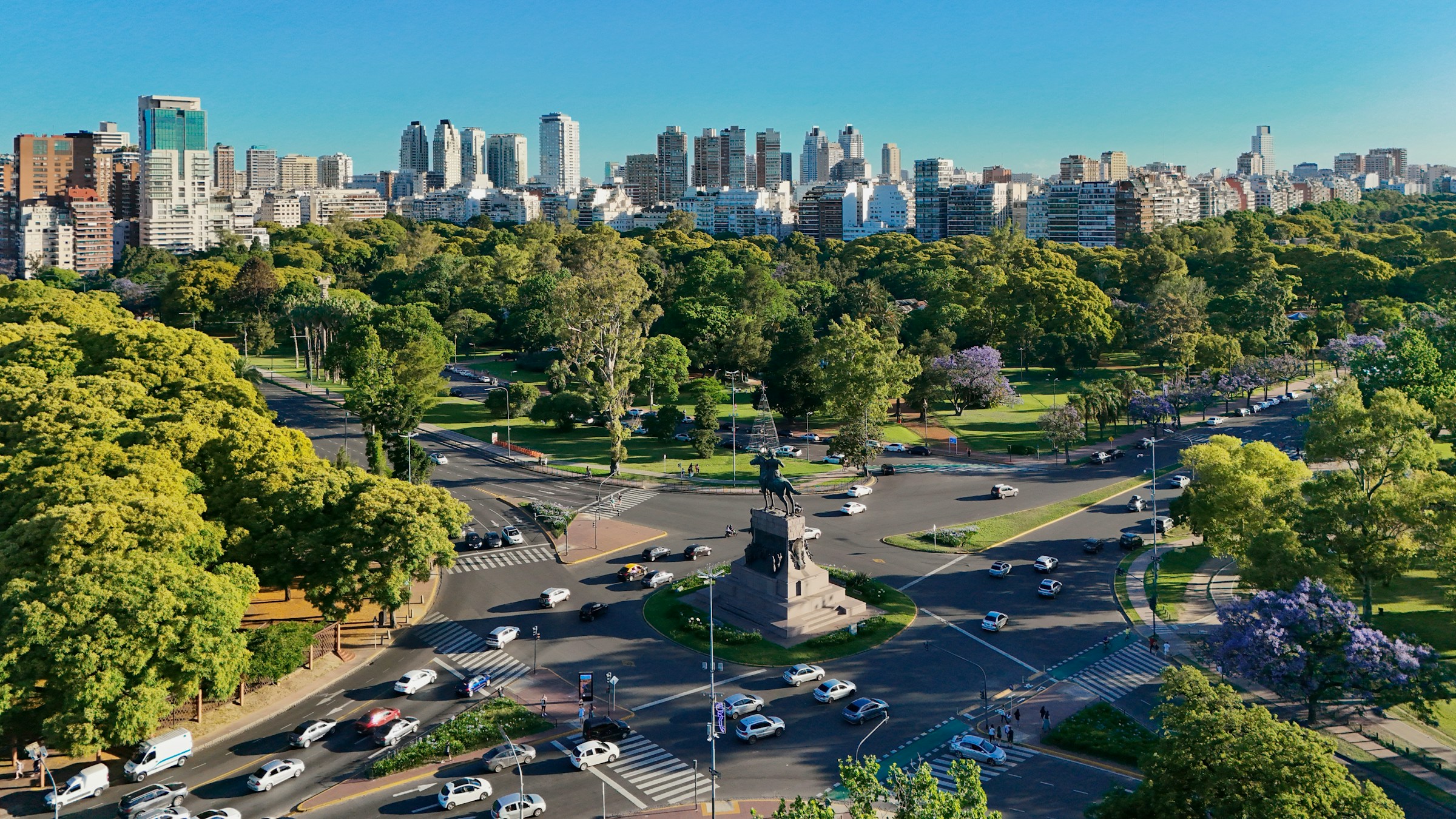
From Buenos Aires and Montevideo to Medellín and Florianópolis, a growing number of foreigners are looking beyond North America and Western Europe for a more affordable, warmer and culturally rich place to call home.
For decades, the dream of a better life abroad has generally pointed in one direction: westward, towards North America, or towards the prosperous cities of Western Europe. But what if some of the most appealing alternatives lie thousands of miles further south?
Latin America is increasingly finding its way into conversations about relocation, remote work and retirement. For people facing the rising cost of living in the United States and Canada, or those who simply want to put some geographical distance between themselves and Europe’s continuing geopolitical tensions, the region offers a compelling alternative.
It is not difficult to understand the attraction. Imagine waking up in a beautiful apartment overlooking the ocean in southern Brazil, spending an afternoon in a pavement café in Buenos Aires, or enjoying the mild climate and mountain views of Medellín.
Add an impressive cultural heritage, world-class food, vibrant cities and, in some destinations, considerably lower living costs, and the appeal becomes clear.
Some enthusiasts have even started describing Latin America as the “new Europe” – not because it replicates the European way of life, but because it offers an intriguing combination of urban sophistication, cultural depth and a different pace of living.
Of course, Latin America is neither a single destination nor a simple solution to the challenges of life in the developed world.
But for those willing to explore beyond the familiar choices, it may offer something increasingly difficult to find elsewhere: the opportunity to build a different kind of life.
A Continent Full of Possibilities
The appeal stretches across an enormous and remarkably diverse region. Argentina’s capital, Buenos Aires, has long attracted foreigners with its grand architecture, cultural institutions and legendary café culture.
Colombia’s Medellín has become particularly well known among remote workers and digital nomads, drawn by its mild climate, lively neighbourhoods and surrounding green mountains.
Montevideo, the capital of Uruguay, offers a more relaxed urban atmosphere, a long waterfront promenade and a reputation for relative political and institutional stability. Further north, Brazil’s coastal city of Florianópolis combines beaches, nature and an established urban infrastructure, while Curitiba and other cities in the southern states of Santa Catarina and Rio Grande do Sul offer different versions of life in one of Brazil’s most distinctive regions.
Along the Pacific coast, Chile provides a mix of dramatic landscapes, cosmopolitan urban life and a long-standing appeal among international professionals. Ecuador, meanwhile, has attracted foreigners for years with its varied climates, Andean scenery and relatively accessible lifestyle.
Mexico and Costa Rica add another dimension to the picture, with established international communities, warm climates and access to both the Pacific and Caribbean worlds.
And this is only the beginning. Countries such as Paraguay, as well as emerging destinations across Central America and the Caribbean, are also attracting people interested in alternatives to the traditional relocation map.
European Charm, Thousands of Miles From Europe
One of Latin America’s most fascinating qualities is its architectural and cultural diversity. In several cities, European influences are so visible that newcomers can experience a familiar atmosphere while living on an entirely different continent.
Buenos Aires is perhaps the most striking example. Often called the “Paris of South America”, the Argentine capital features broad boulevards, elegant buildings, ornate façades and historic cafés that evoke the great cities of Europe.
French and Italian architectural influences are particularly visible in its older neighbourhoods, while its theatres, bookshops, restaurants and cultural institutions give the city an unmistakably cosmopolitan character.
Yet Buenos Aires is not simply a European city transplanted to South America. Its personality is shaped by tango, Latin American traditions, passionate football culture and a distinctive social rhythm. It combines familiar European aesthetics with a much warmer and more unpredictable temperament.
Southern Brazil offers another interesting example. Large waves of European immigration during the nineteenth and twentieth centuries left a lasting mark on the region, particularly in Santa Catarina and Rio Grande do Sul.
Italian, German, Portuguese and other immigrant communities helped shape local architecture, food, traditions and urban development.
The city of Blumenau, in Santa Catarina, is particularly famous for its German heritage, architecture and annual Oktoberfest celebrations. In some communities, German-origin dialects and traditions have survived across generations.
This cultural mixture gives parts of southern Brazil a distinctive identity. It is not Europe, nor does it need to be. It is a uniquely Brazilian interpretation of several European influences, set against a tropical and subtropical landscape.
A Different Rhythm of Life
For many people considering a move abroad, the attraction of Latin America goes beyond architecture or lower prices. It is also about the way everyday life feels.
In many of the region’s cities, social life takes place outdoors. Cafés spill onto pavements, restaurants remain busy late into the evening, and parks, waterfront promenades and public squares play an important role in urban culture.
Food is another major part of the experience. Argentina and Uruguay are famous for their beef, wine and traditional parrillas. Brazil offers extraordinary regional diversity, from seafood and tropical fruit to the rich culinary traditions of its southern states. Colombia brings together fresh ingredients, coffee culture and distinctive regional cuisines.
For someone accustomed to the high costs and fast pace of major North American cities, the possibility of living in a pleasant neighbourhood, enjoying restaurants regularly and spending more time outdoors can be particularly attractive.
The coastal lifestyle is an especially powerful draw. Florianópolis, for example, is built around an island setting with dozens of beaches, lagoons and green hills. It offers a combination that is difficult to reproduce in many expensive North American or European coastal cities: access to nature alongside the services and infrastructure of a substantial urban centre.
Of course, not every city or neighbourhood offers the same experience. But the region’s diversity means that people can choose between large cosmopolitan capitals, quieter coastal towns, mountain communities and smaller cities with a more relaxed atmosphere.
The Financial Advantage: Living Well on an International Income
One of the strongest arguments for considering Latin America is economic. For people who work remotely and earn in US dollars, euros or another relatively strong currency, several destinations in the region can offer considerable purchasing power.
Housing, restaurants, domestic services and some everyday expenses may cost substantially less than in major cities in the United States, Canada or Western Europe.
This can make a significant difference to quality of life. A remote professional who struggles to afford a comfortable apartment in a major North American city may find that the same income provides a much more spacious home, more leisure opportunities and a greater degree of financial flexibility elsewhere.
The same calculation can appeal to retirees receiving pensions or investment income from abroad. Instead of spending a large proportion of their income on housing and daily expenses, they may be able to enjoy a more comfortable lifestyle.
However, affordability is not universal. Montevideo, for example, is relatively expensive by regional standards, while prices in popular neighbourhoods of Buenos Aires, Medellín and Florianópolis can rise as international demand grows.
There is also an important distinction between the experience of foreigners earning in strong currencies and that of local residents. A destination can appear inexpensive to an American or European newcomer while remaining financially challenging for people whose salaries are tied to the local economy.
Argentina is a particularly good example of why economic conditions matter. The country has experienced severe inflation and repeated economic disruptions, making prices, exchange rates and household budgets difficult to predict. The cost advantage for foreigners can therefore change quickly.
Latin America may offer excellent value, but moving there still requires research, financial planning and a realistic understanding of local conditions.
Distance, Freedom and a Different Perspective
There is another reason why some people are looking towards Latin America: the desire for a change of perspective.
For Europeans who have spent years following the war in Ukraine and the wider security concerns affecting the continent, moving to South America can mean living in a very different geographical and political environment.
For North Americans, it can offer an opportunity to step away from the high-pressure lifestyle and increasingly expensive urban centres of the United States and Canada.
Geographical distance does not make any destination immune to global events, and Latin America has its own political, economic and security challenges. Nevertheless, for some people, the prospect of living far from familiar tensions and daily routines is an important part of the attraction.
It can also be a chance to experience a different relationship with time, community and everyday life. The decision is not necessarily about abandoning everything familiar. It may simply be about discovering that a fulfilling life can be built somewhere that was never part of the original plan.
The Other Side of the Dream: What Newcomers Need to Know
The romantic image of Latin America should not obscure the practical realities. The region offers extraordinary opportunities, but it also presents challenges that can be difficult for newcomers accustomed to the systems and expectations of North America or Europe.
Safety is one of the most important considerations. Crime levels vary significantly between countries, cities and even individual neighbourhoods. Some places are relatively comfortable for international residents, while others require much greater caution.
In certain urban areas, everyday precautions may become part of the routine: avoiding the display of expensive phones and jewellery, being selective about where to walk after dark, using trusted transport options and learning which neighbourhoods are best avoided.
These precautions should not be treated as universal rules for an entire country, but they are an important part of researching a potential new home.
Economic stability is another consideration. Argentina’s history of high inflation is a reminder that a seemingly affordable lifestyle can be affected by currency fluctuations, changing regulations and sudden price increases. Other countries have their own economic and political uncertainties.
Infrastructure and public services also differ considerably. Major cities may have excellent private hospitals, international schools, modern shopping centres and reliable internet, while smaller towns and rural areas may offer fewer options.
Public healthcare, transport and administrative services can be inconsistent, and navigating local bureaucracy may require patience and a good command of Spanish or Portuguese.
For anyone considering a permanent move, it is essential to investigate residency requirements, taxation, health insurance, access to banking and the legal implications of earning income from abroad. A destination that works wonderfully for a three-month stay may not necessarily be the right place for a long-term relocation.
The best approach is to spend time in a prospective destination before making a permanent commitment, ideally experiencing it outside the tourist season and exploring several neighbourhoods rather than relying on the image presented by holiday photos and social media.
Perhaps the Next Great Relocation Story is Happening South of the Equator
For a long time, the international conversation about quality of life has been dominated by a relatively small group of destinations.
Western Europe, the United States, Canada, Australia and New Zealand have traditionally occupied the centre of that discussion. But the world is changing, and so are the priorities of people looking for a new home.
Latin America may not offer the same level of institutional consistency, infrastructure or predictability as the wealthiest countries in the world.
Yet it has something that is increasingly difficult to quantify: a remarkable combination of natural beauty, cultural richness, social energy and the possibility of a different lifestyle.
For some, that means a morning coffee in Buenos Aires, an afternoon walk along Montevideo’s waterfront or a weekend spent exploring the beaches of Florianópolis.
For others, it means a new professional chapter in Medellín, a quieter retirement in Uruguay or the discovery of a smaller destination that has yet to become an international relocation hotspot.
Perhaps Latin America is not the “new Europe” in any literal sense. It is something more interesting: a region with its own identity, its own contradictions and an enormous range of possibilities.
And for those prepared to look beyond the usual destinations, the next chapter of their lives might begin somewhere they had never seriously considered before.


