Forget the novel. The real story has no Friday, no happy ending – only a man, a basalt prison, and the particular madness that descends when the horizon offers nothing but more ocean.
Juan Fernández Archipelago · Pacific Ocean, 670 km off Chile
There is a silence in the South Pacific that has no equivalent on land. Not the silence of an empty room, or a forest at dusk, or even a desert at midnight. This silence has weight. It presses against the eardrums. It fills the lungs.
And on the island that the Chilean government, in a misguided act of tourism marketing, renamed Robinson Crusoe in 1966, that silence has been pressing down on things for centuries without much interruption, and without much mercy.
Daniel Defoe’s novel is a story of competence. Its hero builds things, manages things, finds Friday, and eventually goes home enriched by experience. It is, in the deepest sense, an optimist’s fantasy about what solitude might teach a resourceful man.
The real story, the one that happened to Alexander Selkirk, a violent, quarrelsome Scotsman marooned on Más a Tierra in October 1704, is something colder, stranger, and considerably harder to forget.
The Sentence
Selkirk was not shipwrecked. He was not the victim of a storm or a freak wave or any of the clean disasters that fiction tends to prefer. He was left there because he asked to be, and then, as the boat pulled away, immediately changed his mind.
The sequence of events is almost theatrical in its cruelty. Sailing aboard the privateer Cinque Ports under the command of Captain Thomas Stradling, Selkirk had grown convinced that the vessel was not seaworthy – its hull eaten by worms, its timbers compromised, its pumps working around the clock to keep pace with the intake.
He argued with Stradling. The argument became a confrontation. Selkirk said he would rather be put ashore on the nearest uninhabited island than continue sailing on a ship he believed was going to sink. Stradling, who disliked Selkirk and was delighted by the opportunity, called his bluff.
They rowed Selkirk ashore at Cumberland Bay with a musket, a hatchet, a knife, a cooking pot, a Bible, bedding, and some clothing. As the longboat turned back toward the ship, something changed in Selkirk.
He waded into the water. He shouted. He begged. Stradling would not stop. The Cinque Ports sailed south and eventually sank off the coast of Colombia, exactly as Selkirk had predicted, killing most of the crew and delivering the survivors into a Spanish prison.
Selkirk was right about the ship. He was now alone on a volcanic island in the middle of the Pacific Ocean, and being right about the ship did him no good at all.
The Ironies of Marooning
The punishment of marooning, being put ashore on an uninhabited island with minimal provisions, was typically reserved for the worst maritime crimes: mutiny, theft, desertion. In most cases it was a delayed death sentence.
Many captains left the condemned man a single pistol: not for protection, but so that he might use it on himself when thirst and starvation reached their peak. Selkirk was given more than most.
He was still completely alone on an island 670 kilometres from the nearest coast, with no realistic prospect of rescue, in waters that Spain effectively controlled. His advantage over the standard marooned sailor was a matter of degrees, not of kind.
The Island: A Cage of Basalt and Fog
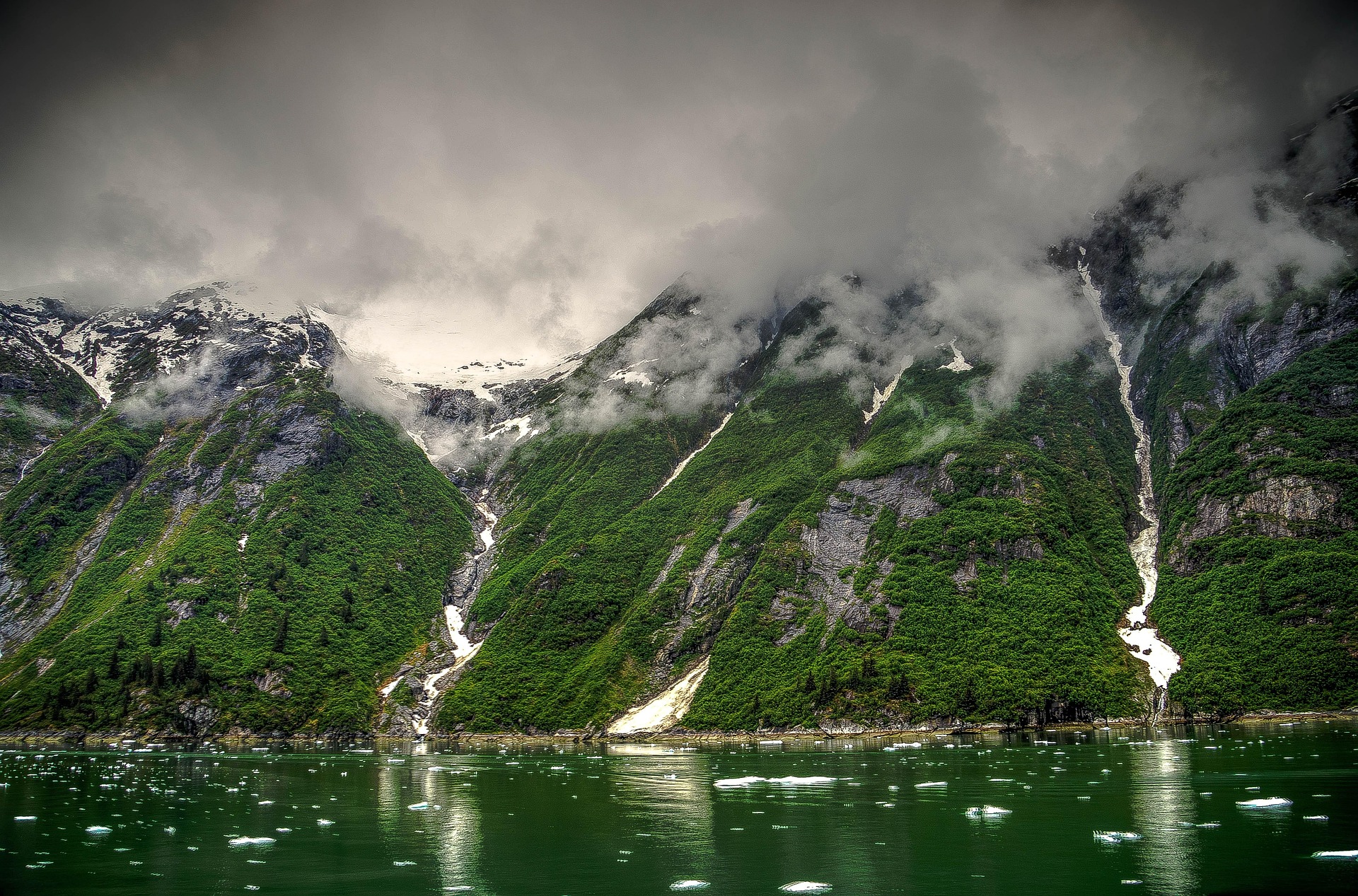
The Juan Fernández Islands are volcanic in origin and make no effort to disguise the fact. Robinson Crusoe Island rises to 915 metres at its highest point – a mass of steep, eroded ridges, deep ravines and cliffs that drop directly into the sea.
The interior is dense with vegetation, but navigating it requires effort of the kind that punishes mistakes. There are no white gentle beaches, no turquoise lagoons, no lovely palm trees bent picturesquely over clear water. The landscape is emphatic and indifferent.
The Humboldt Current, sweeping north from Antarctica along the western coast of South America, keeps the surrounding water cold enough to make sustained swimming almost impossible and survival in the open ocean unthinkable.
This is not the warm Caribbean of adventure fiction. The sea around Robinson Crusoe Island is not a highway. It is a wall. The cold and the currents and the distance from any inhabited coast made the island, functionally, a prison – one with a perimeter that required no guards and no locks, because the ocean itself was sufficient.
The weather compounds the effect. Low cloud regularly settles over the island for days at a time, reducing visibility, muffling sound, and producing a grey, enclosed quality that travellers today describe as oppressive even on short visits.
For a man with no rescue date and no certainty of ever seeing another human being, the fog was not atmospheric. It was a physical manifestation of his situation: the world beyond the island, simply, could not be seen.
Escape by swimming was unthinkable not just because of the bone-chilling cold of the Humboldt Current. Beneath the inky surface of the Pacific, the archipelago was surrounded by patrolling great white sharks and aggressive mako sharks.
Drawn by the bloody battles of sea lions along the shore, these predators had turned the bay into a death zone. For Selkirk, the ocean was not a horizon of hope, but a living, toothed wall that held him captive on the volcanic rocks.
The Juan Fernández Islands are known for their dramatic underwater drop-offs, plunging into abyssal depths of over 3,000-4,000 meters just a few miles from the shore. This meant that deep-sea monsters, rarely glimpsing sunlight, were literally beneath Selkirk’s feet as he tried to fish from the rocks.
The Sea Lions
At night, the island’s large population of sea lions roared. Selkirk’s accounts, recorded later by the journalists and sea captains who interviewed him, describe these sounds as the most psychologically destructive element of his early months on the island.
In the darkness, with no visual reference, the roaring of sea lions in a rocky cove carries something close to articulation: it rises and falls, it varies in pitch, it sounds intermittently and disconcertingly like voices.
For a man already at the edge of his psychological resources, the sound of what his mind could not help interpreting as human language, emanating from the dark water just below his shelter, was its own form of torture.
The Unravelling: Months on the Edge of Madness
The first weeks were the worst. Selkirk described them in terms that suggest the boundary between waking experience and nightmare became temporarily unclear.
He later told Captain Woodes Rogers, his eventual rescuer, that the terror of his situation in those early months was such that he could barely bring himself to eat. He would walk to the shore and look at the empty horizon and walk back. He read his Bible.
He sang hymns to hear his own voice. He talked to himself, at first to maintain the habit of language, and later simply to establish that sound was still possible in a world that had become, in every practical sense, mute.
“He had so entirely forgotten the use of speech, that we could scarce understand him; he seem’d to speak his words by halves.”
(Captain Woodes Rogers, A Cruising Voyage Round the World, 1712 – on first encountering Selkirk after four years and four months)
By the time Rogers’ men found him in February 1709, Selkirk was dressed head to toe in goatskin – his original clothing long since rotted away, and could run across the volcanic rock of the island at a speed that left the sailors, men accustomed to hard physical life, unable to keep pace.
He had been running down goats by foot for years, having exhausted his gunpowder long before. The man who emerged from the undergrowth when Rogers’ landing party came ashore was recognisably human but had become, in significant ways, something other than what he had been. Rogers, with a naval officer’s gift for understatement, described him as looking wilder than the goats themselves.
The language had gone first. Four years and four months without anyone to speak to had eroded the machinery of speech down to its foundations.
When Selkirk finally found himself on a ship with other people, surrounded by voices and questions and the ordinary noise of human company, he struggled to produce coherent sentences.
He said words by halves, Rogers noted. He understood what was being said to him, but the act of responding had become deeply unfamiliar, like a skill remembered intellectually but no longer available in the moment.
The Spanish Ships
During his years on the island, two vessels did anchor in Cumberland Bay. Both were Spanish. As a Scottish privateer – effectively an agent of the English Crown, raiding Spanish shipping – Selkirk knew with precision what capture would mean.
The Spanish did not treat enemy privateers gently. Interrogation, imprisonment, the galleys: these were the best available outcomes. The worst were considerably worse.
Both times, Selkirk hid. He watched from the trees as men came ashore for water, moved around the island he had come to know in the dark, and waited until they left.
The psychological architecture of this situation is worth pausing on. For four years, Selkirk’s most urgent desire was to see a ship. A ship meant rescue, return, the end of an isolation that was slowly consuming him.
And yet, twice, a ship came, and he could not approach it, because the ship was the wrong nationality and approach meant something potentially worse than staying alone. He was trapped between the terror of solitude and the terror of discovery, and the island held him precisely in that space, offering neither resolution.
The Legacy: A Man Who Never Came Back
Alexander Selkirk: A Chronology of Loss
1676: Born in Lower Largo, Fife, Scotland, the seventh son of a shoemaker. Summoned before church authorities at seventeen for indecent conduct. Does not appear – he has already gone to sea.
1704, October: Marooned on Más a Tierra after a quarrel with Captain Stradling. As the longboat pulls away, he wades into the surf and shouts. No one stops. Population of the island: one.
1705-08: Two Spanish ships anchor in Cumberland Bay. Selkirk hides both times. Discovery would mean captivity – possibly worse. He watches from the treeline and says nothing.
1709, 2 February: Rescued by Captain Woodes Rogers aboard the privateer Duke. He is dressed in goatskins, can barely speak coherently, and can outrun every man aboard. Rogers makes him second mate.
1711: Returns to Britain after eight years away, part of them wealthy from a captured Spanish treasure ship. He is a minor celebrity. He reportedly tells people: “I am now worth eight hundred pounds, but shall never be as happy as when I was not worth a farthing.”
1721: Dies of yellow fever at sea, off the coast of West Africa, aboard HMS Weymouth. Age 45. Buried at sea. He never stopped sailing. He never found a way to be comfortable on land again.
That quotation – eight hundred pounds, not worth a farthing – is the one that stays. Selkirk made it back. He returned to Scotland, briefly. He collected money from the privateering expedition.
He became famous, in the limited way that a sailor’s story could make a man famous in early eighteenth-century London.
Daniel Defoe almost certainly encountered his story, whether through Rogers’ published account, through Richard Steele’s newspaper interview with Selkirk, or possibly in person.
And then Defoe transmuted the story into something useful and instructive and, ultimately, false: a tale of a capable man who thrived in isolation and came home improved.
The actual Selkirk went back to sea almost immediately. He had a brief, unhappy relationship. He returned to Lower Largo, found he could not settle, and shipped out again.
He died at forty-five on a naval vessel in the Atlantic, a long way from any island, buried in water he had always known was the only place he felt anything close to at home.
He said he was happiest when he had nothing. Most people read this as a philosophical statement about the simplicity of island life.
It seems more likely that he meant something more specific: that the person he had become on Más a Tierra – that goatskin-clad creature who ran across basalt at inhuman speeds and no longer needed language – was the only version of himself he had ever managed to inhabit completely. And he could never get back there.
The Island Today: San Juan Bautista and the 2010 Tsunami
The village of San Juan Bautista, the only settlement on Robinson Crusoe Island, has a population of around 900 people.
It occupies a narrow strip of coastal land at the foot of cliffs that rise almost directly from the shoreline, giving it a perpetually provisional quality – the sense of a place that exists at the sufferance of the landscape rather than in any comfortable relationship with it.
The economy runs on fishing and the trickle of visitors who make the twice-weekly flight from Santiago in an eight-seat propeller aircraft over four hundred miles of open Pacific.
On 27 February 2010, an earthquake of magnitude 8.8 struck off the coast of Chile and generated a tsunami that hit Robinson Crusoe Island with approximately seven minutes’ warning.
The wave destroyed much of San Juan Bautista and killed five of the island’s residents, with several more listed as missing. Most of the population survived because the Chilean Navy had issued a warning and people had moved to higher ground.
The rebuilt village is smaller and more exposed-looking than before. The event added a layer of contemporary tragedy to a place already carrying considerable historical weight.
The Unnamed Graves
The islands of the Juan Fernández Archipelago have served as a stop for Pacific voyagers since the sixteenth century – a place to take on fresh water, treat the scurvy-sick, and rest before the next long crossing.
Over three centuries of such visits, an unknown number of sailors who arrived sick failed to leave. The island’s interior contains graves without markers, burials recorded in no registry, men whose names were written in ship’s logs that no longer exist.
The island has been accumulating the dead of the Pacific for five hundred years. Most of them have no monuments. Most of them have no names. The ocean sent them here, and here they remain.
Going There: What You Will Actually Find
Robinson Crusoe Island receives perhaps a few hundred tourists per year – one of the lowest visitor figures of any theoretically accessible destination on earth.
The twice-weekly flight from Santiago takes approximately two hours and operates in conditions that depend entirely on Pacific weather.
There are no large hotels. There is no mobile phone coverage across most of the island. The diving is exceptional – the waters around the archipelago are a UNESCO Biosphere Reserve, and the marine life reflects decades of protection.
The hiking is serious: Selkirk’s Lookout, the ridge from which he scanned the horizon for ships, requires a steep climb and offers a view that is simultaneously magnificent and, given its history, quietly devastating.
What you will not find is the island of the novel. There is no tropical abundance, no clear lagoon, no forgiving climate.
What there is – and this is, perhaps, the reason to go – is the specific quality of a place that has had very few human visitors and has consequently retained something that most inhabited places have long since lost: the unmodified weight of its own existence.
The basalt is still the basalt. The fog still comes in from the south. The sea lions still roar at night in Cumberland Bay, and in the dark their roaring still sounds, intermittently, like language.
Selkirk came home. He received his money, told his story, became briefly famous, went back to sea, and died there.
The island that made him – or unmade him, depending on how you read it – was renamed after a fictional character who never existed, in honour of a novel that got the story almost entirely wrong.
Some places are better left in the fog, because the truth of them is colder than anything the fiction was willing to say.
SOURCES:
- Wikipedia – Alexander Selkirk – primary account including Woodes Rogers’ original 1712 record
- World History Encyclopedia – Cartwright, M. “Alexander Selkirk: The Inspiration for Robinson Crusoe”, September 2021
- Smithsonian Magazine – “The Real Robinson Crusoe” – first-hand account of the island today
- Woodes Rogers – A Cruising Voyage Round the World (1712) – the primary historical account of Selkirk’s rescue and condition; quoted directly throughout this article
- Souhami, D. – Selkirk’s Island: The True and Strange Adventures of the Real Robinson Crusoe (2001), Weidenfeld & Nicolson – the definitive modern biography
- Ancient Origins – “How Castaway Survivor Alexander Selkirk Inspired the Tale of Robinson Crusoe”
- Wikipedia – Robinson Crusoe Island – geography, history and 2010 tsunami record
- Hermitary – “Alexander Selkirk: Castaway, Hermit, and Prototype” – analysis of primary sources