In November 1930, a fur trapper found a silent, abandoned camp on the shores of a remote Canadian lake. What happened next is one of the most instructive ghost stories of the 20th century – not because of the supernatural, but because of what people needed it to mean.
~1,500 km northwest of Ottawa – absolute isolation
25 men, women and children reportedly missing
1931 RCMP files official finding: “no foundation”
1959 the story becomes a global legend – in a book
There is a kind of silence that exists only in the subarctic – a silence that isn’t peaceful so much as total. No traffic, no wind turbines, no distant city hum.
In November, when the tundra has frozen solid and the light dies by mid-afternoon, that silence settles over the land like a physical weight.
Animals don’t move much. Humans don’t either, if they have any choice. It is the kind of environment that invites the mind to fill the emptiness with whatever it fears most.
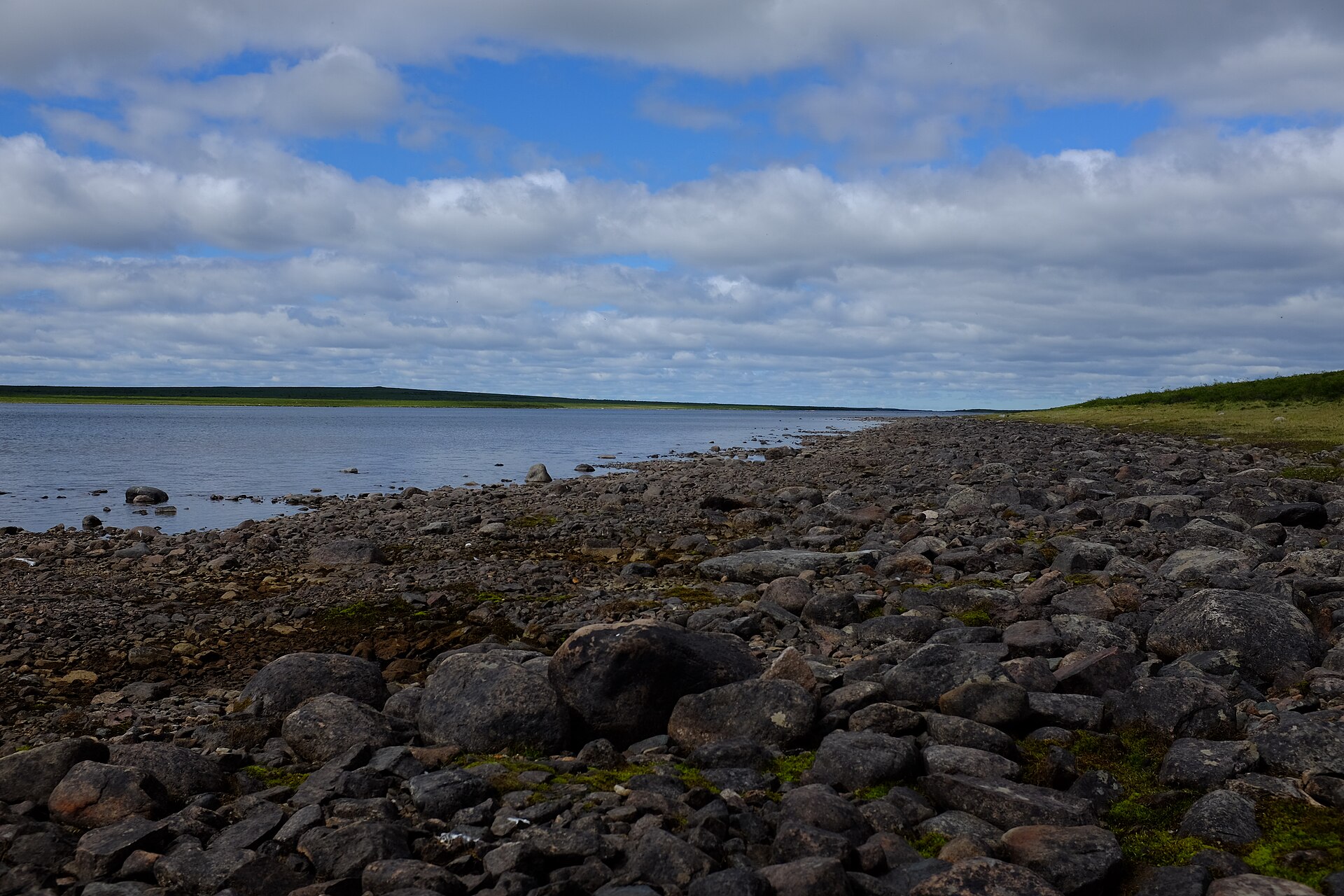
Anjikuni Lake sits in the Kivalliq Region of what is now Nunavut, Canada – roughly 1,500 kilometers northwest of Ottawa, connected to the outside world by the Kazan River and very little else.
In November 1930, a fur trapper named Joe Labelle arrived at a small Inuit camp on its shore expecting to find warmth, shelter, and familiar faces.
What he found instead became one of the most widely repeated mysteries of the Canadian North – and one of its most thoroughly examined legends.
November 1930: The Silence That Started Everything
Labelle was an experienced trapper who had worked the area for years and knew the camp well. He arrived in the early stages of a building storm, counting on the usual welcome – dogs barking, smoke from the stoves, children’s voices.
None of it was there. The six tents of the small camp stood intact. Food hung over extinguished fires. An unfinished sealskin garment sat where someone had been working on it, needle still in place.
The kayaks remained on the shore. Of the roughly 25 men, women, and children who had lived there, there was no trace whatsoever.
Labelle reported what he had found to the nearest RCMP outpost. Officers traveled to the site and confirmed his account: an abandoned camp, apparently left with some speed, with no obvious sign of the kind of violence or accident that would explain a mass departure.
According to some versions of the story – the ones that accumulated detail over subsequent decades – the dogs were found frozen and starved nearby, the graves had been disturbed and emptied, and local trappers reported strange lights in the sky above the lake. A cylindrical object, one witness said, that changed shape before heading toward Anjikuni Lake.
“He discovered unfinished meals, vacant huts full of food and personal belongings, a smoldering fire – and no evidence of a fight that could explain where the people had gone.”
In January 1931, Sergeant J. Nelson of the RCMP filed an internal report. His conclusion was unambiguous: the story had “no foundation.”
Joe Labelle, Nelson noted, was known in the region for colorful storytelling. No Caribou Inuit families known to use the Anjikuni Lake area in 1930 were missing. All were accounted for in patrol records over the following two years.
The RCMP filed it and moved on. The story, however, did not move on. It had other plans.
How a Filed Report Became a Global Legend
On November 27, 1930, a journalist named Emmett E. Kelleher published an article about Labelle’s discovery in the Danville Bee, a Virginia newspaper.
The piece ran under the headline “Vanished Eskimo Tribe Gives North Mystery Stranger Than Fiction.” It was dramatic, it was vivid, and it was, by the accounts of subsequent investigators, liberally embellished.
The photograph published alongside it had no proven connection to the lake. The article was syndicated by the Newspaper Enterprise Association and ran in papers across North America.
For nearly thirty years, it circulated – reprinted, retold, slightly reshaped with each telling. Then, in 1959, a writer named Frank Edwards included the story in his book Stranger Than Science.
Edwards’ version introduced or amplified several of the most dramatic elements that now define the legend: the frozen dogs, the emptied graves, the lights in the sky.
It also misspelled the lake’s name as “Anjikuni” – a misspelling so widely copied that it became the standard version, used by nearly every author who followed him.
How the Legend Grew: A Timeline of Embellishments
1930 – Kelleher’s newspaper article: 25 missing from a 6-tent camp. Likely embellished at source.
1931 – RCMP internal report: “no foundation.” Story quietly archived.
1959 – Frank Edwards’ Stranger Than Science: lights in the sky, emptied graves, frozen dogs added or amplified.
1970s-80s – UFO literature expands the village to 1,000+ people and frames it as mass alien abduction.
1983 – Dean Koontz uses the story as the basis for his novel Phantoms.
1976 – RCMP formally reaffirms: the story is a hoax.
By the time the UFO literature of the 1970s and 80s got hold of the story, the village had grown from 25 people to over a thousand, the lights had multiplied, and the empty graves had become a centerpiece of alien abduction theory.
Dean Koontz used the story as the basis for his 1983 horror novel Phantoms. The RCMP, in 1976, formally reaffirmed their 1931 finding and described the original report as a hoax. By that point, the legend was far beyond the reach of any official denial.
What the Empty Camp Most Likely Was
The Caribou Inuit of the Kivalliq region followed the caribou migrations on a seasonal schedule that routinely produced exactly what Labelle described: abandoned autumn camps, left quickly when the herds moved, with possessions stored against the family’s return the following season.
A camp left in October would look, in November, precisely the way Labelle described – fires cold, food stored, tools in place, not a soul in sight.
To anyone unfamiliar with Inuit seasonal patterns, it would look like a mystery. To an RCMP officer who knew the region, it looked like an ordinary autumn camp.
The disturbed graves, the frozen dogs, the lights in the sky – none of these elements appeared in Kelleher’s original 1930 article.
They entered the story gradually, through Frank Edwards and the writers who followed him, each adding texture to a tale that was already circulating without scrutiny.
The photograph published with Kelleher’s original piece was later identified as having no connection to the lake.
The Wendigo Connection
Theories linking the disappearance to the Wendigo – the spirit of hunger and cannibalism from Algonquian tradition – appeared in later retellings and have no basis in any Inuit oral tradition from the Kivalliq region.
The Wendigo belongs to the Algonquian-speaking peoples of the eastern woodlands; the Caribou Inuit had entirely different spiritual traditions.
The attribution was a layering error – a horror concept from one indigenous culture assigned to another with which it had no connection.
The Real Darkness: What the Legend Obscured
Here is the part of the Anjikuni story that tends not to appear in the retellings about UFOs and Wendigos – and the part that is, in some ways, considerably darker than any of them.
The Caribou Inuit of the Kivalliq were, across the late 19th and early 20th centuries, dying at catastrophic rates.
The disruption of traditional caribou migration routes, the introduction of new diseases, and the restructuring of the region’s economy by fur traders created conditions in which entire families could and did vanish between one winter and the next – not through supernatural intervention, but through starvation, illness, and the collapse of a way of life that had sustained people in one of the harshest environments on Earth for thousands of years.
An Inuit family that appeared healthy at an autumn caribou camp in 1930 could be dead before spring.
The RCMP patrol records that accounted for every known family in the region in 1931 and 1932 were themselves a record of survivors – not a record that no one had suffered.
The legend of Anjikuni Lake, with its alien abductions and its cosmic horror, managed to take the genuine erasure of indigenous lives and turn it into entertainment.
The people who actually disappeared from that landscape, not in a single dramatic night, but over decades of colonial disruption, rarely made it into the paperback books.
“The most haunting element of the Anjikuni Lake story is that an Inuit population in the same region was, in fact, made to disappear – but not in 1930, and not by extraterrestrials.”
– The Dark Atlas, 2026
Why the Legend Persists, and What That Tells Us
The Anjikuni story has now survived nearly a century of debunking. The RCMP denied it in 1931 and again in 1976.
Skeptical researchers have traced every dramatic element back to a source that added it after the fact.
The original newspaper article was written by a journalist known for embellishment, accompanied by a photograph of a different location. None of this has dented the story’s circulation.
That endurance says something worth sitting with. In the subarctic tundra, where the isolation is real and the cold genuinely lethal, the human mind reaches for explanations that match the scale of the environment.
An abandoned camp in a place this remote feels like it should mean something – something vast, something inexplicable, something that makes the darkness outside feel intentional rather than indifferent.
The tundra is not indifferent, of course. It is simply what it is: enormous, cold, and utterly without interest in human stories.
The village that vanished at Anjikuni Lake almost certainly never vanished at all. But the need for it to have done so – the need for the frozen silence to contain a mystery worthy of it – has proven nearly impossible to extinguish.
That, in its own way, is a kind of truth about the place. Some landscapes are so extreme that the legends they generate are more revealing than any fact.
Anjikuni Lake is still there. The tundra around it is still exactly as silent as it was in November 1930. Whatever really happened to that small camp (and the most likely answer is, nothing happened, the family moved with the caribou) the silence remains. And silence, in the far north, does not feel like an absence. It feels like something waiting.
References:
– Historic Mysteries – “Lake Anjikuni: How Did an Entire Village Disappear?” historicmysteries.com
– Unsolved Mysteries Wiki – “Lake Anjikuni Village” (account of Armand Laurent’s testimony and RCMP investigation). unsolvedmysteries.fandom.com
– The Dark Atlas – “Angikuni Lake: The Vanished Inuit Village Mystery” (RCMP Sgt. Nelson’s 1931 report; 1976 reaffirmation; seasonal camp explanation). thedarkatlas.com
– Canada EHX (Substack) – “The Vanishing of the Angikuni Lake” (Kelleher’s 1930 Danville Bee article and photograph discrepancy). canadaehx.substack.com
– Anomaly Info – “1930, November: Lake Anjikuni Disappearances” (Frank Edwards’ 1959 Stranger Than Science as origin of expanded legend and name misspelling). anomalyinfo.com
– Science Times – “Lake Anjikuni Mystery: Conspiracy Theories Behind the Disappearance of an Entire Village” (context on Inuit nomadic patterns and colonial-era disruption). sciencetimes.com


