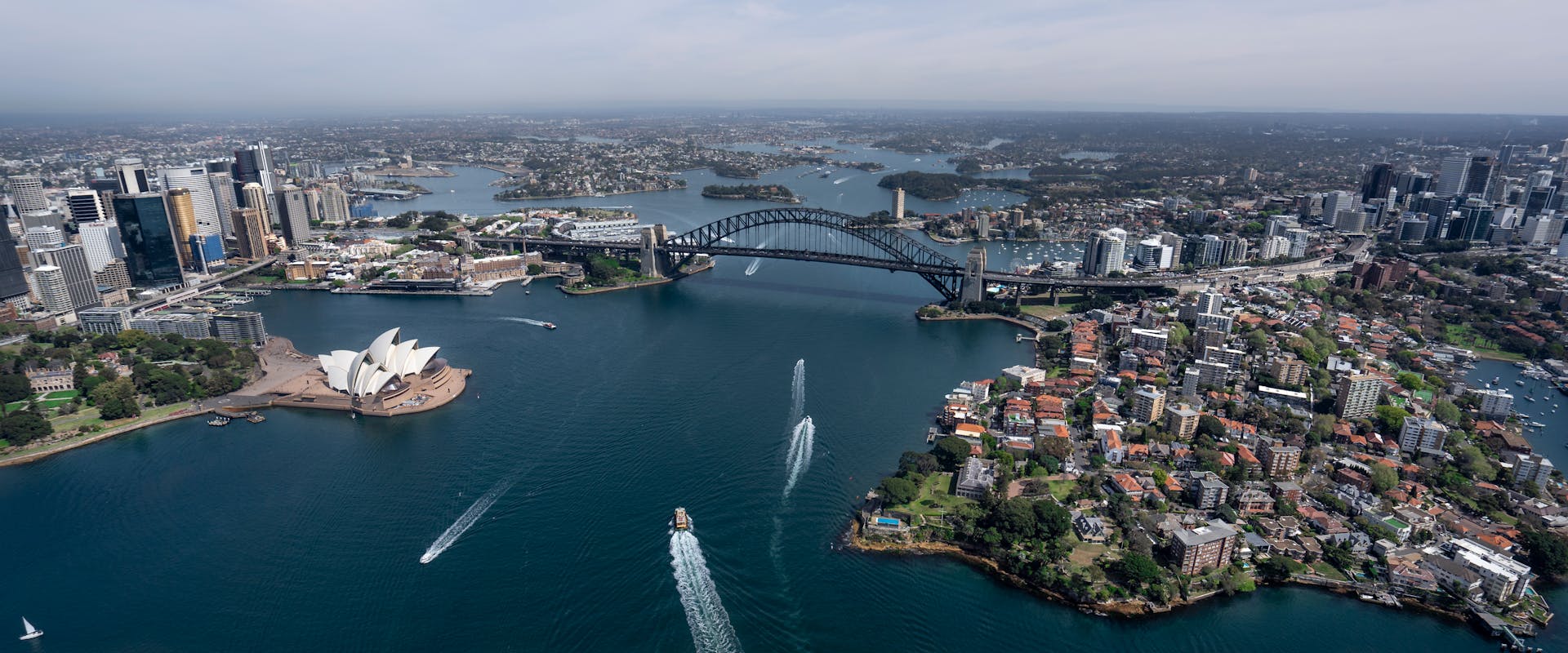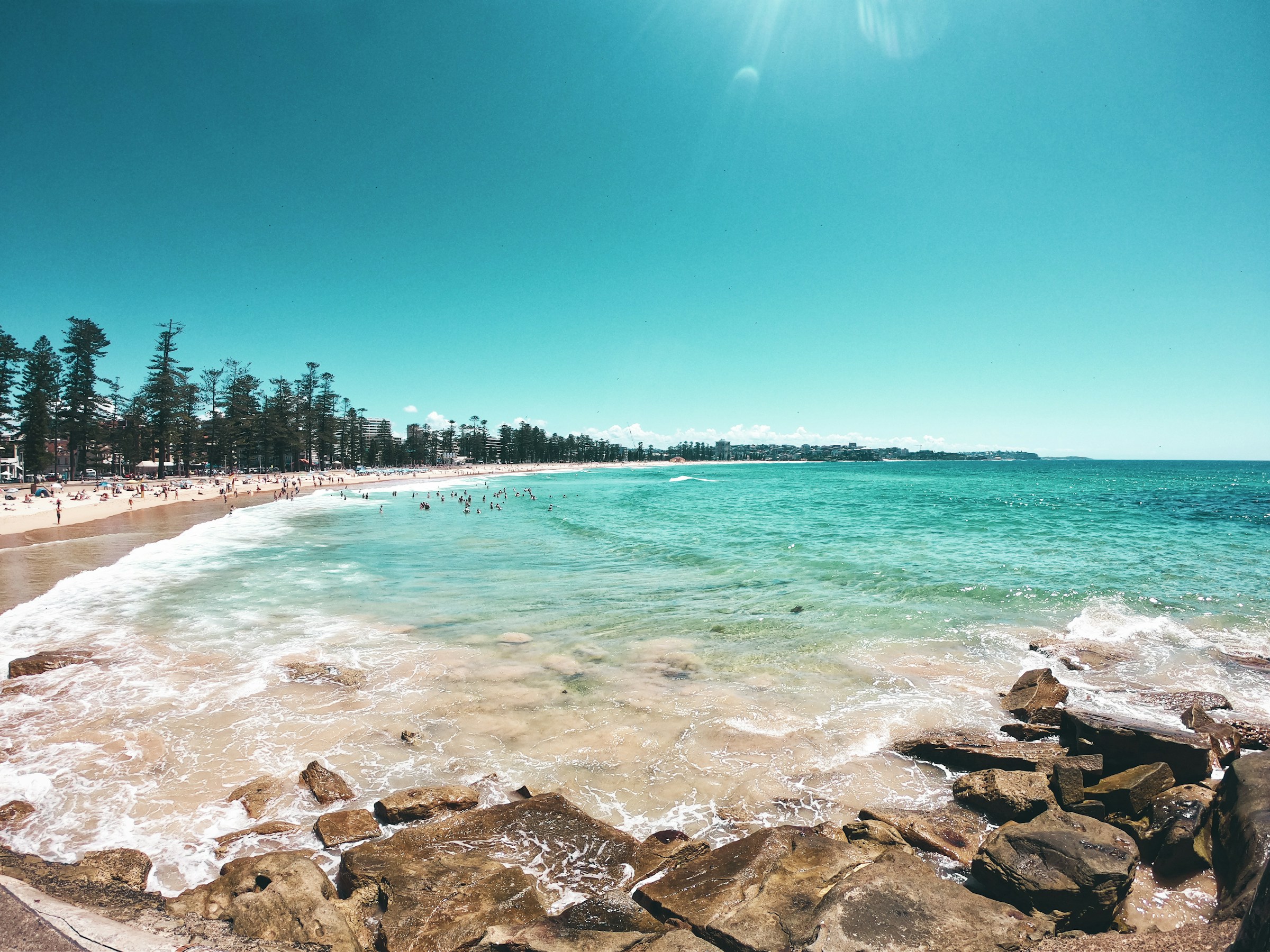
As the Southern Hemisphere heads into summer, Australians are reaching for hats, shade and sunscreen. The country’s beaches are among the most beautiful on Earth, and the sunlight that makes them glow is among the most intense.
In Sydney, the first hot weekends of the season are drawing crowds to Bondi, while farther north, the white sand of Whitehaven Beach in the Whitsundays and the long sweep of Cable Beach in Broome await the holiday rush.
Australia’s coastline is a global tourist draw. It is also, for much of the year, a place where the sun can burn unprotected skin in minutes.
Health authorities call it a national health problem. Australia has one of the highest rates of skin cancer in the world, and Cancer Council Australia says that about two in three Australians will be diagnosed with some form of it by age 70. Scientists say that a combination of geography, atmosphere and astronomy explains why.
How Strong Is “Strong”?
Sunlight is measured by the UV Index, developed under the World Meteorological Organization, which runs from 0 (low) to 11 and above (extreme).
Cancer Council recommends sun protection whenever the index reaches 3, which in Australia happens in most months of the year.
In summer, the numbers climb steeply. According to Cancer Council, peak daily values in Australia are regularly above 12 to 14, and can reach 16 to 17 in the north.
In January, average values are forecast to be 11 or more across most of the country on clear days. At the height of summer, the organization says, unprotected skin can be damaged in as little as 15 minutes around midday.
Why Australia’s Sun Is So Strong
Start with the tilt of the Earth’s axis. It is the reason for seasons: in summer, the Sun climbs higher in the sky, its rays strike the ground more directly and pass through less atmosphere, which increases UV intensity. That is true for every country in its summer. It does not explain why Australia’s sun is stronger than Europe’s for example.
For that, scientists point to three further factors. Dr. Richard McKenzie, a researcher at New Zealand’s national atmospheric science institute NIWA, outlined them for New Zealand, and they apply across the Southern Hemisphere.
- Distance. The Earth’s orbit is slightly elliptical, and our planet is closest to the Sun in December and January, which is summer in the south. That alone makes southern summers about 7 percent more intense than northern ones.
- Ozone. Summer ozone levels are lower over the Southern Hemisphere. McKenzie says ozone is made at the equator and carried toward the poles, and that transport is more efficient in the south. The effect is about 10 percent.
- Cleaner air. The remaining 20 percent comes from air with less pollution and dust, which scatters and absorbs less UV. The Southern Hemisphere has less land and fewer industrial areas.
Together, the effects lead to peak UV levels in New Zealand about 40 percent higher than at similar latitudes in the north, according to NIWA.
Scientists are still debating the exact split, and other estimates put the difference somewhere between 15 and 40 percent.
Altitude and surface matter too: UV rises with height and is reflected by sand, water and snow. Cloud cover can reduce it, though not entirely.
What It Means for Health
The consequences show up in medical statistics. Cancer Council says that skin cancer is the most common cancer in Australia: more than 15,000 Australians are diagnosed with melanoma each year, and more than one million non-melanoma skin cancers are treated.
About 2,000 Australians die of skin cancer every year, and the organization says overexposure to UV is linked to up to 95 percent of melanomas.
Context matters, though. Risk depends not only on the strength of the sun, but also on skin type, age and behavior, and Australia’s rates reflect a largely fair-skinned population with an outdoor lifestyle.
As one New Zealand report notes, people of Mediterranean ancestry have long lived at similar latitudes with more protective skin.
What Experts Recommend
Australia’s best-known response is the Slip, Slop, Slap campaign, launched in 1981 and later expanded to five steps.
Cancer Council and SunSmart, a program that is a World Health Organization Collaborating Centre for UV Radiation, publish this guidance for when the UV Index is 3 or above:
- Slip on sun-protective clothing that covers as much skin as possible.
- Slop on broad-spectrum, water-resistant sunscreen. Cancer Council currently recommends SPF50 or SPF50+.
- Slap on a broad-brimmed hat.
- Seek shade.
- Slide on sunglasses that meet Australian Standards.
The organizations also advise checking the day’s UV forecast, available through the free SunSmart app, and talking to a doctor about personal skin cancer risk.
A Cancer Council survey, however, found that only one in six Australians has a strong understanding of the UV Index.
Across the Tasman and Beyond
New Zealand has some of the world’s highest skin cancer rates, as well as peak summer UV indices around 12. A popular belief is that the Antarctic ozone hole is to blame, but NIWA scientists say the hole is more than a thousand kilometers farther south, and that the 40 percent difference has little to do with ozone depletion.
They add that UV levels in New Zealand will remain high even after the ozone layer recovers. New Zealand’s cooler climate, because of the surrounding ocean, can also encourage people to stay out longer.
But Australia and New Zealand are not alone. South America shares the same physics. Rio de Janeiro’s typical summer maximum is 12, according to data from Germany’s Federal Office for Radiation Protection, while Buenos Aires, at nearly the same latitude as Sydney, reaches about 9 in typical monthly maximums.
Uruguay and the Río de la Plata region lie at similar latitudes. Farther south, in Tierra del Fuego, the ozone hole can matter: at Ushuaia, the daily peak UV index reached 13 in November 2003 and 2009, when the station was under the ozone hole.
The Highest UV Index Ever Measured on Earth
But the world’s most extreme UV is found in the Andes. A reading of 43.3, a world record, was recorded on the Licancabur volcano, at 5,920 meters, on December 29, 2003.
NIWA scientists have also found that the high Altiplano plateau in Peru, Bolivia, Chile and Argentina regularly exceeds 25. High altitude, intense tropical sun and naturally low ozone combine.
Antarctica may be a surprise. The continent is where the ozone hole forms, but its UV levels are lower than the Andes, partly because the Sun stays low in the sky. At Palmer Station on the Antarctic Peninsula, the highest UV index measured was 14.8.
During the ozone hole period, the UV index at the South Pole is 20 to 80 percent higher than in summer months at comparable solar elevations. Snow and ice, which reflect much of the radiation, and up to 24 hours of daylight in summer add to the exposure.
How Does It Compare With the Mediterranean, California and the Caribbean?
The tropics are the intense baseline. In the Caribbean and tropical regions, the UV Index stays above 8 the whole year: Havana’s typical maximum reaches about 12 in July, and Cozumel, off Mexico, is reported at 12. Miami’s peak is roughly 12.5, according to one account.
In the Mediterranean and California, summer values are lower. In mainland Greece, the UV Index in summer is 9 to 10, and Heraklion in Crete reaches 10 in July. Los Angeles also reaches about 10 in July.
The comparison is not exact, because different sources measure different things, such as typical monthly maximums or clear-sky peaks.
But the pattern is consistent with the science: at the same latitude, Southern Hemisphere summers can be significantly stronger, while the tropics are intense all year, and northern Australia, at around 13 degrees south, is among the highest of all.
The Ozone Connection
Ozone is a gas in the stratosphere that absorbs most of the Sun’s harmful UV-B radiation. Its depletion by chlorofluorocarbons (CFCs) created the Antarctic ozone hole, which was discovered in the 1980s.
The 1987 Montreal Protocol phased out most of those chemicals and is widely regarded as the most successful environmental treaty ever.
The link to Australia is real but partial. Naturally lower ozone in southern summers contributes about a tenth of the difference with the north, but the ozone hole itself is not the main cause. It can, however, matter at times in southern South America, and Antarctica.
The hole is still a concern this year. NASA and NOAA reported on November 4 that the 2026 Antarctic ozone hole peaked at 10.5 million square miles on September 18, making it the seventh largest in 48 years, driven by an unusually powerful polar vortex.
The scientists said that long-term recovery remains on track: under current policies, the ozone layer is expected to return to 1980 levels by about 2040 for most of the world, and about 2066 over Antarctica, according to the WMO.
The Takeaway
The sun in Australia is stronger because of a combination of orbit, atmosphere and geography. It is not a mystery, and it is not new. Its danger, though, grows with exposure, and that is the part people can influence. For the beachgoers heading out this summer, the one fact that scientists agree on is that the UV Index is worth checking before heading out.
Disclaimer: This article is for general informational purposes only and is not medical advice. UV exposure, skin cancer risk and sun protection needs vary from person to person, depending on skin type, age, medical history and other factors. Always consult your own doctor or a qualified health professional about how to protect yourself from the sun.
Sources:
- Cancer Council Australia, “UV radiation: statistics and resources”: cancer.org.au/about-us/policy-and-advocacy/prevention/uv-radiation/related-resources/statistics
- Cancer Council Australia, “Cancer Council stresses importance of improved understanding as UV reaches extreme levels this summer”: cancer.org.au/about-us/news-and-media/media-releases/cancer-council-stresses-importance-of-improved-understanding-as-uv-reaches-extreme-levels-this-summer
- Cancer Council Australia, “First-of-its-kind data shows non-melanoma skin cancer rates…”: cancer.org.au/about-us/news-and-media/media-releases/first-of-its-kind-data-shows-non-melanoma-skin-cancer-rates-up-to-three-times-more-common-than-all-other-cancers-combined
- Cancer Council NSW, “Protect your skin”: cancer.nsw.gov.au/protect-your-skin
- Cancer Council Victoria, “Be SunSmart” (SunSmart, WHO Collaborating Centre for UV Radiation): cancervic.org.au/about-cancer/prevent-detect-cancer/prevention/be-sunsmart
- Cancer Council, “5 important things to know about skin cancer”: cancercouncil.com.au/?p=23226
- Science Learning Hub (NZ), Dr. Richard McKenzie, “Why are UV levels high in New Zealand in summer?”: sciencelearn.org.nz/videos/87-why-are-uv-levels-high-in-new-zealand-summer
- Science Learning Hub (NZ), “Monitoring UV”: sciencelearn.org.nz/resources/223-monitoring-uv
- Stats NZ, “UV intensity data to 2023”: stats.govt.nz/indicators/uv-intensity-data-to-2023
- NIWA, “The WMO/UNEP 2002 ozone assessment: a New Zealand perspective” (and NIWA, “Ozone and UV”): niwa.co.nz/publications/wa/vol11-no4-december-2003/the-wmounep-2002-ozone-assessment-a-new-zealand-perspective
- The Spinoff, “Is Antarctica’s ozone hole causing our high skin cancer rates?” (Mar. 19, 2024): thespinoff.co.nz/society/19-03-2024/antarcticas-ozone-hole-causes-our-high-skin-cancer-rates-right-wrong
- DermNet NZ, “UV index”: dermnetnz.org/site-age-specific/UV-index.html
- New Zealand Herald, “Danger ahead from clean air and thin ozone”: nzherald.co.nz/nz/danger-ahead-from-clean-air-and-thin-ozone/JJ4CMEJ5KU5LU4NPFEBVD4YYWA
- Germany’s Federal Office for Radiation Protection (BfS), “UV index worldwide”: bfs.de/EN/topics/opt/uv/index/worldwide/worldwide.html
- Finnish Meteorological Institute, “What are UV radiation and the UV Index?”: en.ilmatieteenlaitos.fi/ultraviolet-radiation
- CBS News / Live Science, “Blazing world record: Strongest UV rays ever measured on Earth”: cbsnews.com/news/blazing-world-record-strongest-uv-rays-measured-in-south-america/
- Bernhard, G. et al., “Ultraviolet radiation in Antarctica, Ushuaia and Arctic,” Atmospheric Chemistry and Physics18 (2018): acp.copernicus.org/articles/18/16019/2018
- Bernhard, G., “Trends of solar ultraviolet irradiance at Barrow, Alaska, and the Antarctic”
- NASA, “NASA, NOAA Track 2026 Antarctic Ozone Hole” (Nov. 4, 2026): science.nasa.gov/earth/2026-ozone-hole/
- NASA Earth Observatory, “Ozone Hole Reaches Its 2026 Maximum”: science.nasa.gov/earth/earth-observatory/ozone-hole-reaches-its-2026-maximum/
- CIRES, “NOAA, NASA rank 2026 ozone hole among 10 largest on record”: cires.colorado.edu/news/noaa-nasa-rank-2026-ozone-hole-among-10-largest-record
- World Meteorological Organization, “Small and short-lived 2025 ozone hole confirms long-term recovery trend”: wmo.int/media/news/small-and-short-lived-2025-ozone-hole-confirms-long-term-recovery-trend
- Associated Press, “UN says ozone layer slowly healing, hole to mend by 2066”: weartv.com/news/nation-world/un-says-ozone-layer-slowly-healing-hole-to-mend-by-2066-scientific-assessment-united-nations-report-american-meteorological-society-chemical-levels
- Newsweek, “Peru tries to adapt to dangerous levels of UV radiation”: europe.newsweek.com/peru-climate-change-ultraviolet-radiation-ozone-436746
- AccuWeather, “The risk of skin cancer around the world”: accuweather.com/en/travel-articles/business/the-risk-of-skin-cancer-around-the-world/70004980