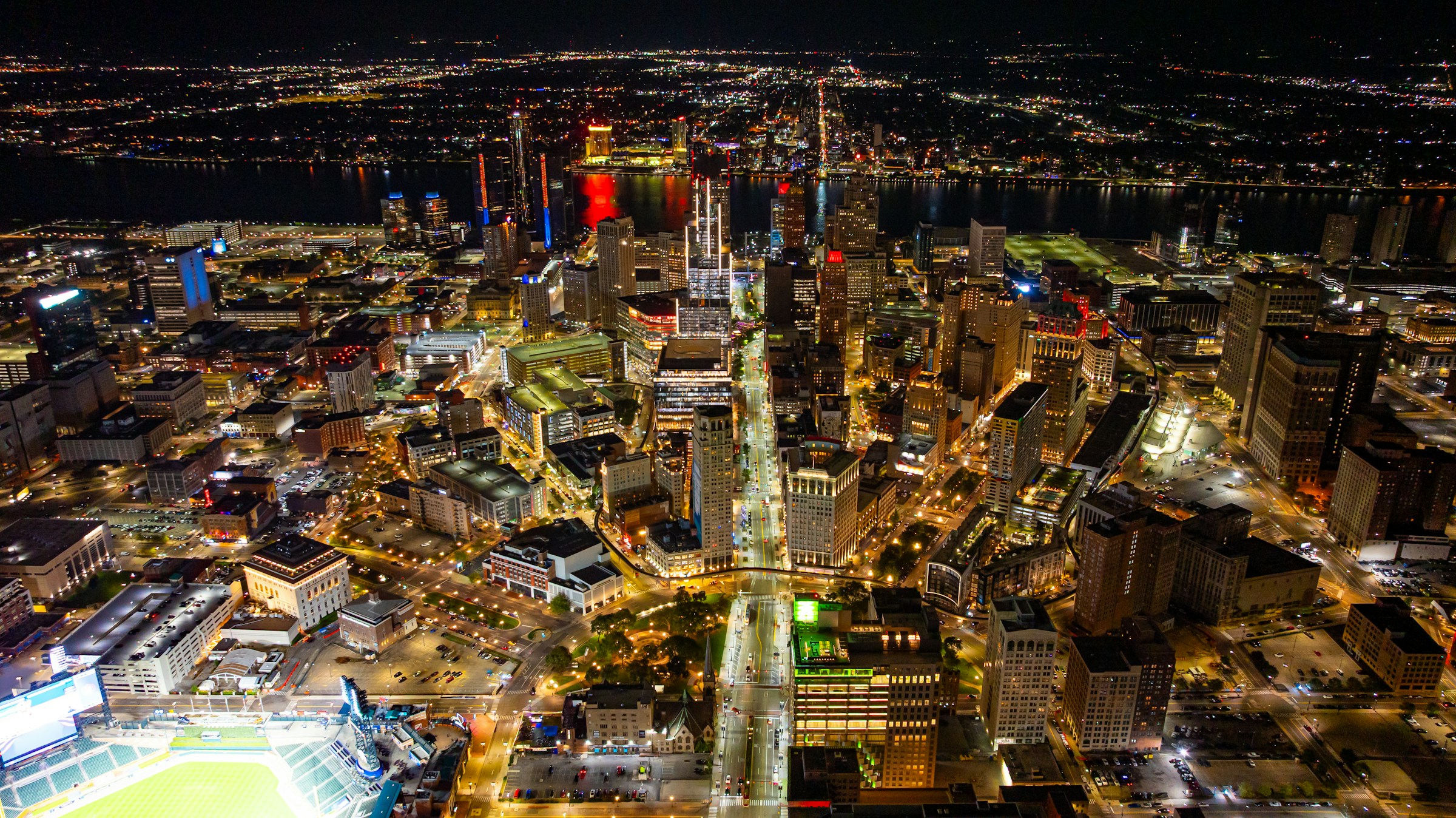
Once defined by industrial decline, economic hardship or a fading sense of purpose, these cities are finding new reasons to attract people, businesses and investment.
Their transformations are far from complete, but their stories show how places can reinvent themselves – sometimes against all expectations.
A city can spend decades losing jobs, residents and confidence in its future. Factories close, industries disappear, young people leave, and once-busy neighbourhoods begin to lose their vitality. Eventually, a place that was once a symbol of prosperity can become associated with decline.
But cities are not static. Some manage to find a new economic purpose, attract investment, rebuild their infrastructure and create a different kind of future.
Their recovery rarely happens overnight, and it does not necessarily benefit every resident equally. Yet, in several places around the world, the direction of change has become increasingly encouraging.
Here are ten cities that have been given something resembling a second chance.
1. Pittsburgh, USA: From Steel Capital to Technology Hub
For much of the 20th century, Pittsburgh was one of the world’s great steelmaking centres. Its factories and mills supplied the industrial expansion of the United States, while the city’s skyline and economy were closely connected to the steel industry.
When American steel began losing ground in the 1970s and 1980s, Pittsburgh was hit particularly hard. Thousands of industrial jobs disappeared, and entire communities were left searching for a new economic identity.
The city gradually began to move beyond its industrial past. Healthcare, higher education, financial services and technology became increasingly important.
The University of Pittsburgh and Carnegie Mellon University played a major role in this transformation, helping create a strong research environment and attracting skilled workers.
Today, Pittsburgh has growing strengths in robotics, artificial intelligence, medicine and advanced manufacturing.
Carnegie Mellon’s Robotics Innovation Center is one example of how former industrial sites are being repurposed for research and innovation.
The city has not escaped every challenge associated with post-industrial decline, but it has developed an economic identity that would have been difficult to imagine during the worst years of the steel crisis.
2. Bilbao, Spain: The Museum That Helped Change a City
In the 1970s and 1980s, Bilbao was struggling with the decline of its traditional industrial base. Steelmaking, shipbuilding and other heavy industries had shaped the city for generations, but industrial restructuring brought unemployment, pollution and economic uncertainty. Its riverfront, once a centre of commercial activity, had become a symbol of the city’s problems.
Bilbao’s response was unusually ambitious. Rather than relying on a single industry to return, the city and the Basque authorities pursued a broader programme of urban renewal.
Transport infrastructure was modernised, former industrial areas were redeveloped, and greater attention was given to culture, public spaces and environmental improvement.
The opening of the Guggenheim Museum in 1997 became the most visible symbol of this transformation. Designed by Frank Gehry, the spectacular building attracted international attention and helped put Bilbao on the global cultural map.
The expression “Bilbao Effect” subsequently became shorthand for the potential impact of major cultural projects on urban regeneration.
However, the museum was not the whole story. Bilbao’s transformation depended on a much wider programme involving transport, riverfront redevelopment and economic restructuring. Today, the city is a popular destination and an important centre of services, culture and business in northern Spain.
3. Manchester, UK: Reinventing the First Industrial City
Manchester was at the heart of the Industrial Revolution. Its textile mills, factories and canals helped make it one of the most influential industrial cities in the world.
But as traditional manufacturing declined during the 20th century, the city faced decades of economic difficulties, unemployment and urban deterioration.
Its recovery began through a combination of investment, cultural energy and economic diversification.
Music, sport, universities and the creative industries became important parts of Manchester’s identity. The city also developed into a centre for professional services, technology and media.
One of the most visible projects has been the transformation of the former Manchester Docks in nearby Salford into Salford Quays and MediaCityUK.
The BBC moved several major departments there from 2011 onwards, while ITV and numerous creative and technology businesses also established a presence. The area has become an important part of the wider Greater Manchester economy.
Manchester is now one of the UK’s most prominent regional economic centres. Its transformation is still incomplete, however, and problems such as housing affordability and inequality remain. Nevertheless, the city has moved a long way from the post-industrial difficulties that once defined it.
4. Leipzig, Germany: A New Life After German Reunification
The fall of the Berlin Wall and German reunification brought enormous changes to Leipzig. The city had been an important industrial, commercial and cultural centre in East Germany, but many of its factories struggled to compete in the new economic environment.
Unemployment increased, residents moved away, and thousands of apartments and industrial buildings stood empty.
For a time, Leipzig seemed to be losing its place among Germany’s major cities. Yet its relatively affordable housing, historic architecture, cultural scene and central location eventually became important advantages.
Major manufacturers, including BMW and Porsche, established production facilities in the Leipzig region, while logistics, services, research and creative businesses also expanded. Young professionals, students and entrepreneurs were attracted by a cost of living that was often lower than in Germany’s largest western cities.
The city experienced substantial population growth over the past two decades. Official municipal figures show that its registered population increased from approximately 610,000 in 2021 to more than 633,000 at the end of 2025.
The pace of growth has since become less certain, but Leipzig remains an important example of how a city can turn the disadvantages of economic transition into new opportunities.
5. Medellín, Colombia: From Violence to Urban Innovation
Few cities have undergone a more dramatic change in international reputation than Medellín. During the 1980s and early 1990s, the Colombian city became internationally associated with drug cartels, organised crime and extreme violence.
Its problems were particularly severe in poorer hillside neighbourhoods, where many residents had limited access to transport, education and public services.
The transformation that followed involved more than attracting businesses or improving the city centre. Medellín invested in public transport, education, libraries, public spaces and infrastructure designed to connect disadvantaged communities with the rest of the city.
One of its best-known innovations was the Metrocable system.
These cable cars connected neighbourhoods on steep hillsides with the urban transport network, making access to jobs, schools and services considerably easier.
Public escalators, libraries and other community projects became part of a broader approach often described as “social urbanism”.
Medellín has since developed a reputation as a centre for entrepreneurship, technology and urban innovation. Its experience has attracted international attention, although inequality, security concerns and social challenges have not disappeared.
Its story is not one of a perfect recovery, but of a city that demonstrated how public infrastructure and social investment can help change the direction of urban development.
6. Malmö, Sweden: A Shipbuilding City Finds a New Direction
For generations, Malmö was one of Sweden’s important industrial centres. Its shipyards, especially the famous Kockums shipyard, provided thousands of jobs and helped shape the city’s economy.
But as European shipbuilding faced growing international competition, the industry went into decline. In 1986, Kockums ceased civilian ship production, dealing a major blow to Malmö’s employment and identity.
The city needed to find a new role. Several developments helped make that possible: the establishment of Malmö University, the construction of the Öresund Bridge connecting Sweden with Denmark, and the redevelopment of former industrial areas.
The bridge, opened in 2000, transformed Malmö’s geographical position. Copenhagen became much more accessible, and the two cities increasingly functioned as connected parts of a cross-border economic region. Malmö also invested in education, modern housing, sustainable urban development and new business sectors.
Former industrial districts have been transformed into residential and commercial neighbourhoods, while the city has attracted students, entrepreneurs and international residents.
Malmö still faces social and economic challenges, but its transition from a traditional shipbuilding centre to a modern, internationally connected city is one of northern Europe’s notable urban transformations.
7. Rotterdam, Netherlands: Rebuilding More Than a City
Rotterdam’s history is different from that of the other cities on this list. Its greatest disaster came during the Second World War, when German bombing in May 1940 destroyed much of its historic city centre. Rather than attempting to recreate the old city exactly as it had been, Rotterdam chose a bold approach to reconstruction.
The result was a city with a distinctive modern character. Wide streets, innovative buildings and ambitious architectural projects became part of its identity.
Over time, Rotterdam developed into one of Europe’s most recognisable centres of contemporary architecture and urban planning.
Its enormous port also remained a major economic asset. As shipping and logistics changed, Rotterdam continued investing in infrastructure, automation and new technologies.
Today, the port is central not only to Dutch trade but also to wider European supply chains.
The city is now looking towards another major transition: making its industrial and logistics base more sustainable while maintaining its international competitiveness.
Its 2050 Port Vision reflects this ambition, placing innovation, resilience and environmental considerations at the centre of future development.
Rotterdam’s second chance was not simply about recovering from wartime destruction. It was about using reconstruction as an opportunity to create a different kind of city.
8. Detroit, USA: The Motor City Is Moving Again
Detroit may be the most recognisable example of an American city that lost much of its former glory. During the 20th century, it was the heart of the US automobile industry.
Ford, General Motors and Chrysler helped turn it into a symbol of industrial power, attracting workers from across the country.
But the decline of manufacturing employment, international competition, suburbanisation and a shrinking tax base gradually weakened the city.
Its population fell dramatically from its post-war peak, neighbourhoods were abandoned, and public services came under increasing pressure. In 2013, Detroit filed for municipal bankruptcy, the largest such case in US history.
The years that followed brought a difficult but significant recovery effort. Debt restructuring, improvements in city finances, private investment and the redevelopment of parts of downtown helped restore confidence.
New businesses, residential projects, restaurants and cultural venues began appearing in areas that had experienced years of decline.
There are also encouraging signs in the population figures. According to the US Census Bureau, Detroit’s population increased from 639,111 in 2020 to an estimated 649,095 in 2025. The city government reported that 2025 marked the third consecutive year of population growth.
Detroit is also building on its industrial heritage, with opportunities in advanced manufacturing, mobility and technology.
Yet the recovery remains uneven. Many neighbourhoods continue to face poverty, abandoned properties and limited economic opportunities.
The city has not returned to its former size or prosperity, but for the first time in many years, its future appears more hopeful.
9. Glasgow, Scotland: A Post-Industrial City Reimagines Itself
Glasgow was once one of the world’s great centres of shipbuilding, engineering and heavy industry. Its shipyards along the River Clyde produced vessels that travelled across the globe, while its factories and workshops supported a powerful industrial economy.
The decline of these industries from the middle of the 20th century onwards brought serious economic and social consequences. Unemployment, population loss and urban deprivation affected large parts of the city.
Glasgow gradually began to rebuild its economic base. Cultural investment, tourism, higher education, financial services and professional activities became increasingly important.
The city also made use of its architectural heritage, museums and music scene to attract visitors and create a more diverse urban identity.
The Clyde waterfront has been the focus of major regeneration projects, while universities and cultural institutions continue to play an important role in the city’s development. Glasgow has also become a centre for creative industries and events.
The transformation has not erased the inequalities that developed during decades of industrial decline.
Nevertheless, Glasgow today has a much more diversified economy and a stronger international profile than it did during the worst years of deindustrialisation.
10. Shenzhen, China: From Fishing Town to Technology Powerhouse
Shenzhen is the most unusual city on this list. Unlike Pittsburgh, Detroit or Glasgow, it did not experience a long period of industrial decline.
Instead, it represents a different kind of second chance: the transformation of a relatively small settlement into one of the world’s most important technology and manufacturing centres.
In the late 1970s, Shenzhen was a modest town close to Hong Kong. In 1980, it became China’s first special economic zone, part of the country’s wider programme of economic reform and opening up. The new status brought investment, industrial development and access to international markets.
During its first decades of rapid growth, Shenzhen became a major centre for electronics manufacturing. Its factories produced components and finished products for companies around the world.
Over time, the city moved beyond assembly and low-cost manufacturing, developing its own technology companies, research capabilities and innovation ecosystem.
Today, Shenzhen is associated with electronics, telecommunications, electric vehicles, advanced manufacturing and technology entrepreneurship.
It is often described as China’s answer to Silicon Valley, although its industrial scale and manufacturing ecosystem make it quite different from the Californian technology hub.
The city’s transformation has been extraordinary, but it also raises questions about housing affordability, labour conditions, environmental pressures and the sustainability of rapid growth.
Shenzhen’s story is not a conventional urban comeback. It is an example of how a city can be given an entirely new economic purpose – and grow into something few people could have predicted.
A Second Chance Is Not the End of the Story
These ten cities have very different histories, economies and challenges. Some rebuilt themselves after the collapse of their dominant industries.
Others used culture, education, transport or technology to create new opportunities. A few, such as Shenzhen, followed a very different path, moving from relative obscurity to global importance within a few decades.
Their experiences also show that urban recovery is rarely straightforward. A successful downtown redevelopment does not automatically improve living conditions in every neighbourhood.
New investment does not always mean that former industrial workers benefit equally. And a growing economy does not necessarily solve problems such as inequality, housing affordability or social exclusion.
Still, there is something encouraging about these stories. Cities can lose their purpose, but they do not have to remain trapped in their past.
With long-term planning, investment, education and a willingness to change, even places that once seemed to have exhausted their opportunities can find a new direction. Sometimes, a second chance is exactly what a city needs.
Sources:
- Carnegie Mellon University;
- Robotics Innovation Center;
- Bilbao Ria 2000;
- Yale Insights;
- Salford City Council;
- UK Government – Greater Manchester Local Industrial Strategy;
- Leipzig Statistical Information System;
- Leipzig Chamber of Industry and Commerce;
- OECD – National Urban Policy Review of Colombia;
- World Bank;
- Malmö City;
- Post-war Reconstruction Rotterdam;
- Port of Rotterdam – 2050 Port Vision;
- US Census Bureau;
- City of Detroit – Population Growth;
- Federal Reserve Bank of Chicago;
- OECD – Urban Renaissance of Glasgow
- OECD – Economic Trends in Glasgow.
- World Intellectual Property Organization,
- World Bank.


