In November 2007, a tough little expedition ship struck ice in calm weather. Within hours, 154 people were in lifeboats on the edge of the world. All of them lived. What came next changed the rules for ships in polar waters.
At about midnight on November 23, 2007, the MS Explorer was moving through an ice field in the Bransfield Strait, near the South Shetland Islands off the Antarctic Peninsula.
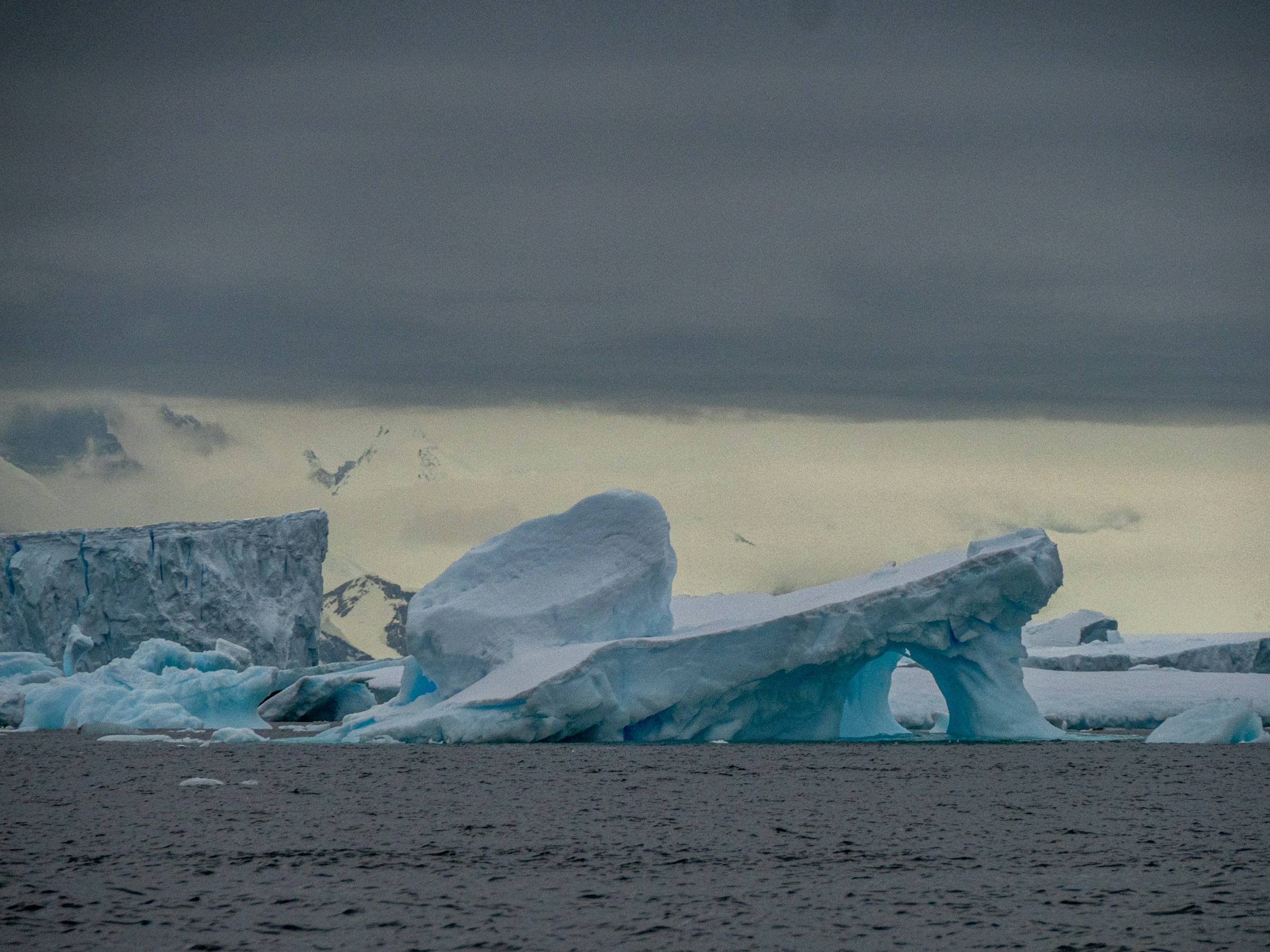
The weather was calm, the sea was quiet, and most of the 154 people on board were asleep. Then the ship hit what the master later described as a “wall of ice.”
Within minutes, water was pouring into the hull. Within about a day, one of the most famous ships in polar tourism was at the bottom of the Southern Ocean.
A Pioneer of Polar Tourism
The Explorer was no ordinary cruise ship. Built in 1969 by Uudenkaupungin Telakka in Uusikaupunki, Finland, as the Lindblad Explorer, she was a small vessel of about 73 meters (239 feet) and 2,400 tons.
She was widely described as the first cruise ship ever designed specifically for the icy waters of Antarctica, and for nearly four decades she carried travelers to the White Continent.
By 2007, she was Liberian-flagged and owned by the Toronto-based G.A.P Adventures.
On that voyage, an 18-day round trip from Argentina to Antarctica, the ship had already called at the Falkland Islands and South Georgia.
Into the Ice
On the evening of November 22, the Explorer entered an ice field described by the master as first-year ice. Around midnight, she struck the ice and was damaged.
The distress call went out at about 03:20 GMT, and, according to the international association of Antarctic tour operators, IAATO, the crew’s attempts to contain the flooding failed. The order to abandon ship was given.
All 154 people on board took to the ship’s lifeboats and inflatable boats: 100 passengers and 54 crew in the count used by the Liberian investigators (IAATO broke the figure down as 91 passengers, nine expedition staff and 54 crew). The conditions were as kind as Antarctica gets. The seas were calm and the weather reasonable.
A Rescue That Worked
Help was close. Two other expedition ships, the Norwegian Nordnorge and the National Geographic Endeavour, were about 40 miles (64 kilometers) away, and the Nordnorge, which had room for around 700 passengers, took everyone on board.
People waited in lifeboats and Zodiacs for four to five hours. “It is really scary to see a ship sinking out your porthole,” one American passenger aboard the Nordnorge wrote to her family. Passengers were asked to donate clothing for those coming in from the lifeboats.
The Explorer, which had rolled onto her starboard side, sank later that day. The survivors were taken to a Chilean base on King George Island and then flown to Punta Arenas by the Chilean Air Force. Only one minor injury was reported.
The wreck was later located by the Royal Navy ship HMS Endurance at a depth of about 1,130 meters (3,710 feet) in the northwest of the Bransfield Strait. The ship went down with nearly 50,000 gallons (185,000 liters) of diesel on board, leaving a slick almost a mile (1.5 kilometers) long.
“Fist-Sized” Hole, or Something Bigger?
At first, the picture was unclear. The ship’s owners described the damage as a “fist-sized hole,” but Argentina’s navy later said it observed significant damage to the hull.
Experts were also puzzled. Sander Calisal, a professor of naval architecture at the University of British Columbia, told the Christian Science Monitor that the Explorer’s ice-reinforced hull should have withstood accidental contact with submerged ice, and that the initial explanation did not seem right to him.
What the Investigation Found
The answer came in April 2009, from an investigation by the Liberian Registry in cooperation with the Chilean Navy.
It concluded that the primary cause of the casualty was the master’s decision to enter the ice field, based on “his knowledge and information available at the time”.
The report said that he believed it was first-year ice, when it was much harder land ice. It added that the master was very experienced in Baltic waters but was unfamiliar with the type of ice found in Antarctica, and that it would have been safer to alter course to open water rather than enter the ice field at night.
The report was not only critical. It praised the master and crew for the actions taken to ensure the passengers’ survival, and said the decision to abandon ship, along with the engine crew’s efforts to keep power running so that passengers could be put into lifeboats, “in all likelihood saved lives.”
It also recommended that the ship’s classification society review its procedures and that the operator review its abandon-ship and lifeboat drills.
The Liberian Registry said it would consider making some of the IMO’s guidelines for polar shipping mandatory. These are the conclusions of the investigators; they are not a court ruling.
A Rule Book Is Written
The Explorer sank at the end of a decade in which polar cruising was booming, with few binding rules.
Nature wrote that the issue came to public attention with the Explorer’s sinking, and a Liberian Registry official later called the sinking the “real kick-off” for what became the Polar Code.
The International Maritime Organization’s Polar Code entered into force on January 1, 2017. It is mandatory under the main treaties on safety at sea (SOLAS) and pollution prevention (MARPOL), and covers ship design, equipment, voyage planning, crew training and pollution. Ships are classified into categories according to the ice conditions they are designed for.
Training requirements for officers serving in polar waters became mandatory under the STCW convention on July 1, 2018. Ships built before 2017 had to meet the Code’s requirements by their first survey after January 1, 2018.
Two earlier changes were also related to Antarctic shipping: in 2011, the IMO banned heavy fuel oil in Antarctic waters.
A Lesson From the Bottom of the World
The Explorer’s story is often told as a near-miss, and it was. That nobody died owed a good deal to calm weather, nearby ships and a disciplined evacuation.
The sinking also exposed a gap: ships in some of the world’s most remote waters were operating with rules written for other seas.
That gap has since been narrowed, though the Antarctic remains a place where help is days away and the ice does not forgive mistakes.
Sources:
- Marine Link / Liberian Registry, “Explorer casualty” (summary of the investigation): https://www.marinelink.com/news/explorer-casualty-liberia330307
- The Maritime Executive, “Liberia Issues Report into Investigation of Explorer Casualty” (April 14, 2009): maritime-executive.com/article/2009-04-14-liberia-issues-report-investigation-explorer-casualty
- Cruise Industry News, “Liberia Issues Report into Investigation of Explorer Casualty”: cruiseindustrynews.com/cruise-news/2009/04/41409-liberia-issues-report-into-investigation-of-explorer-casualty/
- Carter Capner, “MS Explorer sinks after ice collision in Antarctica’s Bransfield Strait” (retrospective): cartercapner.com.au/cruise-feed/ms-explorer-sinks-after-ice-collision-in-antarcticas-bransfield-strait-november-2007-retrospective/
- Arctic (University of Calgary), “The sinking of the MS Explorer” (citing IAATO press releases): journalhosting.ucalgary.ca/index.php/arctic/article/download/63134/47074/180422
- The Christian Science Monitor, “Questions swirl around the sinking of the MS Explorer” (Dec. 3, 2007): csmonitor.com/2007/1203/p04s01-wogi.html
- NBC News / Associated Press, “Cruise ship goes down off Antarctica” (Nov. 23, 2007): nbcnews.com/id/wbna21935099
- CBS News, “All safe after frigid cruise ship rescue”: cbsnews.com/news/all-safe-after-frigid-cruise-ship-rescue
- NPR, interview with a captain who took part in the rescue (Nov. 2007): npr.org/transcripts/16592898
- Fox News / AP, “Cruise ship sinking in Antarctica; more than 150 passengers and crew evacuated”: foxnews.com/story/cruise-ship-sinking-in-antarctica-more-than-150-passengers-and-crew-evacuated.amp
- The Globe and Mail, “British Navy finds sunken cruise ship”: theglobeandmail.com/news/national/british-navy-finds-sunken-cruise-ship/article957797
- Wikipedia, “MV Explorer (1969)”: en.wikipedia.org/wiki/MV_Explorer_(1969)
- International Maritime Organization, “Shipping in polar waters”: imo.org/en/mediacentre/hottopics/pages/polar-default.aspx
- International Maritime Organization, “Polar Code briefing” (press briefing): imo.org/en/mediacentre/pressbriefings/pages/02-polar-code.aspx
- Nature, “Polar Code for Arctic shipping approved” (2014): nature.com/articles/nature.2014.16402
- Antarctic and Southern Ocean Coalition (ASOC), “What is the Polar Code?”: asoc.org/learn/polar-code/
- Mollitor, C. (Liberian Registry), “Hazards and risks of Arctic shipping & implementation of the Polar Code”: alaskabar.org/wp-content/uploads/Hazards_of_Arctic_Shipping_presentation_Alaska_Bar.pdf
- Marine Link / The Maritime Reporter, “Polar Code afoot”: magazines.marinelink.com/Magazines/MaritimeReporter/201408/content/polar-code-afoot-476182
- Antarctic Science, “The IMO Polar Code: new governance for the Southern Ocean”: cambridge.org/core/journals/antarctic-science/article/imo-polar-code-new-governance-for-the-southern-ocean/DD11D8E2A61654C124BF1AA22E35BE55