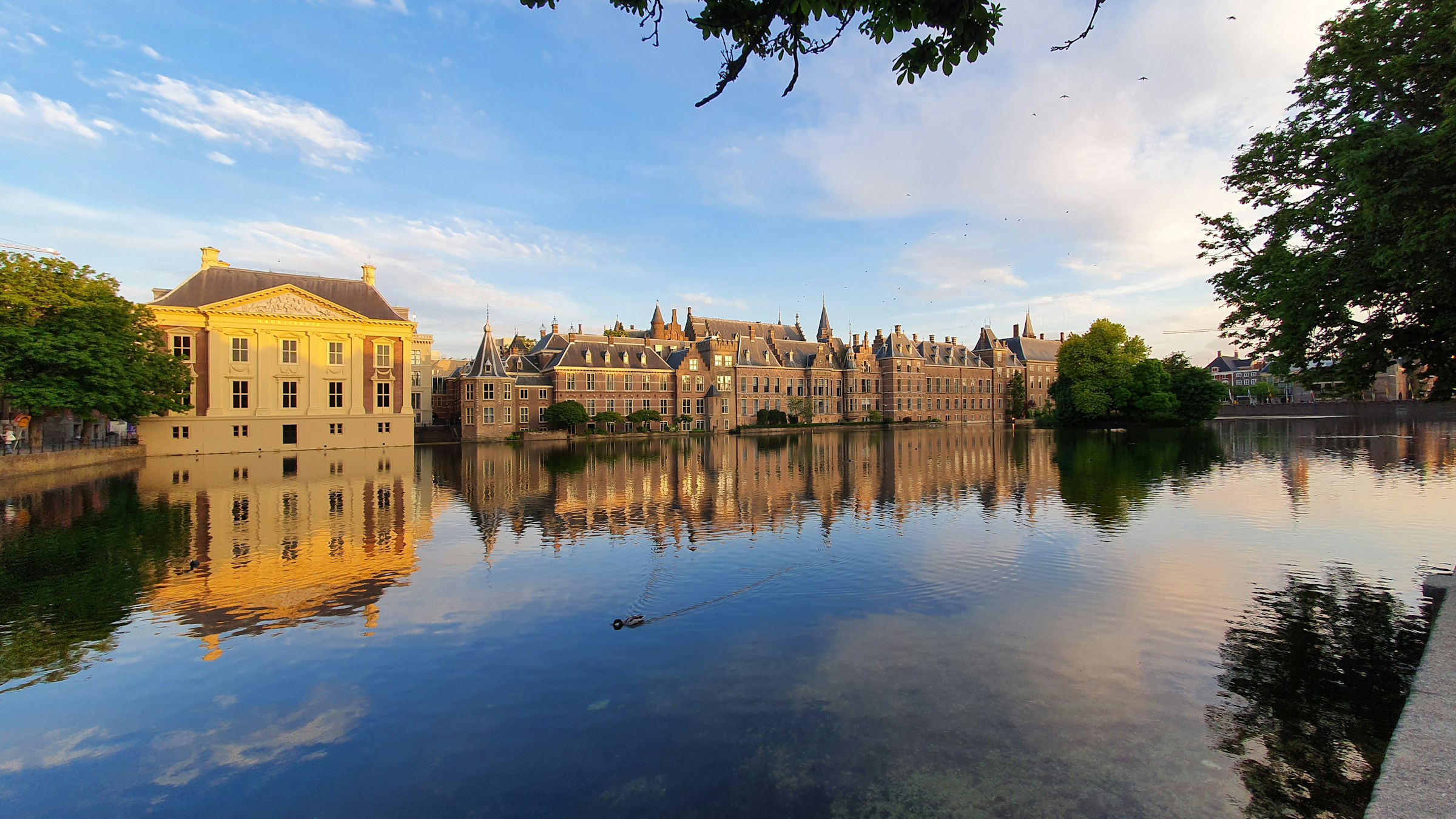
From the orderly streets of The Hague to the historic charm of Tallinn and Ljubljana, Numbeo’s latest figures offer a fresh look at where Europeans feel safest.
Imagine walking home after dinner without constantly looking over your shoulder, taking an evening stroll through a city centre that still feels welcoming after dark, or letting children explore their neighbourhood with a little more freedom.
Safety is difficult to measure in a single number, but it remains one of the qualities that can transform a place from somewhere people visit into somewhere they want to call home.
And according to Numbeo’s 2026 Safety Index, some of Europe’s most reassuring urban environments can be found in an unexpected combination of places: the Netherlands is out in front, while cities across Central and Eastern Europe are also making a strong impression.
The Hague takes the lead with a Safety Index of approximately 80, followed by Eindhoven at 79.1 and Utrecht at 79.0. Munich and Trondheim are close behind, with scores of around 78.9.
The pattern is striking: three Dutch cities occupy the top positions, suggesting that the country’s reputation for well-organised urban living extends beyond its famous cycling lanes and carefully planned neighbourhoods.
But the wider European picture is just as interesting. Cities including Tartu and Tallinn in Estonia, Zagreb in Croatia, Ljubljana in Slovenia and Cluj-Napoca in Romania also record high safety scores.
Together, they challenge the assumption that the most attractive places to live in Europe are necessarily its largest capitals or most famous tourist destinations.
Why the Netherlands Keeps Appearing at the Top
There is no single formula for a safe city. Yet the Netherlands offers a compelling combination of urban planning, accessible public spaces and neighbourhoods designed for everyday life.
In Dutch cities, cycling and walking are part of the ordinary rhythm of getting around, rather than activities reserved for leisure.
Residential areas, shops, schools and transport links often sit within relatively compact urban networks. Streets are frequently designed to accommodate people as well as vehicles, while public spaces remain an integral part of daily life.
These characteristics do not automatically produce low crime rates, and Numbeo’s index cannot establish that urban design alone explains the Dutch cities’ high positions. Still, they help illustrate why a city’s sense of safety is about more than policing.
The way people move through their surroundings, use public spaces and interact with their neighbours can shape how comfortable they feel in the places where they live.
The Hague, the Netherlands’ seat of government, combines international institutions and diplomatic life with residential districts, parks and easy access to the North Sea.
Eindhoven, known for its technology and design industries, has a different identity, shaped by innovation and a growing international community.
Utrecht, with its canals, historic centre and university population, offers a more intimate atmosphere despite being one of the country’s major urban hubs.
Three cities, three distinct personalities – but all feature near the top of the same safety ranking.
Central and Eastern Europe’s Quiet Rise
The Dutch cities may lead the list, but the presence of Central and Eastern European destinations adds another dimension to the story.
Tallinn, Estonia’s capital, combines a remarkably preserved medieval Old Town with a modern, digitally oriented society. Its compact centre makes it easy to explore on foot, while the city’s contemporary districts reflect Estonia’s transformation into one of Europe’s most technologically connected countries.
Further south, Ljubljana offers a different kind of appeal. Slovenia’s capital is known for its riverside cafés, green public spaces and pedestrian-friendly centre.
Its relatively relaxed pace gives it a small-city atmosphere without sacrificing the cultural life and services expected of a European capital.
Zagreb, Croatia’s capital, blends Austro-Hungarian architecture, lively squares and a strong café culture.
Meanwhile, Cluj-Napoca has developed into one of Romania’s prominent university and technology centres, attracting students, entrepreneurs and international businesses.
Estonia, Croatia, Slovenia and Romania have different histories, economies and urban challenges.
What their cities have in common in this ranking is that residents and visitors report a comparatively strong sense of safety – a result that deserves attention beyond the usual focus on Western Europe’s best-known destinations.
Their inclusion also serves as an example that a city’s international reputation can lag behind the experience of living there.
Places that receive less attention in global travel coverage may still offer appealing combinations of culture, public life and perceived security.
What Does “Safe” Actually Mean?
There is an important caveat behind these figures. Numbeo is an international online database that collects user-contributed information about crime and safety.
Its index draws on perceptions of crime, feelings of safety during the day and at night, and concerns about issues such as theft, assault and harassment. The responses are converted into a scale that allows cities to be compared.
That makes the index useful for understanding how people feel about safety in their surroundings. But it is not the same as a ranking based exclusively on police-recorded crime, and it should not be read as a definitive measure of the actual risk faced by every resident or visitor.
Perceptions can be influenced by many factors, including personal experience, media coverage, neighbourhood differences and willingness to report crime.
Official statistics also have limitations: countries may define offences differently, record them in different ways and have different rates of reporting.
Nor is a city’s position fixed. Numbeo updates its data, and scores can change as new responses are collected.
Small differences between cities – such as scores separated by a few tenths of a point – should not be interpreted as proof that one is meaningfully safer than another.
For anyone considering a move, the most useful approach is to combine broad comparisons with local information: neighbourhood-level crime data, transport options, street lighting, access to public services and the practical experience of people who live there.
Beyond the Numbers
Safety rarely comes down to a single statistic. It is also found in the everyday details that make urban life feel manageable: a well-used public square, a reliable journey home, streets that remain active after work, and neighbourhoods where people feel comfortable spending time outdoors.
The 2026 Numbeo figures put the Netherlands firmly in the spotlight, while also drawing attention to cities across Central and Eastern Europe that deserve a closer look.
The Hague, Eindhoven and Utrecht lead the way in the current table, but Tallinn, Ljubljana, Zagreb and Cluj-Napoca show that the story is not confined to one country or one part of the continent.
For travellers, the rankings offer a starting point for discovering destinations beyond Europe’s familiar hotspots.
For people thinking about relocation, they provide a prompt to look more closely at everyday quality of life – not just salaries, housing prices or cultural attractions.
Ultimately, the most valuable city ranking is not the one that declares a universal winner. It is the one that helps people ask better questions about the places where they might live, work, raise a family or simply feel at home.
Sources:
- Numbeo – Europe Crime Index 2026: The underlying European city table, including Safety Index scores for The Hague, Eindhoven, Utrecht, Munich, Trondheim and the Central and Eastern European cities mentioned above. numbeo.com
- Numbeo – Understanding Crime Indexes: Explains how the index is compiled, what its questions measure and why it differs from official crime statistics. numbeo.com
- Numbeo – Methodology and Motivation: Further information about data collection, filtering and crowdsourced contributions. numbeo.com


