In 1964, a world-famous actress fled the paparazzi and found a village with no electricity. Her escape changed the future of a small peninsula on the coast of Rio de Janeiro.
When visitors arrive in Búzios today, one of the first sights they meet is a bronze statue of a woman sitting on a suitcase and gazing out to sea.
She is Brigitte Bardot, and the promenade around her carries her name. The town she once hid in has become one of Brazil’s most glamorous beach resorts. A little over sixty years ago, it was a quiet fishing village at the end of a road.
Before the Star
Armação dos Búzios was never completely untouched by history. In the 16th century, the area was home to the Tupinambá people.
In the following century, French pirates and smugglers traded with them, interested in Brazilian wood and in selling enslaved Africans, until the Portuguese expelled the French.
In the 18th century, the gold trade through Rio de Janeiro brought ships to the coast, and whale hunting took hold.
The town’s name comes from the process of separating whale meat from the bones, and the beach known as Ossos, or “bones,” was named for the whale remains found there.
After the slave trade was abolished around 1850, Búzios settled into a life of farming and fishing.
By the early twentieth century, Rio’s high society had started to escape to the peninsula for peace and quiet. Even so, it remained a remote village that few outsiders had heard of.
January 1964
Then came Bardot. In January 1964, she was at the height of her fame and exhausted by the constant attention of the press.
She flew to Rio de Janeiro with her Brazilian boyfriend, Bob Zagury, but the pair were mobbed on arrival.
According to one account, they plotted an escape, sailed up the coast incognito on a yacht, and arrived in an isolated fishing village.
She stayed on Manguinhos beach in a house described as humble compared with other residences. The village at that time had no electricity and life was quite bucolic.
Brazilian press accounts say she stayed about four months, from January to April 1964, though some accounts say three.
The Secret Gets Out
The anonymity did not last. Photographs of Bardot on the beaches of Búzios soon appeared in magazines around the world, and the village became known as her secret hideaway.
She returned for a second, shorter stay from December 1964 to January 1965, but this time the press followed her and made the visit unpleasant. According to Brazilian media, she left after the New Year and never came back.
Her departure was not the end of the story. Pousadas began to appear, foreign journalists returned, and the old village entered the international tourist circuit.
Stars such as Mick Jagger and Madonna followed in her path, though none, according to one account, left as strong an impression as she did. The place she stayed in the first time is now a small hotel.
Argentinians, in particular, began flocking to the resort from the 1960s, drawn by the news of Bardot’s tropical paradise. By one count, they made up 67% of foreign visitors in 2013.
A Legend in Bronze
In 1999, the city inaugurated the Orla Bardot waterfront, where it placed a bronze sculpture of the actress by the artist Christina Motta.
The municipality also made her an honorary citizen, and reportedly gave her a plot of land on João Fernandes beach. She never returned to claim the honor.
In November 2014, Bardot wrote a letter to the city that Búzios later made public, in which she recalled her stay as one of the happiest periods of her life.
Yet she had mixed feelings. Over the years, she reportedly lamented the transformation of the resort she had helped create.
Bardot died on December 28, 2025. The municipality’s tribute on social media thanked her, according to Brazilian press reports, as a “force of nature in the form of a woman.”
Búzios Today
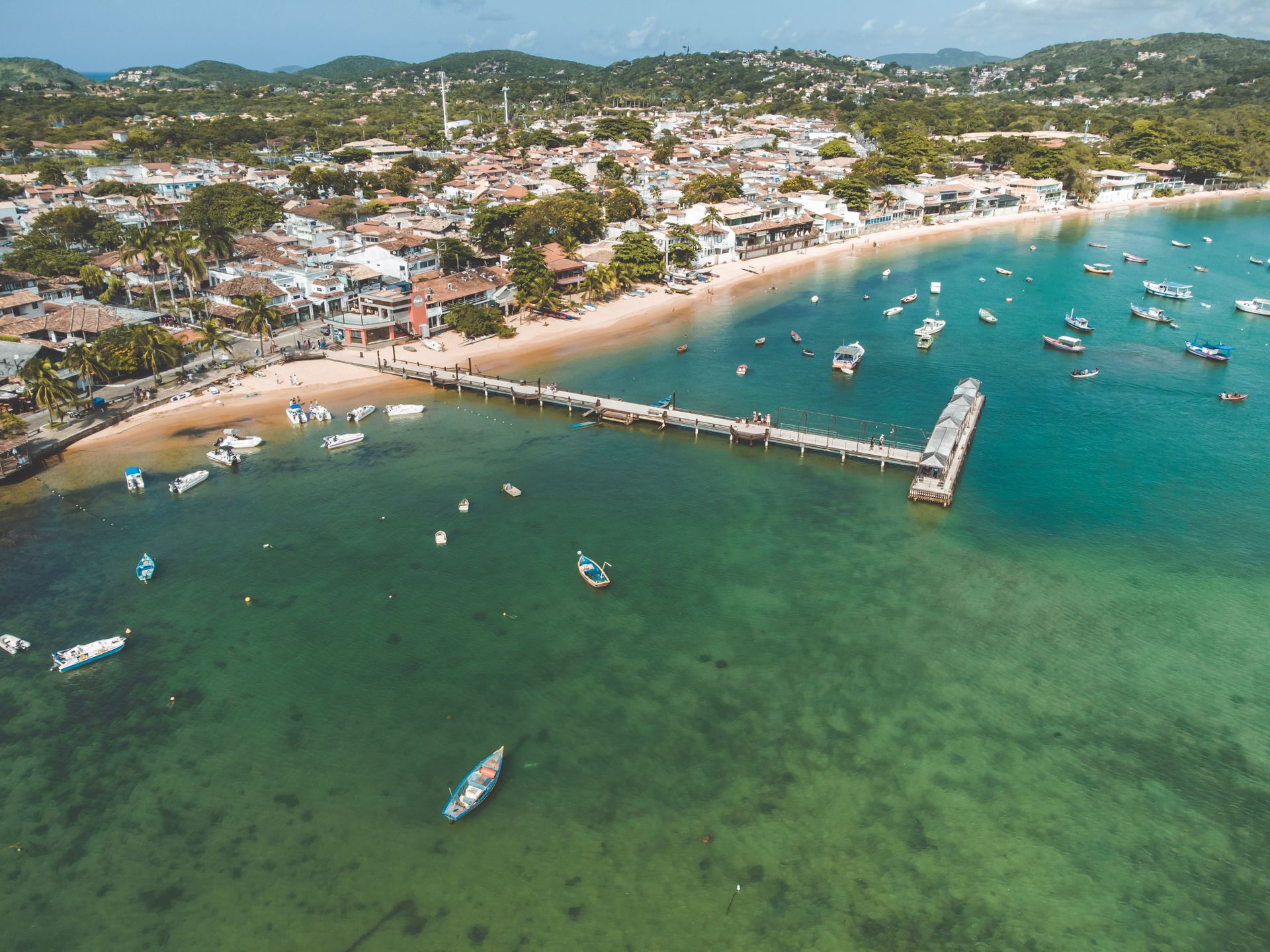
The modern town is a long way from its fishing-village days, but it still tries to hold on to its scale. The peninsula’s 23 beaches range from calm, clear waters on the west coast to wilder surf on the east.
Rua das Pedras, the cobblestone main street, is a 600-meter pedestrian zone lined with shops, cafés, bars and restaurants. Boat tours depart from the waterfront, and the harbor is full of yachts and sailboats.
The town has about 40,000 residents, according to the national statistics institute, and urban rules limit the height of buildings to two stories to protect the skyline.
This is what gives Búzios its low-rise, small-town feel, a sharp contrast with the big-city energy of Rio or São Paulo.
It is also the reason many visitors come: a stylish seaside escape within reach of Rio, about three hours by road. The tourist season runs from December to March, with quieter shoulder months between.
The Question of What’s Next
The challenge for Búzios is the one Bardot reportedly worried about: how to grow without losing the thing that made it famous.
In July 2025, Brazilian media reported on a planned billion-real luxury development inspired by the French Riviera.
In late 2025, the town’s council also considered a sustainable tourism fee for visitors and vehicles, but the proposal was later withdrawn after pressure from residents and business owners.
Búzios was never really “discovered” by Bardot. Rio’s elite had been coming for decades, and the village had its own long, complicated history.
What she did was make it visible to the world. The paradox of her legacy is that the quiet she came looking for helped create the crowds that followed.
Sources:
- Wikipedia, “Armação dos Búzios” (history, geography, beaches, Rua das Pedras, Bardot): en.wikipedia.org/wiki/Arma%C3%A7%C3%A3o_dos_B%C3%BAzios
- Culture Trip, “A Cultural Guide to Búzios: The Brazilian Saint Tropez”: theculturetrip.com/south-america/brazil/articles/a-cultural-guide-to-b-zios-the-brazilian-saint-tropez
- Latin America for Less, “Sand, surf, and sun in Búzios, Brazil”: latinamericaforless.com/blog/?p=2242
- This Island Life, on Búzios and Bardot: thisislandlife.com/?p=1667
- Estadão Conteúdo via Tribuna de Minas, “Relembre como Brigitte Bardot parou o Rio de Janeiro em 1964 e transformou a vida em Búzios” (Dec 29, 2025): tribunademinas.com.br/?p=804606
- Istoé, “Por que Brigitte Bardot tem estátua e orla com seu nome em Búzios”: istoe.com.br/brigitte-bardot-buzios-entenda
- BandNews FM, “Como Brigitte Bardot colocou Búzios (RJ) no circuito turístico” (Dec 28, 2025): band.com.br/bandnews-fm/noticias/como-brigitte-bardot-colocou-buzios-rj-no-circuito-turistico-202512281054
- iBahia / A Tarde, “Brigitte Bardot tinha forte ligação com esporte brasileiro”: atarde.com.br/cineinsite/brigitte-bardot-tinha-forte-ligacao-com-esporte-brasileiro-1374006
- CNN Brasil, “Brigitte Bardot morre aos 91 anos: relembre relação da atriz com o Brasil”: cnnbrasil.com.br/pop/brigitte-bardot-morre-aos-91-anos-relembre-relacao-da-atriz-com-o-brasil/
- CNN Brasil, “Brigitte Bardot: a francesa que deu visibilidade para Búzios”: cnnbrasil.com.br/nacional/sudeste/rj/brigitte-bardot-a-francesa-que-deu-visibilidade-para-buzios/
- Tribuna de Jundiaí, “Brigitte Bardot morre aos 91 anos: legado no Brasil”: tribunadejundiai.com.br/mais/minuto-de-silencio/brigitte-bardot-morre-aos-91-anos-legado-no-brasil/
- Jovem Pan, “Brigitte Bardot buscou refúgio no Brasil e transformou Búzios em destino internacional”: jovempan.com.br/?p=7515
- SESC São Paulo, “Glamourosa e internacional” (2015, tourism data and Argentine visitors): portal.sescsp.org.br/online/artigo/compartilhar/9043_GLAMOUROSA+E+INTERNACIONAL
- Tupi FM, on Búzios, Orla Bardot and Rua das Pedras: tupi.fm/?p=2430606
- Correio Braziliense, “Búzios: charme internacional, praias icônicas” (Jan 2026): correiobraziliense.com.br/webstories/flipar/2026/01/7334198-buzios-charme-internacional-praias-iconicas-e-paisagens-que-encantam-o-ano-todo.html
- Times Brasil, “Inspirado na Riviera Francesa, Projeto Aretê recebe R$ 1 bi” (July 2025): timesbrasil.com.br/brasil/inspirado-na-riviera-francesa-projeto-arete-recebe-r-1-bi-de-investimento-e-impulsiona-turismo-de-alto-padrao-em-buzios/
- Tribuna de Minas, “Búzios pode passar a cobrar taxa de turistas no verão” (Nov 4, 2025): tribunademinas.com.br/?p=793238
- Mercado & Eventos, “Búzios desiste de criar taxa de turismo”: mercadoeeventos.com.br/?p=666083


