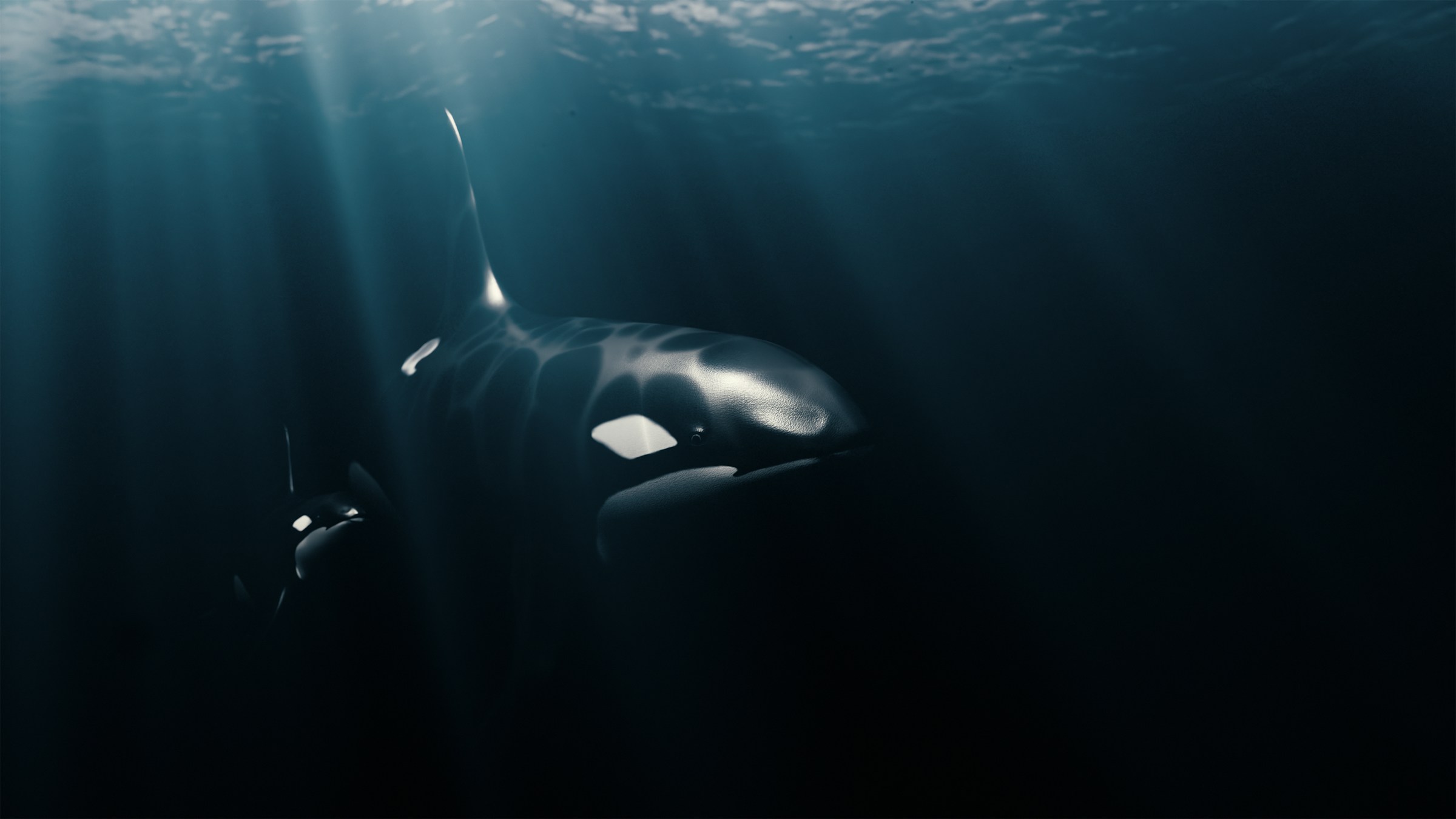
From Arctic Norwegian fjords to the Strait of Gibraltar, Europe’s killer whales live very different lives. Where you go – and when – decides what you will see.
On a November afternoon in northern Norway, the water of a fjord turns silver. Millions of herring have packed into the cold, deep water, and suddenly the surface erupts: tail slaps, bursts of bubbles, tall black fins weaving through the shoal.
Overhead, in the short Arctic day, the sky shifts from pink to blue; by nightfall, the northern lights may be out. It is one of the most dramatic wildlife shows in Europe. And it is only one of the ways European orcas live.
One Species, Several Worlds
Orcas – killer whales – are the largest members of the dolphin family, but around Europe they split into populations with very different diets, habits and futures.
Norway and Iceland are the domain of the herring-eaters, which shadow the fish through their yearly migrations. Researcher Robert de Latour estimated the Norwegian population at about 1,500, roughly double what it was two decades ago – a single estimate rather than an official census. In Iceland, researchers have photographed and identified more than 400 individual whales.
Scotland has a different cast. Around the Northern Isles of Shetland and Orkney, orcas hunt seals, while the West Coast Community – Britain’s only resident group – is close to disappearing: of the eight individuals once identified, only two males, John Coe and Aquarius, are thought to remain, according to the RSPB.
The most fragile group of all lives off the Iberian Peninsula. Classified as critically endangered by the IUCN, the Iberian orcas numbered just 39 in a 2011 census; today’s estimates range from about 30 to 50 animals, all of them dependent on Atlantic bluefin tuna.
Giants With a Family Tree
Orcas are big. Males reach about nine metres in length and females up to eight, with adults weighing between 4.5 and nearly seven tonnes, according to Norway’s Institute of Marine Research. A newborn calf is already around 2.4 metres long. In the wild, males typically live 30 to 40 years; females average about 50 and can reach 80 or more.
Their society is built around females. Each family group is led by the eldest female – the matriarch – and can span four generations: her sons and daughters, their children, and their children’s children. And the young are not born knowing how to hunt herring or where to find food. They learn it from their families.
The Herring Carousel
Feeding techniques are passed down the same way. The herring-eaters of Norway use a method called carousel feeding: several whales swim in a circle around a school of herring, using powerful tail blows and curtains of air bubbles to drive the fish into a tight, silvery ball, then take turns diving through the carousel to feed. In Norway this happens in winter, when the herring move into the cold, deep fjords to overwinter.
Scotland’s orcas chase something else. They come inshore in late spring and summer to hunt seals – conveniently, around the time the seals give birth to their pups.
Norway: The Surest Bet in Europe
For most travellers, northern Norway is the best bet. From around mid-October to late January, orcas and humpback whales follow the herring into the fjords near Skjervøy, about 250 km north of Tromsø, with the peak from November to January.
One thing to understand: the whales go where the herring go. The fish used to winter off Lofoten; around 2014 they shifted to Andfjord, and since about 2018 the centre of the action has been Kvænangen fjord, above Tromsø.
Over the past 20 years, the herring have moved some 300 kilometres north. Today the Skjervøy-Alta area is the main hub, and the most-cited base is Skjervøy itself – a few hours from Tromsø by road or fast boat, with day trips also running from Tromsø.
Sightings are never guaranteed, because the orcas follow the herring. But the odds are good: one operator, Brim Explorer, reported 96 sightings between 23 October 2025 and 15 January 2026, with nine to 14 boats out at the same time. A full-day safari costs roughly 1,690 to 1,990 Norwegian kroner (about €150 to €175) in the 2026-27 season. The season overlaps with the Arctic night, so many travellers combine the trip with the northern lights.
One ethical caveat. Some operators in Skjervøy offer snorkelling with wild orcas, but the practice remains controversial. A 2025 study found that the area had no specific regulations prohibiting the activity, no dedicated licensing system and no limit on the number of boats involved. Researchers also documented crowding and potentially risky situations at sea.
Norway introduced rules for whale-watching activities in 2019, including minimum distances of 370 metres from boats and fishing gear and 740 metres for swimming and diving. However, the 2025 study raised questions about whether the existing framework provides adequate protection for the whales themselves.
If you choose an operator, look beyond the promise of an in-water encounter. Ask about group sizes, approach distances and rules for avoiding pursuit or disturbance. Responsible operators should be willing to end an encounter when the animals show signs of stress. Seeing orcas in the wild is extraordinary; respecting their space should come first.
Iceland: Following the Same Fish
Iceland tells a similar story, a stage west. The orcas there follow herring too, and the best-known spot is the Snæfellsnes Peninsula in the west, around Grundarfjörður.
Sightings are most common from February to May, with winter activity in Breiðafjörður Bay. The local operator Láki Tours sails from Grundarfjörður from December to March and from Ólafsvík from April to October.
The herring’s own pattern has shifted over the years – the fish moved from one fjord to the next, and the orcas followed, though they still frequent the coast. In summer, the action shifts to the Westman Islands (Vestmannaeyjar) in the south, a herring spawning ground.
Scotland: Watching from the Cliffs
Scotland offers something different: you often don’t need a boat at all. In Shetland, orcas come inshore to hunt seals between May and August; in Orkney, the best window runs from May to September. Both islands can be watched from land, along the cliffs, and the local sightings groups on Facebook are the best source of real-time reports.
Look for areas with plenty of seals and pups – that’s where the orcas will be. But don’t expect a guarantee: it takes patience and luck, and an encounter with the West Coast Community is extremely rare.
The Strait of Gibraltar: A Fragile Summer Audience
In southern Spain, tours depart from Tarifa in search of orcas that follow Atlantic bluefin tuna through the Strait of Gibraltar. The main viewing season varies from year to year, with operators often advertising trips from July to September.
Sightings are never guaranteed, however, as the whales move with their prey and seasonal conditions. The Cruising Association notes that orcas are typically present around the Strait from April to early July before moving west and north.
There are two reasons to approach encounters in this region with particular care. First, the Strait of Gibraltar population is exceptionally small and is considered one of Europe’s most endangered orca populations, with only a few dozen animals.
Second, since 2020, some orcas in the region have been involved in repeated interactions with sailing vessels, sometimes striking boats and damaging rudders. Several yachts have subsequently sunk.
These incidents have primarily involved sailing vessels rather than organised whale-watching tours. Scientists have proposed several explanations for the behaviour, but no single theory has been universally accepted.
If you book an excursion, choose an operator that follows the applicable local guidelines and keeps a respectful distance from the animals.
Year-Round Calendar: The Season at a Glance
- Northern Norway (Skjervøy, Tromsø, Kvænangen): mid-October to late January, peak November to January. The most reliable option in Europe – though never guaranteed.
- Iceland (Snæfellsnes): roughly February to May, with winter activity in Breiðafjörður.
- Scotland (Shetland, Orkney, Caithness): May to August or September, often watched from shore.
- Strait of Gibraltar (Tarifa): summer, with variable timing. A critically endangered group – watch with care.
How to Watch Well
Orcas are wild animals following their food, and the best encounters are the ones where they set the terms. Stay out of their way, keep your distance, and pick operators who put both in writing. In a place like northern Norway, where regulation is thin, the choice you make as a traveller matters more than you think.
Sources:
- Norwegian Institute of Marine Research, “Killer whale”: hi.no/en/hi/temasider/species/killer-whale
- Divers Alert Network, “Orcas in Norway” (Alert Diver): dan.org/alert-diver/article/orcas-in-norway/
- AFP, “Climate change pushing killer whales to migrate north; population thriving around Norway’s coast”: sharesansar.com/newsdetail/climate-change-pushing-killer-whales-to-migrate-north-population-thriving-around-norways-coast
- Visit Northern Norway, “A Winter Journey to the Whales off Tromsø”: nordnorge.com/en/artikkel/a-winter-journey-to-the-whales-off-tromso/
- Orca (UK), “A year of whale watching along the Norwegian coast”: orca.org.uk/news-blog/a-year-of-whale-watching-along-the-norwegian-coast
- Pixidia, “Where to see orcas in Norway” (2026-27 season): pixidia.com/?p=75691
- Louda vým krokem, “Whale Watching in Tromsø, Norway”: loudavymkrokem.cz/en/whale-watching-tromso-norway/
- Sage Journals, “Snorkelling with orcas (killer whales) in Skjervøy, Northern Norway: Ambivalent encounters in a crowded tourism space”: https://journals.sagepub.com/doi/10.1177/25148486251319672
- IWC Whale Watching Handbook, “Norway”: wwhandbook.iwc.int/en/country-profiles/norway
- Perlan, “Orcas in Iceland”: perlan.is/articles/orcas-in-iceland
- Orcazine, “Orcas in Iceland”: orcazine.com/?p=2353
- Marine and Freshwater Research Institute (Iceland), killer whale report: hafogvatn.is/static/research/files/hv2017-005.pdf
- Icelandic Orcas project: icelandic-orcas.com/outreach
- The Scotsman, “The best places to see whales in Scotland”: scotsman.com/arts-and-culture/the-best-places-to-see-whales-in-scotland-336319
- Thoroughly Travel, “Where and when to see orca in Orkney”: thoroughlytravel.com/europe/where-to-see-orca-in-orkney-whale-watching/
- RSPB, “The West Coast Community”: members.rspb.org.uk/?p=83878
- Wikipedia, “Iberian orca attacks”: en.wikipedia.org/wiki/Iberian_orca_attacks
- Mongabay, “Iberian orcas sink sailboat in latest ramming game in Portugal”: news.mongabay.com/short-article/2025/09/iberian-orcas-sink-sailboat-in-latest-ramming-game-in-portugal/
- Royal Society of Biology, “Orcas and boat attacks”: biologist.rsb.org.uk/orca_intent.html
- Cruising Association via Sail-World, “CA urges vigilance for orca encounters”: sail-world.com/news/272787/CA-urges-vigilance-for-orca-encounters
- WhenToBeWhere, “Whale watching Tarifa”: whentobewhere.com/travel-listing/whale-watching-tarifa


