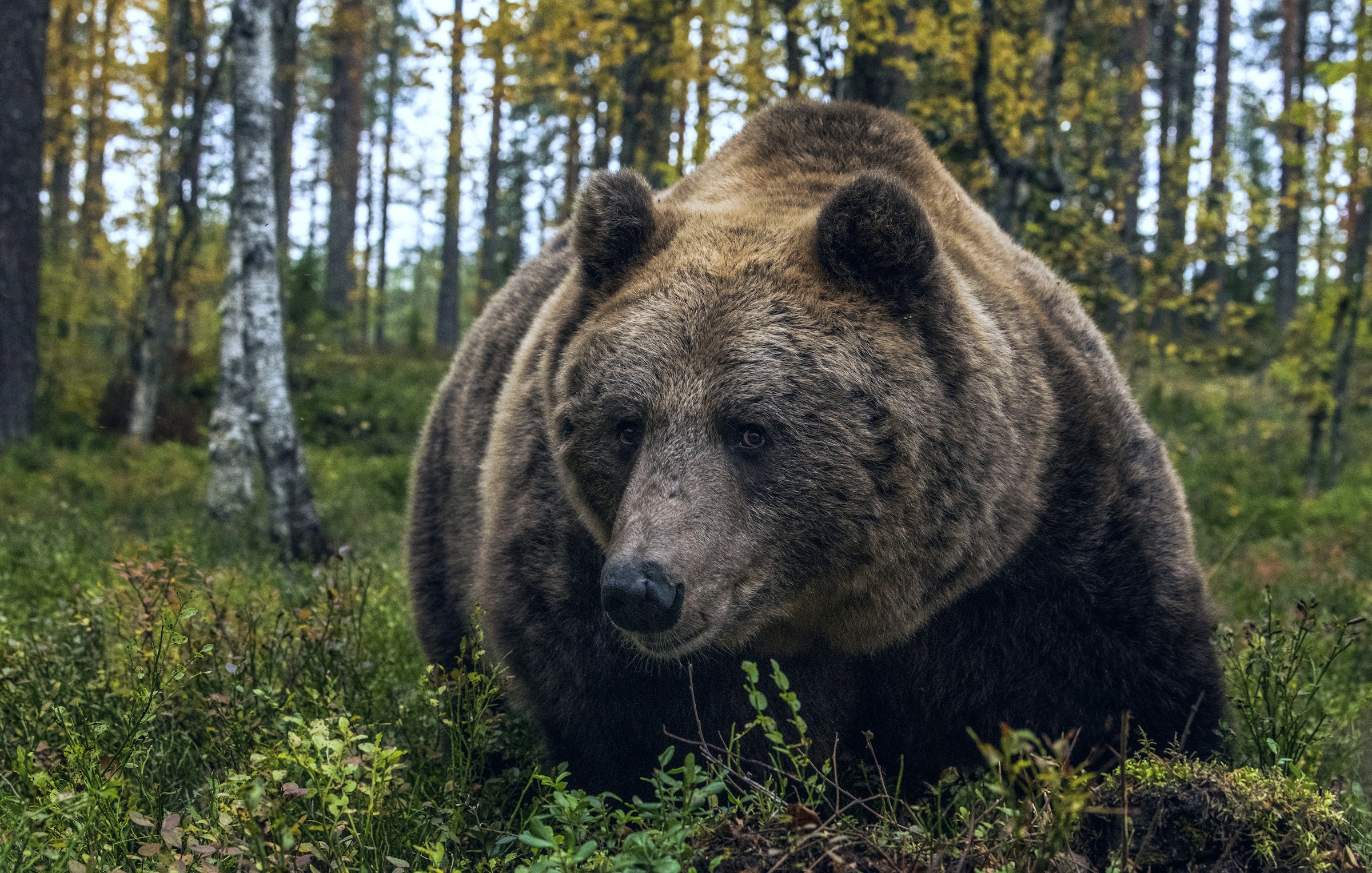
Australia has its sharks and crocodiles. America has its grizzlies and mountain lions. Europe has always seemed like the safe option.
A Saturday Afternoon in the Mountains Above Sofia, Bulgaria
On Saturday 16 May 2026, the body of a man in his thirties was discovered in the Vitosha Nature Park, near a road connecting two chalets in the northwestern part of the mountainous area rising to 2,295 metres above sea level – roughly 30 minutes by road from the bustling city centre of the Bulgarian capital, Sofia.
The victim was found in outdoor gear with severe injuries including significant facial trauma. Witnesses reported he had attempted to defend himself using a stick. Emergency services were alerted via a 112 call, prompting the arrival of an ambulance and police officers.
“The findings of the medical examiner and a wildlife expert show that marks found on the body are those of a female bear accompanied by her cub,” a Sofia police spokesperson told AFP.
It is very important to note: this was not a remote wilderness. Vitosha is one of the most visited hiking destinations in Bulgaria – a mountain that half of Sofia can see from its windows, a place of Sunday walks, family picnics, and popular trails.
Deadly encounters with brown bears are relatively rare in Bulgaria, unlike in neighbouring Romania to the north. Estimates suggest there are between 300 and 500 brown bears in Bulgaria, though precise figures are unavailable. Some experts even believe the number could be significantly higher.
The incident in the Vitosha Mountains is also unusual because bears in Bulgaria are more commonly found in other mountain regions. This was the first fatal wild animal attack in Bulgaria since 2010.
Why a Mother Bear Is the Most Dangerous Animal in Europe
Wildlife experts are consistent and unanimous on the mechanism behind the Vitosha attack – and behind the majority of fatal bear encounters in Europe. The brown bear, in almost all circumstances, avoids humans.
It hears them coming, registers them as a threat, and retreats. The animal that kills is not the bear acting as a predator. It is the bear acting as a mother.
Almost half of all bear attacks happen when humans encounter a female with cubs. In that scenario, the calculus changes entirely. Every instinct the animal possesses focuses on a single priority: eliminate the threat to her offspring.
The distance involved matters enormously – a bear that has 200 metres of space will retreat. A bear that is surprised at 20 metres with cubs beside her has no retreat option she is willing to take.
The hiker on Vitosha that Saturday – equipped, experienced enough to be in the mountains, carrying a stick – encountered exactly this combination: a female with a cub, at close range, without warning.
One wildlife specialist summarised the situation: “In areas where humans and bears overlap, prevention through behaviour and management is the only reliable way to reduce risk.”
The European Map of Bear Danger
The Vitosha incident shocked Bulgaria. But set against the broader European picture, it represents the extreme end of a spectrum – and in some countries, that spectrum has been moving sharply in the wrong direction for years.
Romania: The Exception That Proves Nothing Is Safe
If the rest of Europe experiences bear fatalities as isolated, shocking anomalies, Romania experiences them as a persistent and worsening public safety crisis.
Romania is home to over 8,000 brown bears – around 40% of Europe’s total bear population, and double the optimal population of 4,000 that the country’s natural habitat can sustain without conflict with human populations.
The consequences are documented and grim. Romania has recorded the deaths of at least 27 people over the last two decades. According to the New York Times, there were 264 bear attacks in Romania between 2016 and 2025.
The most emblematic recent case came in June 2024. A 19-year-old hiker identified as Maria Dana was chased, attacked, and killed by a brown bear on the Jepii Mici trail in the Bucegi Mountains, in front of her boyfriend.
She called emergency services to ask for help as she was being chased. After catching up with her, the bear grabbed her by the leg, dragged her to the edge of the trail, and dropped her off a 400-foot cliff.
The incident prompted the Romanian prime minister to call lawmakers back for an emergency Parliament session during the summer recess, and Romania doubled its annual bear cull quota to 481 animals.
The move sparked immediate controversy with the European Commission over the protected status of brown bears under EU law – a tension that has not been resolved.
The danger is not confined to remote hiking trails. A motorcyclist was killed on Romania’s famous Transfăgărășan mountain road after getting off his bike to feed and photograph a bear at close range.
Bears have been reported entering towns in the Carpathian region with increasing frequency, drawn by unsecured waste and the gradual erosion of the buffer between human settlements and bear habitat.
Slovakia: When the Bear Comes to Town
Slovakia’s experience represents a different kind of crisis – one where the boundary between wilderness and urban space has collapsed almost entirely.
Bear attacks in Slovakia rose to 20 incidents in 2023, up from just eight in 2021. In March 2024, the country experienced two bear fatalities and a town under siege within the space of a single week.
A 31-year-old woman from Belarus died after being chased by a bear through the Low Tatras mountain range. Walking with a companion, the pair encountered a bear and ran in opposite directions.
The bear pursued the woman until she disappeared from her companion’s view. Rescue crews found her body beneath a ravine – she had fallen to her death while being chased.
One day later, a bear ran amok through the streets of Liptovský Mikuláš, a small town near the Low Tatra Mountains, attacking five people including a ten-year-old girl, and sending residents fleeing over fences and into buildings.
The country declared a state of emergency and introduced draft legislation creating a 500-metre safety zone around towns and villages, within which any bear could be shot by hunters, police officers, or park administrators.
Wildlife researchers estimate the brown bear population in Slovakia at around 1,250 and growing – making the concentration of Slovakian bears second only to Romania in Europe.
Italy: The Return of Something Lost
In Western and Central Europe, bear fatalities have been almost nonexistent for generations – because bears themselves were almost nonexistent. The story of the Italian Alps illustrates both the success and the unexpected consequences of conservation.
In April 2023, 26-year-old Andrea Papi was found dead after going for a run in the mountainous region of Trentino-Alto Adige. He had suffered deep wounds to the neck, arms, and chest. It was the first fatal bear attack in Italy in over 150 years.
The bears of Trentino had been reintroduced in the late 1990s under an EU-funded programme called Life Ursus, designed to restore a population that had been hunted to near-extinction. The programme succeeded. The bears returned, multiplied, and eventually produced the conditions for a tragedy that had not occurred in the region within living memory.
The bear responsible, known as JJ4, had already attacked a father and son hiking on Mount Peller in 2020. Italian authorities had requested her removal after that attack, but a court ruling overturned the decision.
After Papi’s death, local authorities issued a kill order, but animal rights activists again successfully challenged it in court. The animal was instead captured and placed in an enclosure.
Where the Bears Are Plentiful and the Deaths Are Almost Zero
The European bear map is not uniformly dangerous. Some of the most bear-dense countries on the continent have almost no record of fatal human encounters, and the reasons are instructive.
Sweden has approximately 3,000 brown bears; Finland around 2,000. The number of bears is rising across Europe, from around 84,000 in 2013 to 96,000 in 2022. Yet in Scandinavia, fatal attacks remain a statistical near-impossibility.
The difference is geography: vast, genuinely uninhabited forests that give bears enormous territories where they rarely encounter humans. When incidents do occur, they typically involve hunters who have wounded an animal.
Slovenia – a small country with one of the highest bear densities in Europe, with over 1,000 animals in a relatively compact territory – has built a model of coexistence through strict waste management around settlements, livestock protection programmes, and decades of cultural familiarity with the animals. The bears are present. The deaths are not.
The lesson is not that bears are uniformly dangerous. It is that the conditions for danger are specific: dense populations of bears overlapping with dense populations of humans, inadequate waste management that draws animals into contact with people, and the particular, explosive danger of the surprise encounter at close range.
North of Everything: The White Bear
At the far northern edge of the European continent, the equation changes entirely. On the Norwegian archipelago of Svalbard, above the 74th parallel, the animal that comes to mind is not the brown bear but its larger, more purely predatory cousin.
The polar bear of Svalbard does not avoid humans. It is not startled by them. It actively hunts large mammals – and in an Arctic environment with limited prey, a human being represents a potential food source in a way that a European brown bear never would.
All visitors to the Svalbard wilderness are required by law to carry firearms and to know how to use them. The bear is not a background risk to be managed with noise and awareness. It is a foreground predator to be actively monitored at all times.
Polar bear attacks on humans are rare in absolute numbers – but in Svalbard’s case, the rarity is partly a function of the extremely limited human presence in the wilderness and the strict protocols that govern it. Remove those protocols, and the risk calculus would be very different.
What to Do If You Meet a Bear in Europe
The Vitosha incident has prompted renewed guidance from wildlife specialists across the continent. The rules are consistent and, when followed, dramatically reduce risk.
Make noise. In forested or dense terrain, especially at low visibility hours, dawn and dusk, talk loudly, clap occasionally, step heavily. The bear will hear you and leave. This single habit eliminates the vast majority of dangerous encounters before they begin.
One wildlife specialist explained that visitors should avoid walking alone, move in groups, and make noise to reduce the likelihood of surprising wild animals, and called for a comprehensive risk assessment of tourist routes and surrounding areas.
Do not leave food waste. Litter and unsecured food around mountain huts and hiking routes is the primary driver of bears losing their instinctive wariness of humans. A bear that associates human settlements with food is a fundamentally more dangerous animal than one that avoids them.
If you see a bear in the distance, do not run. Back away slowly, facing the animal, speaking in a calm, firm voice. Running activates pursuit instinct. A slow retreat gives the animal the space it needs to choose withdrawal.
If a bear charges, the evidence on fighting back versus playing dead is nuanced, and depends on whether the attack is predatory or defensive.
In the European context, virtually all attacks are defensive, meaning the bear is responding to perceived threat. In a defensive attack, playing dead – lying face down, hands protecting the neck, remaining still – signals that the threat has been neutralised.
In the rare case of a predatory attack, fighting back with everything available is the recommended response.
Carry a stick. It will not stop a determined bear, but it extends your reach, provides a psychological deterrent, and may buy crucial seconds.
The Real Lesson of Vitosha
Deadly encounters with brown bears are relatively rare in Bulgaria, and the incident on Vitosha is unusual.
This was not the beginning of a trend. It was a tragedy at the intersection of the most dangerous possible combination: a surprised mother, close range, cubs nearby, no time for either human or animal to make a safer choice.
But it is also a reminder that Europe is not the sanitised, predator-free environment that its cities and motorways suggest. The mountains above Sofia contain wolves, wild boars, and bears.
The forests of the Carpathians contain Europe’s largest population of brown bears on a trajectory that its own environment ministry describes as unsustainable.
The Tatras of Slovakia contain animals that have walked into town centres and attacked people on the pavement. The Alps of northern Italy contain a bear population that did not exist thirty years ago and is still growing.
The hiker who left Sofia on a Saturday morning and never came home was not reckless. He was hiking on a popular trail on a well-known mountain, equipped for the outdoors. The wilderness found him anyway. That is the thing about wilderness. It does not stay where you left it.
Sources and Further Reading:
- CBS News – Man Killed by Mother Bear with Her Cub in Rare Attack in Bulgaria
- Yahoo News / Reuters – Man Killed in Rare Brown Bear Attack in Bulgaria
- Novinite – Bear Attack on Vitosha Mountain Kills Hiker Near Sofia
- The Irish Times – Kill or Confine? Italy and Romania Wrestle With Bear Attacks Response
- Romania Insider – Parliament to Meet in Special Session After Deadly Bear Attack
- Outdoor Life – Romania to Cull Hundreds of Brown Bears After Fatal Attack on Hiker
- Romania Insider – Motorcyclist Killed by Bear on the Transfăgărășan
- CBS News – Bear That Injured 5 Shot Dead, Slovakia
- CBS News – Woman Walking with Companion Dies After Being Chased by Bear in Slovakia
- Euronews – Shoot on Sight or Give Them Space? Slovakia Grapples With Bear Attacks
- Outdoor Life – Brown Bear Identified with Biometric Drone Killed After Attacking 5 in Slovak Village
- Yahoo News / Reuters – Bear Kills Jogger Italy, JJ4