On Christmas Eve, 1971, 17-year-old Juliane Koepcke was strapped into her seat aboard a passenger plane over Peru when lightning tore the aircraft apart in mid-air.
She fell nearly three kilometers toward the Amazon rainforest – and somehow survived. What came next is, in some ways, even harder to believe.
Juliane was sitting beside her mother on LANSA Flight 508, en route from Lima to Pucallpa to spend the holidays with her father, a German zoologist who ran a research station deep in the Peruvian Amazon.
The flight had been calm until the plane flew directly into a violent thunderstorm. Lightning struck the right wing, and within moments the aircraft began breaking apart around her – luggage, wrapped Christmas presents, and loose debris spinning through the cabin air.
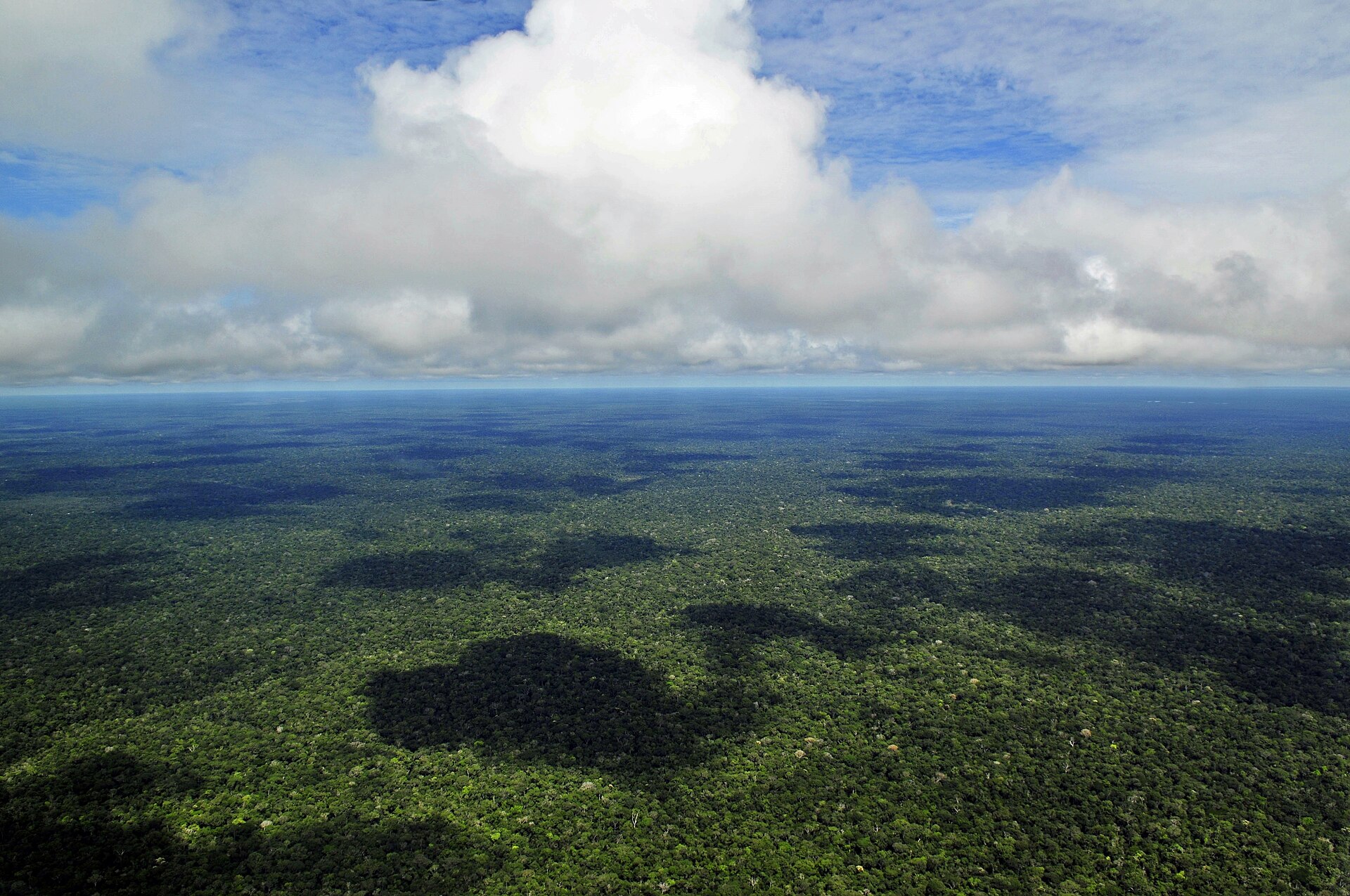
Then the row of seats she was buckled into simply separated from the fuselage, and she was no longer inside a plane at all. She was falling, still strapped to her seat, toward a green expanse nearly 3,000 meters below.
A Fall That Should Not Have Been Survivable
Juliane doesn’t remember much of the descent itself – only the sight of the canopy rushing up to meet her before she lost consciousness.
When she woke, she was lying on the forest floor, alone. The plane was gone. Her mother was gone. So were the other 91 people who had been aboard the aircraft.
Of everyone on Flight 508, Juliane Koepcke was the only one who survived – and even that fact, extraordinary as it is, turned out to be only the opening chapter of her ordeal.
She had a broken collarbone, deep cuts, and a concussion. She’d lost her glasses somewhere in the fall, leaving her severely short-sighted.
She was dressed for a short flight, not a jungle trek – a light summer dress, and only one shoe. She had almost no food.
And she was somewhere inside one of the most unforgiving ecosystems on Earth, with no way of knowing which direction might lead to another living person.
For nearly anyone else, that combination of injuries, isolation, and terrain would have been a death sentence on its own. Juliane had one advantage almost nobody else on that flight would have had: she actually knew this jungle.
The Rainforest Wasn’t a Mystery to Her
Her parents, Hans-Wilhelm and Maria Koepcke, were both scientists – a zoologist and an ornithologist – who had spent years studying the Amazon and had built a research station in the middle of it.
Juliane had lived there as a child, long enough to absorb the rainforest’s logic in a way that textbooks alone couldn’t teach: which sounds signaled danger, which harmless-looking plants weren’t harmless at all, and how to keep her nerve in an environment built to overwhelm the senses.
Most usefully of all, she remembered a specific piece of advice her father had given her years earlier – if she was ever lost in the jungle, she should find moving water and follow it downstream, because small streams eventually feed into larger rivers, and rivers are where people live and work.
That single rule became the backbone of her entire strategy. Rather than trying to force her way through the densest vegetation, she moved along streams and riverbanks, letting the water do the navigating.
She understood, in a way few 17-year-olds would, that the jungle wasn’t an obstacle to be beaten through brute force – it was a system to move with, not against.
The Small Things Turned Out to Be the Real Danger
It wasn’t the jaguars or the caimans that nearly finished her off – it was the insects. As the days wore on, flies laid eggs in her open wounds, and maggots began to develop beneath her skin.
She had no antiseptic, no bandages, nothing resembling medical care. Using a piece of a ring she was wearing, she dug the maggots out herself, one agonizing session at a time, and kept walking.
Food was almost nonexistent; the only real supply she had was a small packet of sweets recovered near the crash site, and once that ran out, she survived on little more than river water for the rest of the ordeal.
The forest around her was far from empty. Monkeys moved through the canopy overhead. Caimans slid off the riverbanks as she approached.
Snakes and biting insects were a constant, low-grade threat she’d learned as a child not to panic over. She kept her pace steady and her focus narrow: find the water, follow the water, keep moving.
On the Eleventh Day, She Found a Boat
By day eleven, Juliane was running on almost nothing – exhausted, malnourished, her wounds worsening, with no guarantee that the river she’d been following for over a week would lead anywhere at all.
Then, along the bank, she spotted something that didn’t belong in the wilderness: a boat. For a moment she assumed she was hallucinating. She wasn’t.
Nearby was a small shelter used by Peruvian hunters and loggers – the first sign of human life she’d encountered since the crash.
When the men who used the shelter returned and found her, they were, by her own later account, initially unsure what they were looking at.
According to the story she has told in interviews since, they wondered briefly whether she might be some kind of river spirit from local folklore, a legendary half-human, half-dolphin figure rather than an actual survivor. She wasn’t a spirit.
She was a badly injured teenager who had just spent eleven days alone in the Amazon, and she needed help.
The men treated her injuries as best they could and got her by boat to medical care, ending an ordeal that had begun on a stormy Christmas Eve nearly two weeks earlier.
Survival Came With a Second Blow
Being rescued didn’t undo the loss she now had to face. Juliane had survived; her mother had not.
Maria Koepcke’s remains were recovered from the crash site weeks later, confirming what Juliane had likely already suspected during her long walk along the river.
She was, in the end, the sole survivor of LANSA Flight 508 – a young woman who had somehow lived through a fall that killed everyone else on board, and then lived through eleven more days that could easily have killed her too.
Why the Fall Itself Was Survivable at All
Decades later, the physics of her fall still fascinate researchers and readers alike, and there’s no tidy explanation for it.
Juliane remained attached to a row of seats throughout the descent, which may have altered how she fell and distributed the impact.
Some analyses point to the dense, layered structure of the rainforest canopy itself as a kind of natural cushion, absorbing and slowing the final impact in a way that open ground never could have.
But no combination of factors fully accounts for surviving an unbraked fall from roughly 3,000 meters, and no one should read her story as evidence of a technique. There isn’t one.
What happened to Juliane Koepcke was an extraordinarily rare convergence of chance, physical resilience, and circumstance, not a replicable formula.
The Real Story Isn’t the Fall – It’s What Came After
That’s precisely what makes the rest of her story so remarkable. Surviving the crash made Juliane a statistical outlier.
What kept her alive for the following eleven days wasn’t luck at all – it was knowledge, applied under enormous physical and psychological strain.
She didn’t wander randomly through unfamiliar terrain hoping to stumble onto help. She didn’t experiment with unfamiliar plants out of desperation.
She executed a plan her father had given her years before any of this happened, and she stuck to it even as her body deteriorated around her.
There’s an almost ironic symmetry to how her ordeal resolved. The rainforest that isolated her from the rest of the world was, at the same time, the very thing that eventually delivered her back to it – because the rivers that cut communities off from each other are also the routes those communities actually use to get around.
The water she needed to survive doubled as the path most likely to lead her to another human being. She wasn’t fighting the Amazon so much as reading it correctly.
What Happened to Her Afterward
Juliane eventually relocated to Germany, where she completed her education and went on to study biology, later working as a librarian while maintaining a lasting connection to Peru and the rainforest that had nearly killed her.
She recounted the full story decades later in her memoir, When I Fell From the Sky, and her experience has since been revisited in documentaries and retold across countless accounts of extraordinary human survival.
The headline version of her story is easy to summarize in a single sentence: a teenage girl fell three kilometers from a plane and lived.
But the more remarkable chapter is the one that gets less attention – injured, half-blind without her glasses, alone, and without so much as a compass, she still managed to make clear-headed, correct decisions for eleven consecutive days in one of the most dangerous environments on the planet.
She didn’t have a satellite phone, a GPS unit, or a survival kit. She had something considerably rarer: she knew exactly what to do next, and the discipline to keep doing it until it worked.
Sources:
- The Guardian – “A bolt of lightning struck my plane – and I plunged 3,000m into a rainforest” (2024 interview with Juliane Diller)
- The Guardian – “From the archive: the girl who came back alive” (1972 Observer account, republished 2019)
- The Guardian – “How We Survive” series (2024), contextual coverage of the LANSA Flight 508 disaster
- BBC – “Juliane Koepcke: How I survived a plane crash”
/This article is intended for general educational and travel-interest purposes./