An 83-year-old woman, a bear at her clothesline, and the long, quiet history of the Arctic’s largest predator washing up on an island that was never meant to have one.
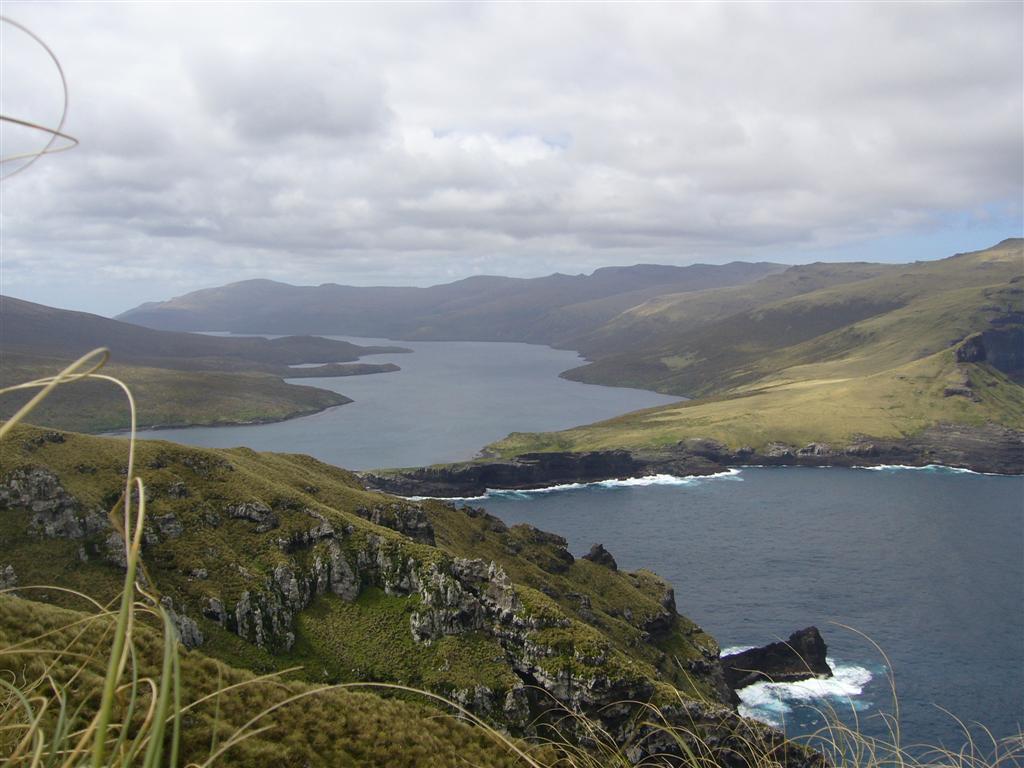
On September 19, 2024, Ásthildur Gunnarsdóttir walked back into her summer cabin at Höfðaströnd, a remote stretch of Iceland’s Westfjords, and glanced out the window. About three meters away, a polar bear was sniffing at the laundry on her clothesline.
Unable to reach the police directly, she phoned her daughter in Reykjavík, who raised the alarm. Officers set out by boat from Bolungarvík, and the Coast Guard flew in special-operations personnel by helicopter.
By the end of the afternoon the bear was dead, shot by police after they consulted the Environment Agency, which declined to relocate it.
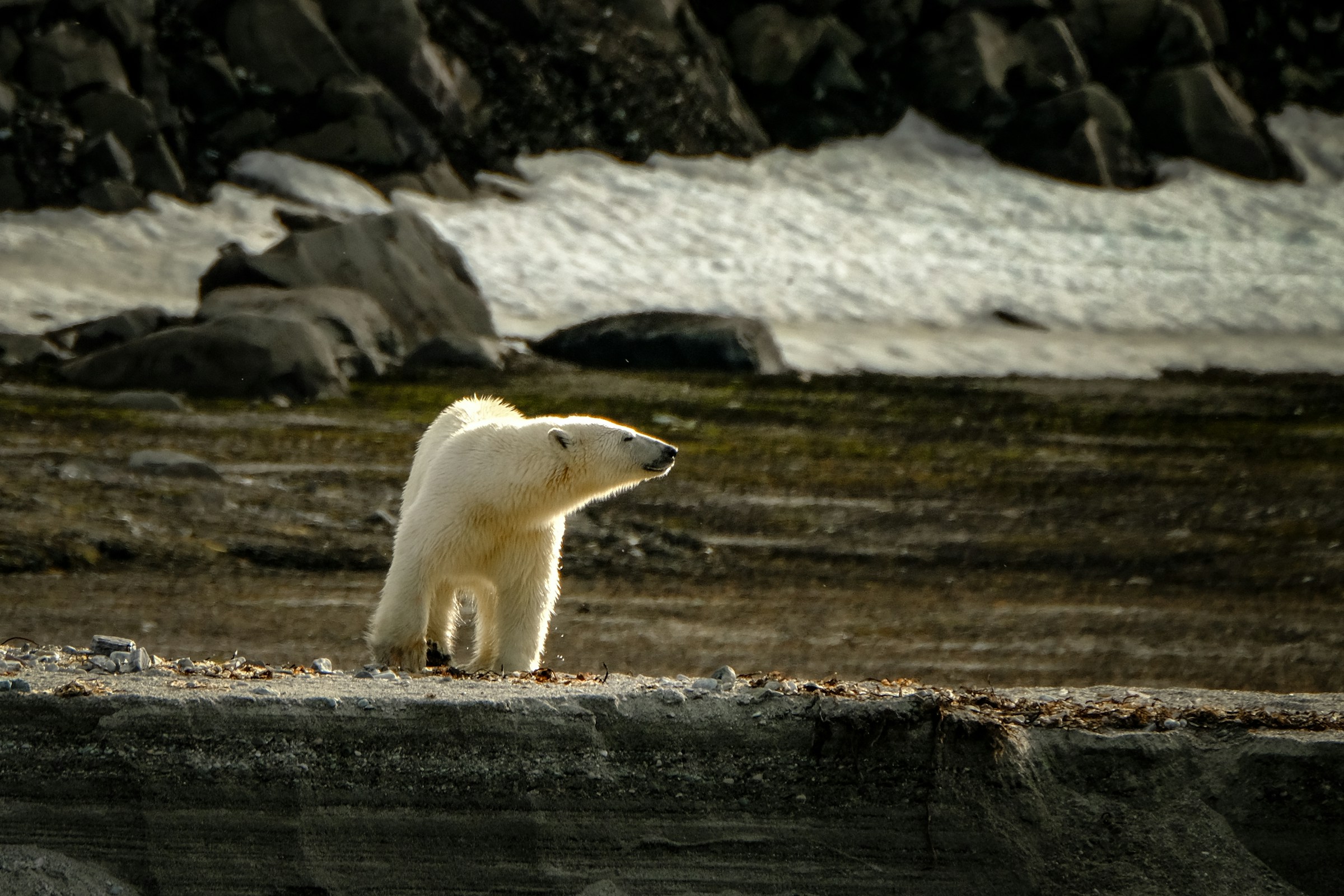
It was a young animal weighing roughly 150 to 200 kilograms (300 to 400 pounds). “It’s not something we like to do,” the local police chief told The Associated Press.
A Coast Guard helicopter then searched the surrounding coast for other bears and found none. The woman, authorities said, decided to stay at her cabin a little longer.
It was the first polar bear seen in Iceland since 2016. It was not the first to arrive uninvited, and the records suggest it will not be the last.
How Does a Bear Reach an Island With No Sea Ice?
Polar bears are not native to Iceland. According to Anna Sveinsdóttir of the Icelandic Institute of Natural History, they occasionally come ashore after traveling on ice floes from Greenland.
In September 2024, Iceland’s national broadcaster reported that many icebergs had recently been spotted off the north coast. Scientists believe a healthy population in East Greenland is where such bears originate, a journey of hundreds of miles.
The bears are built for distance. U.S. Geological Survey researchers tracked one female that swam 687 kilometers (426 miles) across open water in nine days. She lost about a fifth of her body mass and her yearling cub along the way, and still kept traveling for roughly another 1,800 kilometers.
An Animal Built to Hunt
The polar bear is the largest land carnivore on Earth. Adult males typically weigh 350 to 700 kilograms, and the largest on record, a male shot in Alaska’s Kotzebue Sound in 1960, weighed about 1,000 kilograms.
On land, a polar bear can sprint at around 40 kilometers per hour (25 mph), faster than almost anyone can run. Its sense of smell can pick up a seal buried under a meter of snow from roughly 1.6 kilometers away.
It is also a creature with no fallback plan. Unlike grizzlies or black bears, which can live on plants when prey is scarce, polar bears must hunt. Biologists who study them note that this is part of what makes a hungry polar bear different from a hungry bear of another species.
Do Polar Bears Hunt People?
Sometimes, and the research is blunt about it. In 2017, a team led by wildlife biologist James Wilder compiled every verified attack on humans across the five countries where polar bears live.
They found 73 attacks between 1870 and 2014, which killed 20 people and injured 63. The researchers judged that the bear was acting as a predator in most of them, and in the fatal cases the animal typically fed on the victim.
The details complicate the legend. Most of the bears involved were males in poor condition: about 61% of attacking bears were in below-average body condition, and nutritionally stressed adult males were the most likely to threaten people.
In 59% of cases, human behavior contributed to the attack. Attacks remain extremely rare, but the pattern is consistent. Hunger, not malice, tends to turn a bear toward people. The consequences can be deadly.
In 2011, a bear presumed to be starving attacked a group of students camping on Norway’s Svalbard archipelago, killing a 17-year-old British boy and injuring four others; investigators later concluded the attack could have been prevented if the group had stayed in cabins rather than tents.
In 2020, a bear killed a man in a tent at a campground near Longyearbyen, the sixth fatal attack in Svalbard in nearly 50 years.
A Norwegian Polar Institute researcher put it plainly: bears prefer seals, but a desperate one will see people as prey. And in 2023, a polar bear killed a woman and her young son in Wales, Alaska.
Iceland’s Long Ledger
Iceland has been keeping track of its visitors for centuries. The Icelandic Institute of Natural History counts around 600 recorded bear arrivals since the settlement era.
The earliest mention appears in Landnámabók, the Book of Settlements. Sightings peaked in the 19th century, when bears were spotted two or three times a year on average, and since 1951 the average has dropped to one every other year. One account counts around 73 bears arriving in 1881 alone.
Medieval chronicles also record the dark side. The Icelandic annals report that in 1321 a polar bear came on the ice to Strandir in the northwest, killing eight people and causing havoc before it was finally killed at Straumnes.
A later account, from the museum at Perlan, describes a bear that came ashore at Skagi in 1518 and killed eight more, mostly poor women traveling with their children between Húnaflói and Skagafjörður.
Folklore preserves even grimmer tales, including a legend of a dozen bears that descended on a farm in the north and killed the people there, sparing only a son who was away. Yet the same animals were also treasured.
The best-known medieval tale, The Tale of Auðun of the West Fjords, follows a poor Westfjords Icelander who spends everything he owns on a polar bear in Greenland, intending to give it to the king of Denmark.
He travels with the animal through Norway, where King Harald Hardrada, at war with Denmark, tries to buy the bear and eventually lets him pass. Auðun’s gamble pays off in Denmark, and when he stops in Norway on the way home, the king is impressed by his rewards.
A Policy of Last Resort
For modern Iceland, the arrival of a bear is a crisis on a tight clock. In June 2008, the first of two bears appeared on a mountain road near Þverárfjall in Skagafjörður.
By the time police arrived, a crowd of cars had gathered. Police shot the animal because no tranquilizers could be found in time and the gun to deliver them was elsewhere in the country.
Two weeks later, a second bear appeared at the farm of Hraun on the Skagi peninsula, and a capture attempt failed. The public outcry led the environment minister to appoint a task force, which concluded that the best response was to kill the bears.
In 2010, a task-force member explained the reasoning on national television: the animals are dangerous, saving them is too costly, and, in the group’s view, the species is not at risk. (The International Union for Conservation of Nature lists polar bears as vulnerable.)
Under Icelandic law, polar bears are protected, and it is forbidden to kill one at sea, but they may be shot if they threaten people or livestock.
| Year | Where | What happened |
| June 2008 | Þverárfjall, Skagafjörður | Shot by police; no tranquilizers available |
| June 2008 | Hraun, Skagi peninsula | Capture attempt failed; bear killed |
| January 2010 | Þistilfjörður, northeast | Starved, very young bear; a woman hid in her attic as it wandered near her sheepcote; hunters killed it |
| May 2011 | Reported near Hælavík, Hornstrandir | Another bear killed, one of five killed between 2008 and 2016 |
| July 2016 | Hvalnes, northwest Iceland | Young female within 500 meters of an inhabited farm; marksman shot it from 130 meters |
| September 2024 | Höfðaströnd, Westfjords | Young bear shot near an elderly woman’s cabin |
Why They Can’t Stay
Authorities have given the same reasons each time. Iceland has no sea ice to hunt from and a limited food supply. Females would be unable to give birth or raise cubs on the volcanic island.
Returning a bear to Greenland is expensive. Not every bear arrives starving, since the 2024 animal was described as healthy, but a bear that cannot hunt seals will eventually become a hungry bear near sheep, farms and people.
That is the uncomfortable arithmetic. Biologists say the same loss of Arctic sea ice that puts bears under nutritional stress is also pushing more of them onto land elsewhere, increasing contact with people.
Iceland sits at the far edge of that story, a place where a bear that arrives on drifting ice has nowhere to go and no way home.
Sources:
The Associated Press, “A rare polar bear showed up on the shores of Iceland. Police shot it” (September 2024), via CBS News, CNN and AOL Phys.org (September 2024); Iceland Review (September 20, 2024; June 4, 2008; January 28, 2010; July 18, 2016);
The Reykjavík Grapevine (September 19, 2024); Icelandic Institute of Natural History (Náttúrufræðistofnun Íslands), “Polar bear” (natt.is); Iceland Monitor (July 2016); Iceland Magazine (July 2016); WhatsOn Iceland, “A History of Polar Bears in Iceland”; Perlan Museum, “Polar Bears in Iceland”; James M. Wilder et al., “Polar bear attacks on humans: Implications of a changing climate,” Wildlife Society Bulletin (2017), and Canadian Geographic and CBC coverage of the study; Durner et al., USGS, long-distance swimming study, as reported by National Geographic; AFP, “Polar bear kills man in Norway’s Arctic Svalbard archipelago” (2020); Wikipedia, “2011 Svalbard polar bear attack,” “Skagi,” “Þverárfjall,” and “The Tale of Auðun of the West Fjords”; Seven Icelandic Short Stories(Project Gutenberg), for the text of Auðun’s tale; William Ian Miller, Audun and the Polar Bear (Brill, 2008).