It doesn’t look like much. Bordered by some of the richest, most developed countries in Europe, the North Sea reads on a map like a calm, manageable pond. Sailors know better – and what makes it so lethal isn’t its depth. It’s the lack of it.
Unlike the open ocean, where ships have room to ride out almost anything, the North Sea offers no such mercy. It’s a trap built from a specific, brutal combination of shallow water, extreme weather, and shifting seabed – and for generations of mariners, it’s produced some of the worst storms they’ve ever lived through.
Why Shallow Water Is Actually More Dangerous Than Deep Water
Northwestern Europe is famously flat, and the seabed beneath the North Sea follows the same rule. It’s one of the shallowest seas on the planet, averaging around 90 meters deep, and dropping to just 30-40 meters in its southern reaches.
That sounds like it should make things safer. It does the opposite. When massive swells rolling in from the Atlantic hit that shallow shelf, they slam into the seabed with nowhere left to go. All that energy – instead of dispersing – gets compressed.
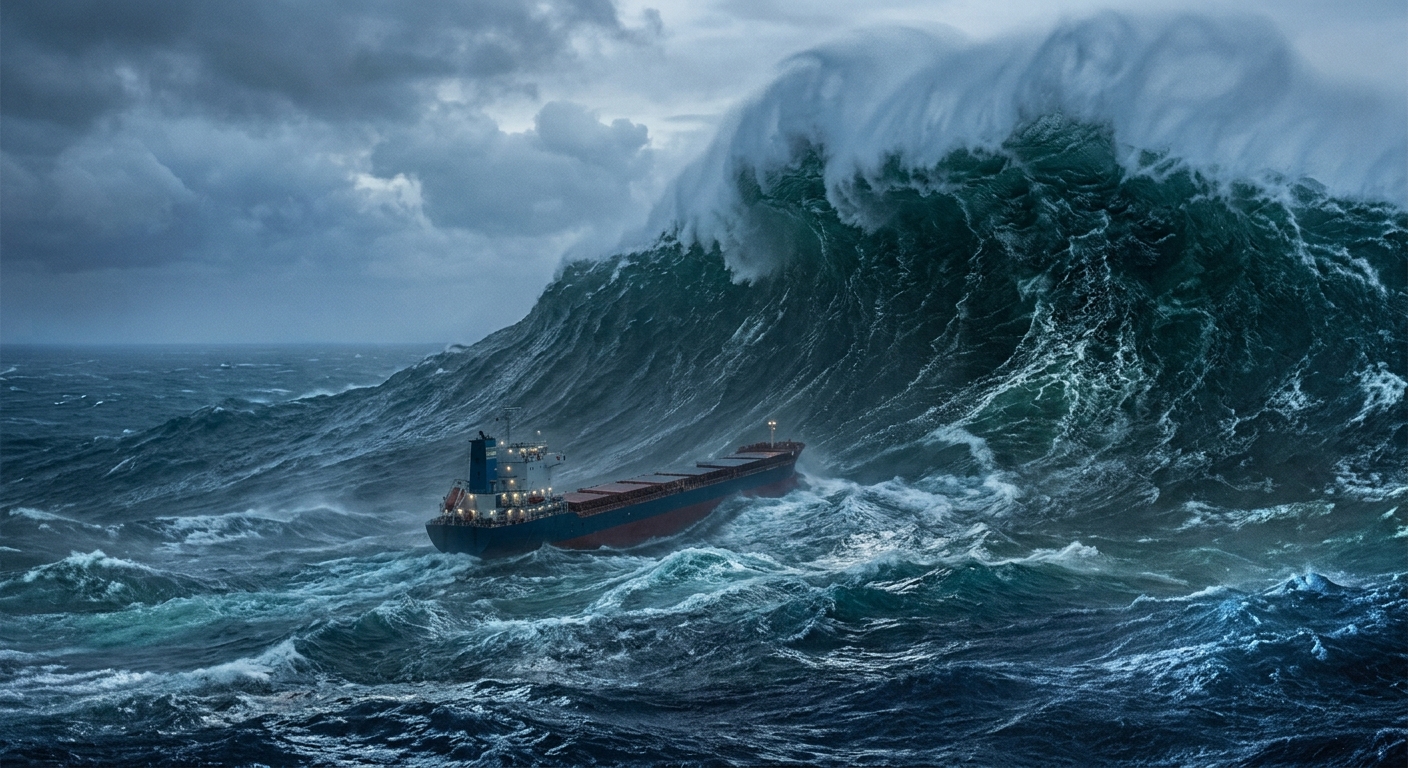
The waves slow down and rear up, turning into short, steep, brutally fast walls of water that don’t rock a ship so much as crash directly into it.
The physical force these waves put on hulls and oil platforms is immense, and it’s a big part of why the North Sea has such a fearsome reputation among the people who actually have to cross it.
Where Warm Meets Cold – And the Weather Turns in Minutes
Geography makes it worse. The North Sea sits directly in the collision zone between cold Arctic air pushing down from the north and warm, moist Atlantic air moving in from the west.
The result is weather that can flip in minutes – a calm, sunlit sea can turn violent, with winds exceeding 150-200 km/h, in under an hour.
It was here, on the Draupner oil platform in the Norwegian sector of the North Sea, that scientists recorded history’s first scientifically confirmed “rogue wave.”
On January 1, 1995, instruments on the platform measured a freak wave 25.6 meters high – roughly the height of an eight-story building – smashing a hole in what oceanographers had assumed for decades was mathematically impossible.
The Graveyard Hiding Six Miles Off the English Coast
If the North Sea has one location that sums up everything terrifying about it, it’s a sandbank most people have never heard of: Goodwin Sands.
Stretching roughly 16 kilometers, just 8 kilometers off the coast of Kent, Goodwin Sands sits exactly where the North Sea narrows into the English Channel – a bottleneck that’s turned it into what historians and hydrographers now call one of the deadliest shipping hazards on the planet.
Estimates put the toll at around 2,000 wrecked vessels over the centuries, earning it a grim nickname: the Ship Swallower.
That name isn’t poetic exaggeration. Goodwin Sands isn’t solid ground – it behaves more like quicksand, a shifting mass constantly reworked by powerful tidal currents.
When a ship runs aground there, the surrounding water turns the sand semi-liquid, and it starts pulling the hull down by the keel.
A few tidal cycles later, the structure buckles under its own weight and simply snaps in half. Ships have been known to vanish almost entirely within 24 to 48 hours of running aground.
Making matters worse, Goodwin Sands sits directly opposite “The Downs,” a sheltered natural anchorage where sailing ships waited for centuries for favorable winds before heading into the Atlantic or up toward London.
Sometimes hundreds of vessels rode at anchor there at once. If a storm suddenly turned – usually from the south or southwest – ships could snap their anchor chains and be driven straight onto the sands with zero ability to maneuver away.
The Night Thirteen Warships Vanished
The worst single catastrophe in the sandbank’s history came during the Great Storm of 1703 – still considered the most destructive storm to ever hit Britain.
On the night of November 26–27, 1703, hurricane-force winds tore through a fleet anchored near Goodwin Sands.
In a matter of hours, the sandbank claimed 13 Royal Navy warships, and roughly 1,500 British sailors lost their lives – the single deadliest loss of life the Royal Navy has ever suffered in home waters.
A Drowned Island, a Ghost Ship, and a Downed Bomber
Centuries of carnage have made Goodwin Sands a magnet for folklore. Local legend holds that it was once a fertile island called Lomea, owned by the Earl Godwin – father of King Harold II – until it was swallowed by tidal waves in 1099 after funds meant for maintaining its sea walls were allegedly diverted to build a nearby cathedral tower.
Then there’s the Lady Lovibond, maybe England’s most famous ghost-ship legend. The three-masted schooner wrecked on the sands on February 13, 1748 – supposedly driven aground deliberately by a jealous first mate furious over the captain’s new bride.
According to the tale, the ship reappears every 50 years, sailing under full canvas with wedding music playing, before vanishing back into the sand. The last reported “sighting,” per local lore, was in 1998.
The sandbank’s toll isn’t limited to ships. During World War II, the skies over Dover and Kent hosted brutal dogfights, and dozens of British and German aircraft went down over the sands.
The sand’s unusual consistency meant many of them sank largely intact – in 2013, a nearly perfectly preserved German Dornier Do 17 bomber was recovered from the seabed there, the only surviving example of its kind in the world.
Today, thanks to GPS and radar, shipwrecks on Goodwin Sands are rare. At low tide, parts of the bank still rise above the surface as temporary sand islands, where local cricket clubs occasionally play a match before the tide reclaims the pitch.
The site is now a protected marine area – both for its wildlife, including a large seal colony, and because it remains a mass grave for thousands of sailors and airmen.
Ice Water, Blinding Fog, and Currents That Turn the Sea Into Chaos
Goodwin Sands is only part of the story. The wider North Sea comes with its own arsenal of hazards. Powerful Atlantic tides can shift water levels by 6-7 meters in just a few hours.
When a strong tide runs directly against the wind, it creates what’s known as a “wind-against-tide” effect – the sea turns genuinely chaotic, pyramid-shaped waves rise up from multiple directions at once, and maneuvering becomes close to impossible.
Then there’s the cold. Water temperatures in the North Sea rarely climb above 10-12°C even in summer, and drop close to freezing in winter.
Anyone who ends up in the water – whether falling from a ship or an oil rig – faces cold shock within seconds, with hypothermia capable of killing in under 15 minutes. Without a survival suit, the odds of making it are grim.
Add in fog. The same collision of warm and cold air that fuels the region’s violent storms also produces sudden, extremely dense sea fog – known as “haar” in Scotland.
Before modern radar, that fog, combined with narrow channels and shallow water, was responsible for thousands of ship collisions.
And Yet, It’s One of the Busiest Shipping Lanes on Earth
Despite all of this, the English Channel and the southern North Sea remain among the most heavily trafficked waters on the planet. Hundreds of container ships, oil tankers, fishing vessels, and ferries pass through every single day.
In storms and fog, that traffic turns an already hostile environment into a genuinely stressful, high-stakes navigational challenge.
The North Sea doesn’t forgive mistakes. Ice-cold water, storms that build in minutes, hurricane-force winds, a seabed that never stops moving, and – above all – steep, violent waves born from its own shallowness make it, to this day, one of the ultimate tests a sailor or a ship’s captain can face.
Sources & further reading:
- Draupner wave – Wikipedia
- What conditions led to the Draupner freak wave? – ECMWF
- Great storm of 1703 – Wikipedia
- Goodwin Sands and Its Shipwrecks – Amusing Planet
- The place where 1,000 ships were sunk – Goodwin Sands SOS / BBC Earth
- Save Our Shipwrecks – Goodwin Sands SOS
Note: The legends of the drowned island of Lomea and the ghost ship Lady Lovibond are long-standing pieces of English maritime folklore, not verified historical events. The Draupner wave, the Great Storm of 1703, and the 2013 recovery of the Dornier Do 17 are documented, well-sourced history.