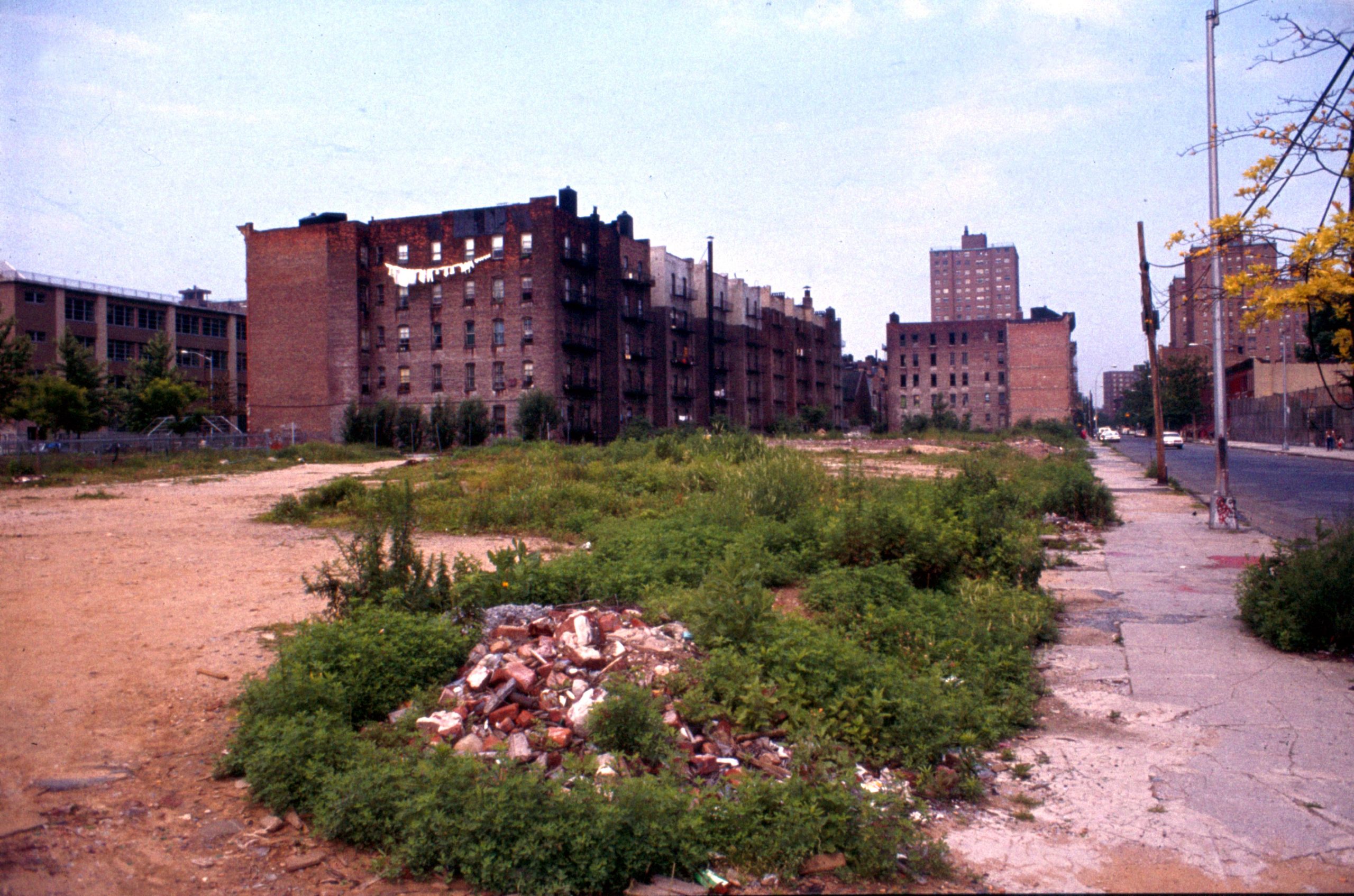
In the 1970s and 1980s, the capital of American ambition came close to being written off. The story of its fall is darker than the legend, and the story of its recovery is even more complicated.
For a brief moment in the fall of 1975, the most famous city in America looked finished. It owed more than it could pay, it was laying off thousands of police officers, firefighters and teachers, and its biggest newspaper was telling the world that Washington had turned its back. That story would become the founding myth of a decade of decline. It would also become a story of an unlikely second life.
How the Slide Began
The roots go back decades. Postwar New York was losing its factories, its tax base and its people. About 600,000 jobs disappeared between 1969 and 1976, and some 800,000 residents left the city during the 1970s.
Many of the neighborhoods that suffered worst had been condemned long before. In 1938, federal housing maps marked parts of the South Bronx as deteriorating, a practice known as redlining that starved those areas of mortgages and investment for decades.
Then the money ran out. In 1975, the city lost access to credit markets, and commercial lenders cut off New York, triggering the worst fiscal crisis in its history. The cuts hit services first.
Hospitals and libraries were closed and thousands of firefighters, police, teachers and sanitation workers were laid off. On October 30, the Daily News ran its famous headline, “Ford to City: Drop Dead.”
President Gerald Ford never actually said those words. He ended up rescuing the city from bankruptcy after all, but the headline captured the mood.
The Bronx
Nowhere did the crisis look worse than in the South Bronx. Between 1970 and 1980, seven census tracts lost more than 97 percent of their buildings to fire and abandonment, and 44 more lost over half.
The area’s loss of housing was staggering: nearly 80% of the housing stock disappeared, and some 250,000 people lost their homes, according to a documentary on the fires.
What actually caused it is still debated. A common explanation blamed landlords hiring arsonists, and some fires certainly were set for insurance money.
But researchers note that the fires were not a single coordinated event but the result of multiple socioeconomic factors.
One was the closure of fire companies. Twelve fire companies were closed in the South Bronx between 1974 and 1976, as the bankrupt city tried to save money.
The image that fixed it in the public mind came in October 1977. During the World Series, television cameras showed a building burning near Yankee Stadium. According to legend, announcer Howard Cosell said, “The Bronx is burning.”
The legend is probably false. Cosell appears never to have said it on camera during Game 2, although the phrase had been circulating for years as a description of the fires. The fires, though, were real.
The Summer of 1977
That July, the city was hit by a different kind of disaster. A lightning strike knocked out the power across the city on the evening of July 13. By the following day, a thousand fires had been set, 1,600 stores were ransacked, and 3,400 people were arrested.
Unlike a blackout in 1965, when New Yorkers had mostly stayed calm, 1977 saw widespread looting. It came while another fear was already gripping the city: a serial killer who shot young couples in parked cars, and who was known as the “Son of Sam.”
Not everything that came out of the era was destruction. In the Bronx, young people were building something new.
One theory, discussed on the podcast 99% Invisible, is that the looting of equipment during the blackout helped give people who couldn’t afford turntables and mixers a chance to become DJs. Hip-hop was being born in the same rubble.
The Bottom
The next decade made matters worse. Crack cocaine arrived in the mid-1980s, and with it came an explosion of street violence.
The city’s homicide count reached an all-time high of 2,245 in 1990, making New York the murder capital of America. (Later revisions of the figure put it at 2,262.)
The subway, daubed in graffiti, had become a symbol of the disorder. By the mid-1980s, surveys showed widespread fear of theft and assault in downtown Brooklyn, along Fordham Road in the Bronx and in Jamaica Center, and riders abandoned the subway in droves.
The Turn
Then the numbers began to fall, slowly at first, and then quickly. Murders dropped below 1,000 by 1996. What caused it is among the most argued-over questions in American criminology.
Some of the change came early and from below. In 1984, the head of the Transit Authority began a five-year campaign to rid subway trains of graffiti.
Business districts took over Bryant Park, which had been an open-air drug market, and the area around Times Square. Policing changed too, and the introduction of Compstat, a system that mapped crime and held commanders accountable, is often credited.
Researchers who study the question list other factors as well: the decline of the crack epidemic, a strong economy, rising incarceration, reduced lead exposure and immigration.
Some scholars credit police tactics above all, while others see the fall in crack use or wider social change as primary.
As one pair of experts noted, crime also fell nationwide, but New York’s decline was earlier and more dramatic. The honest answer is that no one has proved a single cause.
The City Today
By 2025, New York was setting records in the opposite direction. The city recorded 688 shooting incidents, the lowest number in its history, and murders fell 20.2% from the year before.
Police say subway crime hit a record low over a five-month stretch. Compared with 1990, the number of murders is a fraction of what it was.
The neighborhoods that were once synonymous with danger have changed even more. Tompkins Square Park, once overrun by drug addicts and the homeless, is now a family-friendly haven.
In East Harlem, median home values rose 219 percent between 2000 and 2016, from about $228,000 to about $728,000. In Williamsburg, prices went from roughly $331,000 to $882,000 over a similar period.
Even Mott Haven, in the South Bronx, saw a median home price of $472,500 in 2016, up from $330,000 the year before.
The Price of the Comeback
That is not the whole story, and the people who lived through the bad years know it. Rising prices have been a mixed blessing.
The longtime residents of places like Bedford-Stuyvesant, a neighborhood that was seen for years as one of New York’s roughest and poorest, have been caught between selling their homes at high prices and watching their communities change.
A leader of a homebuyers’ group told NPR that the boom was both good and bad for Bed-Stuy. For many longtime residents, the question is not whether the city has recovered but who it recovered for.
New York’s darkest years were not a single event but a long chain: a shrinking economy, a broke government, neglected neighborhoods, a drug epidemic, and a city that, for a while, stopped believing it could be fixed. That it was fixed anyway is the real surprise.
How Safe Is the Bronx Today?
The borough that once symbolized urban collapse is, by the numbers, far safer than it was. In 1993, the Bronx led the city with 54 murders per 100,000 residents, a rate that had fallen to about 6 by 2019.
In 2026, the NYPD says the Bronx is leading the city in crime reductions: major crime fell 11.9% over the first eight months of the year compared with 2025, and in April the borough recorded its fewest murders in history, at four.
The picture is still not simple. Police Commissioner Jessica Tisch has acknowledged that the Bronx has experienced more crime per capita than any other borough.
The decline has not been steady: in 2024, the borough’s murder rate rose from 57 to 81 per million people. Violence is also uneven within the borough.
A Vital City analysis found that six of the ten precincts with the highest levels of violent crime in 2024 were in the Bronx, although rates varied widely even within that group.
And statistics do not always match how residents feel: local television reported that residents say they remain fearful even after a record-low month.
For visitors, the borough’s best-known attractions, among them Yankee Stadium, the Bronx Zoo, the New York Botanical Garden and Arthur Avenue, draw crowds every day, and the usual big-city precautions apply.
Like the rest of New York, the Bronx is less a single place than a patchwork. The safest generalization is also the most honest one: it is much safer than in the days of “Bronx is Burning,” and not yet as safe as the city’s other boroughs.
Sources:
Background: the fiscal crisis
- Wikipedia, “1975 New York City fiscal crisis”: en.wikipedia.org/wiki/1975_New_York_City_fiscal_crisis
- Project MUSE, excerpt on the 1975 crisis and the 1977 blackout: muse.jhu.edu/article/170346/pdf
- History News Network, on 1975 and the 1977 blackout: historynewsnetwork.org/article/165333
- The Christian Science Monitor, “When New York City stood on the brink”: csmonitor.com/Books/chapter-and-verse/2017/0413/When-New-York-City-stood-on-the-brink
The Bronx fires
- Wikipedia, “1970s South Bronx building fires”: en.wikipedia.org/wiki/1970s_South_Bronx_building_fires
- City Limits, on Bronx fire data compiled by FDNY historian Joe Flood: citylimits.org/?p=5429
- FiveThirtyEight, “Why the Bronx Really Burned”: fivethirtyeight.com/features/why-the-bronx-really-burned
- Columbia University Shoe Leather, “The Bronx Is Burning”: shoeleather.podcasts.library.columbia.edu/podcast/the-bronx-is-burning
- Barry Popik, “The Bronx is burning” (origin of the phrase): barrypopik.com/blog/the_bronx_is_burning_1972
- Bronx River Alliance, “How the Bronx Burned”: bronxriver.org/post/greenway/how-the-bronx-burned
- PBS Independent Lens, Decade of Fire: pbs.org/independentlens/documentaries/decade-of-fire
- The Nation, “Born in Flames”: thenation.com/article/culture/born-flames-bronx-arson
The 1977 blackout
- PBS American Experience, “The Night New York’s Lights Went Out”: pbs.org/wgbh/americanexperience/features/night-new-yorks-lights-went-out
- Bill Moyers, on the 1977 blackout: billmoyers.com/?p=176579
- 99% Invisible, “Lights Out”: 99percentinvisible.org/episode/lights-out
The bottom and the turn
- AP / Police1, “NYC murders at all-time low”: police1.com/archive/articles/nyc-murders-at-all-time-low-nm6cS0Mi7qfqx5oz
- Vital City, Moskos and Karmen on the 1990s crime drop: vitalcitynyc.org/what-brought-new-york-city-back-from-the-brink
- City Journal, “How New York Became Safe”: city-journal.org/article/how-new-york-became-safe-the-full-story
- City Journal (2009), on the New York crime decline: city-journal.org/2009/nytom_ny-crime-decline.html
New York today
- CBS News New York, 2025 shooting record: cbsnews.com/newyork/news/hochul-mamdani-tisch-nyc-crime-statistics
- amNY, 2025 crime data: amny.com/news/nypd-record-low-crime-stats-shootings-murder
- Fix The News, on New York’s 2025 shooting record: fixthenews.com/s/new-york-city-records-its-lowest-number-of-shootings-on-30be1a
Gentrification
- NPR, on Bed-Stuy: npr.org/transcripts/4947452
- WNYC, “Surging Home Prices Mixed Blessing in Mott Haven” (2016): wnyc.org/story/surging-home-prices-are-mixed-blessing
- Habitat Magazine, home value changes by ZIP code: habitatmag.com/Publication-Content/Co-op-Condo-Buyers/2018/2018-March/Gentrifying-Hoods
- Bracha, on East Harlem home values: bracha.com/?p=756
The Bronx today
- NYPD press release, first seven months of 2026: nyc.gov/site/nypd/news/PR012/nypd-fewest-shooting-incidents-shooting-victims-murders-recorded-history-the
- NYPD press release, safest summer (September 3, 2026): nyc.gov/site/nypd/news/PR014/nypd-safest-summer-shooting-incidents-shooting-victims-murders-recorded
- News12 Bronx, “NYPD announces safest summer; Bronx leads with major crime decline”: newyork.news12.com/nypd-announces-safest-summer-bronx-leads-with-major-crime-decline
- News12 Bronx, “NYPD reports fewest murders in recorded history”: bronx.news12.com/nypd-reports-fewest-murders-in-recorded-history
- Gothamist, “NYC reports fewest murders on record through April”: gothamist.com/news/nyc-reports-fewest-murders-ever-through-april-violent-crime-declines-in-bronx
- Vital City, “Vital Signs” (March 2023): vitalcitynyc.org/articles/vital-signs-march-2023
- Vital City, “State of the City on Crime” (2024): vitalcitynyc.org/articles/vital-signs-state-of-the-city-on-crime-2024
- AOL, “Homicides down 30% in NYC in first 3 months of 2026”: aol.com/articles/homicides-down-30-nyc-first-234500512.html


