In 1820, a sperm whale sank a Nantucket ship in the middle of the Pacific. What happened to the twenty men who survived the sinking is the darker story, and it begins with a fear that turned out to be unfounded.
On the morning of November 20, 1820, the whaleship Essex was hunting in the empty ocean roughly 2,000 nautical miles west of South America.
The ship was small and old but considered lucky. Her captain, 29-year-old George Pollard Jr., was on his first command, and his first mate, Owen Chase, was 21. Two of the ship’s three whaleboats were out chasing a pod of sperm whales.
Chase was aboard the Essex, repairing a damaged boat, when the crew spotted something unusual: an enormous bull whale, reportedly around 85 feet long (nearly 26m), lying motionless and facing the ship before it began to swim toward it.
It struck the hull, dove under, and surfaced alongside. Then it swam off, turned, and came back. According to Chase, who later published an account, it did so with “tenfold fury and vengeance.” The second impact crushed the bow. The ship went down within about twenty minutes.
When Pollard rowed back and saw the wreck, Chase gave him a three-word explanation: they had been “stove by a whale.”
No one knows why the animal attacked. One later theory, advanced by the historian Nathaniel Philbrick, is that the hammering on the damaged boat may have sounded to the whale like the sounds bull sperm whales make to communicate.
The Wrong Decision
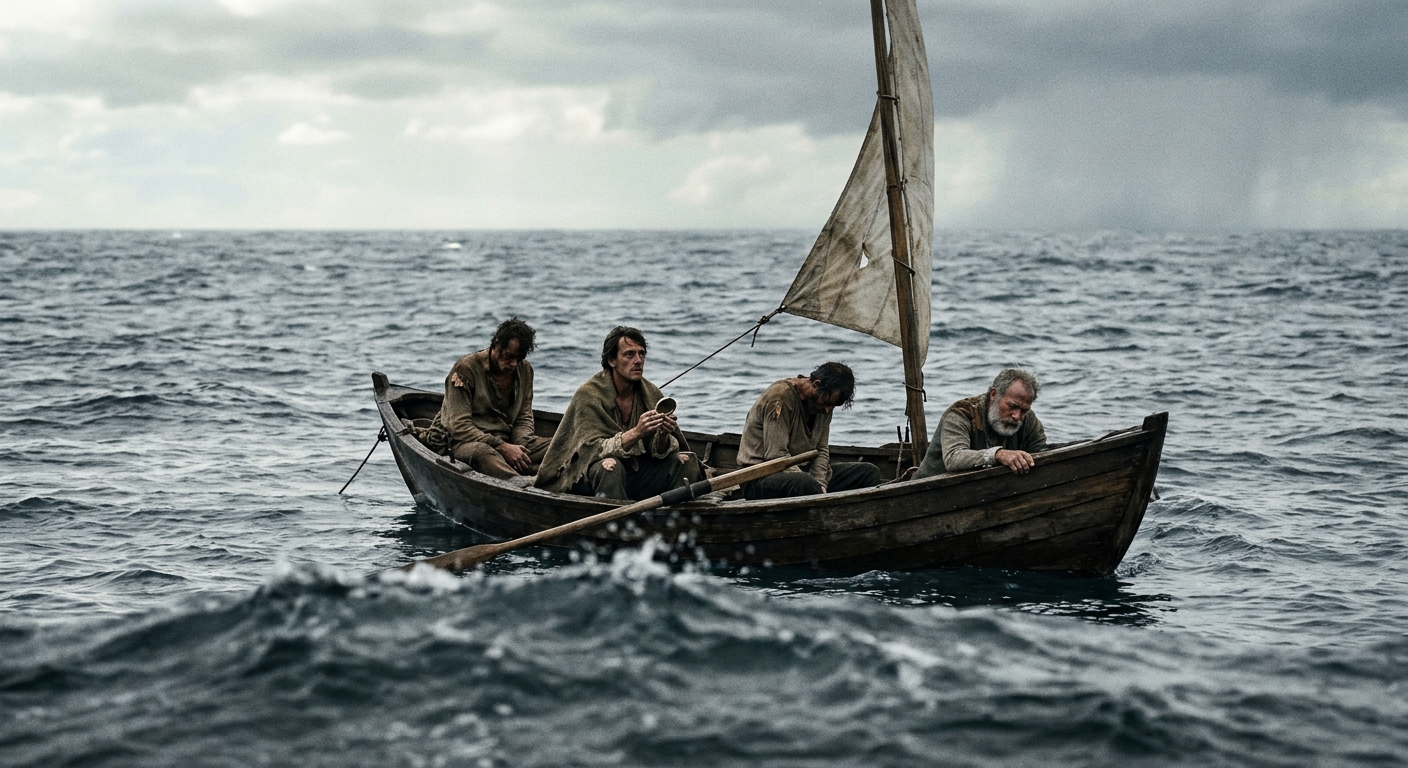
What happened next is, in some ways, the real horror story. The crew salvaged what they could and rigged three small whaleboats with makeshift sails. Then the officers had to decide where to go.
The nearest land was the Marquesas, about 1,200 miles away. But Pollard feared they would encounter cannibals there, and he proposed the more distant Society Islands instead.
Chase and the second mate, Matthew Joy, worried that the Society Islands might hold the same danger. Instead they argued for a far longer route: sail south to find variable winds, then head east toward the coast of Chile or Peru, hoping to meet another whaler. Pollard went along with it.
The fear was misplaced. Historians note that both island groups would have been safe, as the inhabitants at the time were friendly toward mariners. Decades later, Herman Melville wrote that the men’s sufferings might have been avoided had they steered for Tahiti, “But they dreaded cannibals.”
Three Boats, One Long Failure
The boats set off on November 22. The men were soon on rationed bread soaked in seawater and the meat of Galápagos tortoises salvaged from the ship.
On December 20, they reached uninhabited Henderson Island, where food ran out within a week. Three men chose to stay behind: William Wright, Seth Weeks, and Thomas Chappel. The other seventeen put to sea again.
By January, the deaths began. Joy died first and was buried at sea. Within days, the boats were separated by squalls, and the men on Pollard’s boat made a decision they had avoided so far: when Lawson Thomas died, the crew ate the body.
Over the following days, three more crew members died and were eaten. One boat vanished entirely. Its last three occupants, boatsteerer Obed Hendricks, steward William Bond and seaman Joseph West, were never seen again.
Years later, a British naval survey found a whaleboat on Ducie Island with four skeletons inside. Captain Frederick Beechey suspected they were the Essex’s missing men but could not prove it.
The numbers do not match, since only three men were known to be on that boat, and the identity of the fourth body has never been established.
One theory is that he was Isaiah Sheppard, who had died shortly before the boats separated. If true, it would mean the men had taken a body with them, as the others did. No one knows.
The Lot
By February 6, only four men were left in Pollard’s boat, and they were starving again. According to the accounts, they agreed to draw lots to decide who would be killed and eaten, and the short straw went to Owen Coffin, Pollard’s young relative, usually described as his cousin. Coffin was about 17.
The most haunting detail is how he accepted it. A later narrative by cabin boy Thomas Nickerson, drawing on what he was told, says that Pollard offered to take his place and Coffin refused.
Another account says the lots were cast again to choose his executioner, and Coffin’s friend Charles Ramsdell was picked. He shot Coffin, and then joined the others in consuming the remains.
Five days later, Barzillai Ray died and was eaten. On Chase’s boat, the survivors turned to the same fate when Isaac Cole died.
Rescue, and What Came After
On February 18, Chase’s boat was spotted by a British ship, the Indian. Five days later, 93 days after the sinking, Pollard and Ramsdell were found by the whaleship Dauphin, sucking marrow from the bones of their dead shipmates.
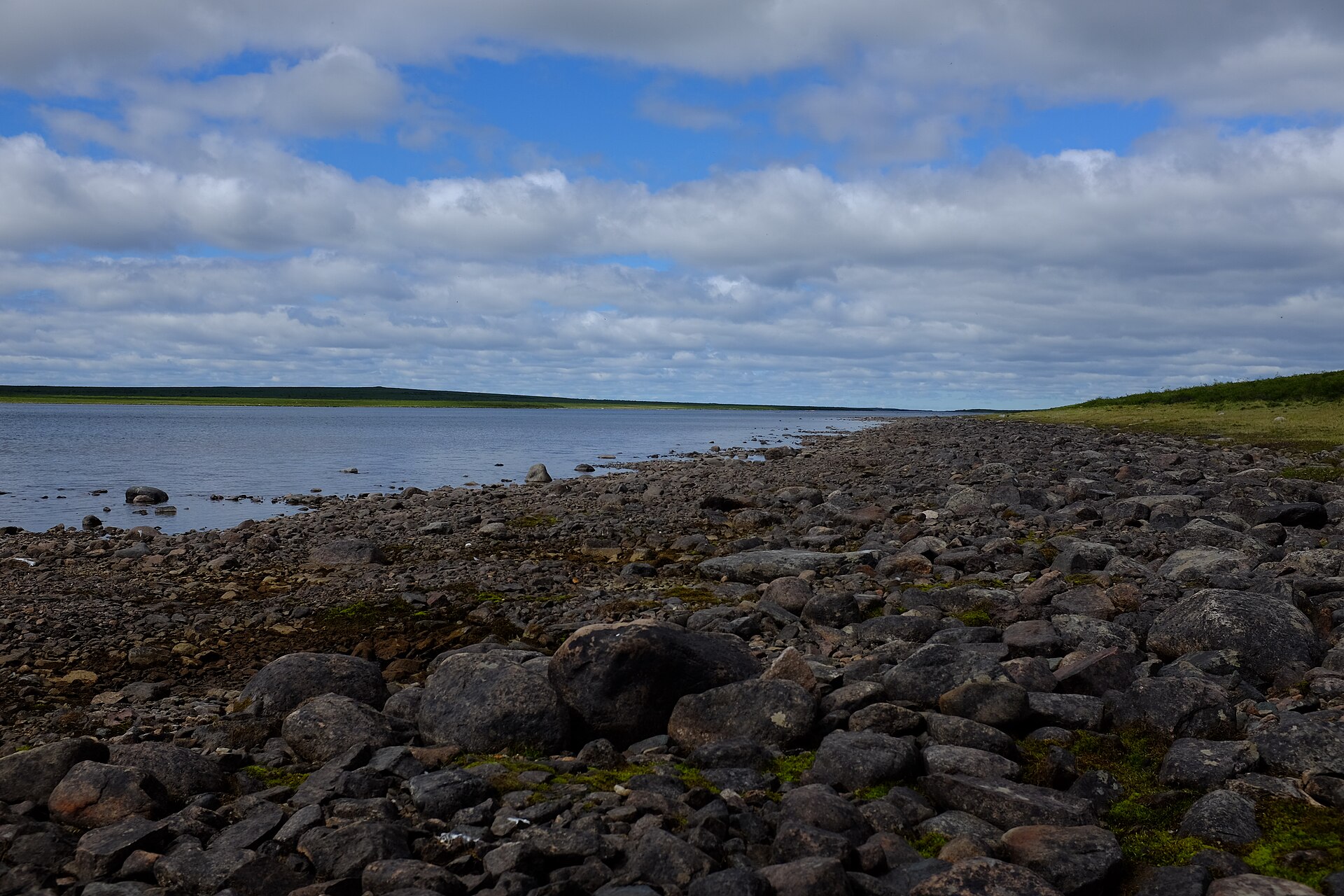
Of the seventeen men who had left Henderson Island, five survived. The three left behind were picked up in April. In all, eight of the twenty men survived.
The aftermath was quiet and grim. Pollard captained another ship, which also wrecked, and was never trusted with a command again. He became a night watchman on Nantucket, and every year on November 20 he would lock himself in his room and fast.
Chase, haunted by memories, suffered nightmares and began hiding food in his attic. Neither man ever returned to the story of the whale as an adventure.
Chase’s published account, and Nickerson’s, which was written in 1876 and not published until 1984, became the main source for Melville’s Moby-Dick (1851). In the novel, the whale is a symbol. In the real story, the whale ends in minutes. What follows lasts three months.
The Monster in the Story
The Essex story has lasted because of what it shows about fear. The men sailed away from a danger that did not exist and toward one that did: hunger, thirst, and the choices that come with them.
At sea, they had their own rules. Later in the nineteenth century, British courts would take up the same question in R v Dudley and Stephens (1884), a case involving cannibalism out of necessity.
The cannibals they feared were imagined. The cannibalism they carried out was real, and it was done by ordinary young men from Nantucket.
Sources:
- Wikipedia, “Essex (whaleship)” (detailed timeline, with references to Philbrick, Chase and Nickerson): en.wikipedia.org/wiki/Essex_(whaleship)
- Wikipedia, “Ducie Island”: en.wikipedia.org/wiki/Ducie_Island.
- The Boston Globe, “Remembering the whaleship Essex disaster” (2019): bostonglobe.com/metro/2019/11/20/remembering-whaleship-essex-disaster/kZKHO35ioBR64NvBf4zKfN/story.html
- Executed Today, “1821: Owen Coffin, main course”: executedtoday.com/?p=10491
- Nantucket Historical Association, “Stove by a Whale: 20 Men, 3 Boats, 96 Days”: essex.nha.org/the-whaleship-essex/
- Owen Chase, Narrative of the Most Extraordinary and Distressing Shipwreck of the Whale-Ship Essex (1821)
- Thomas Nickerson, The Loss of the Ship “Essex” Sunk by a Whale (written 1876, published 1984)
- Nathaniel Philbrick, In the Heart of the Sea (2000)