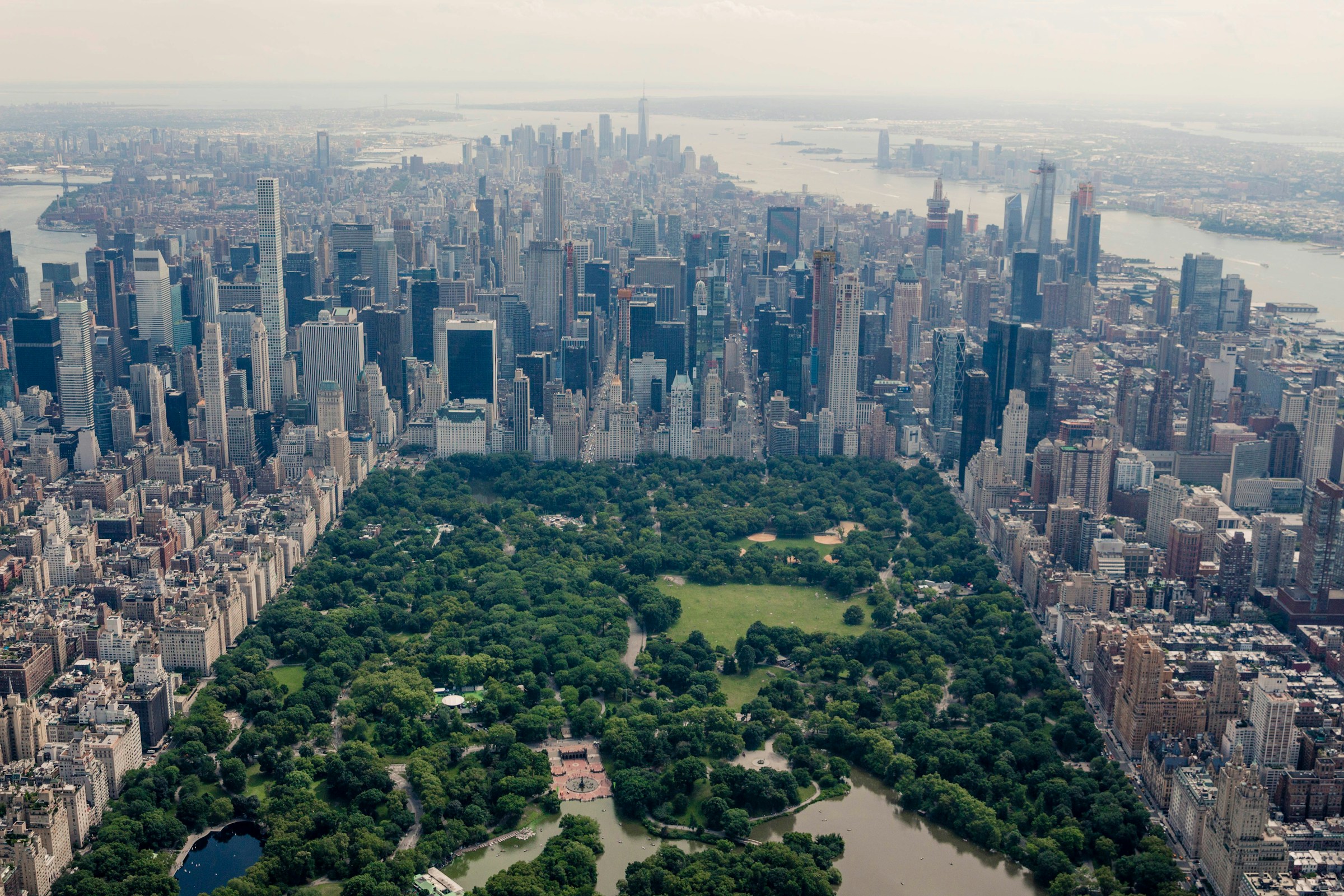
From world-class career opportunities and cultural landmarks to record-breaking rents and an increasingly competitive housing market, Manhattan remains one of the most desirable places to live in the world. But with the annual income needed to afford a typical rental apartment now reaching $215,000, the question is becoming increasingly difficult: Who can still afford to call Manhattan home?
MANHATTAN, NEW YORK – There are few places in the world that offer the same combination of opportunity, energy and cultural influence as Manhattan.
The island is home to some of the world’s most recognisable landmarks, leading financial institutions, international media companies, prestigious universities, celebrated restaurants and an extraordinary concentration of arts and entertainment.
From the bright lights of Times Square and the theatres of Broadway to the leafy avenues of the Upper West Side and the waterfront neighbourhoods of Lower Manhattan, the borough offers a lifestyle that continues to attract people from across the United States and around the world.
For ambitious professionals, entrepreneurs, artists and international newcomers, living in Manhattan can mean being at the centre of industries that shape the global economy.
Its public transportation network, walkable neighbourhoods, restaurants, museums, parks and professional opportunities make it possible to experience an unusually diverse urban lifestyle without depending on a car.
Central Park provides a remarkable green escape in the middle of one of the world’s busiest urban environments.
Broadway offers access to an internationally influential theatre scene, while Wall Street and Midtown remain synonymous with finance, business and corporate power. And yet, behind this extraordinary appeal lies an increasingly difficult financial reality.
The price of having Manhattan as an address is rising to levels that place it beyond the reach of many professionals, including people with relatively comfortable incomes by American standards.
The $215,000 threshold
A recent analysis by Realtor.com, reported by CBS News New York on October 27, 2026, found that the median asking rent for an apartment in Manhattan reached $5,375 per month in the third quarter of the year.
That represents an annual increase of 8.3%, or approximately $411 more per month than a year earlier. The financial implications are substantial.
According to the study, a household needs an annual gross income of approximately $215,000 to afford the median asking rent while keeping housing expenses within the commonly used 30% affordability threshold.
In practical terms, that means earning nearly $18,000 per month before taxes simply to maintain a rental budget considered financially sustainable by conventional housing standards.
The figure is particularly striking when compared with the incomes of ordinary American households. It also illustrates the growing divide between the cost of living in Manhattan and the financial capacity of people who might otherwise consider themselves middle-income professionals.
Importantly, the $215,000 figure is not a legal income requirement or a minimum salary imposed by landlords. It is an affordability benchmark based on gross household income.
A person earning less can still rent in Manhattan, but may need to share an apartment, devote a substantially larger proportion of income to housing or find accommodation below the borough’s median asking rent.
The pressure is not limited to Manhattan. Realtor.com’s third-quarter data show that median asking rents reached $4,197 in Brooklyn, $3,744 in Queens and $3,233 in the Bronx.
Nevertheless, Manhattan remains the most expensive of the four boroughs covered by the report.
An increasingly expensive housing market
The rental market reflects a wider problem: a limited supply of available apartments competing with sustained demand.
According to Corcoran’s September 2026 residential rental market report, Manhattan’s median rent reached $5,395, while the number of available rental listings fell 16% compared with the same month a year earlier.
The borough’s rental vacancy rate stood at approximately 1.54%, indicating just how little room there is for people searching for a new home. The pressure is visible across different types of accommodation.
Smaller apartments are particularly important for young professionals and people moving to New York alone. Studios and one-bedroom apartments can offer a more accessible entry point into the market, but they still command substantial rents in many of Manhattan’s most desirable neighbourhoods.
Larger apartments, meanwhile, can become prohibitively expensive for households that need additional bedrooms or space for children. Location also makes a considerable difference.
Harlem and parts of Upper Manhattan generally offer lower asking prices than neighbourhoods such as Chelsea, the Upper East Side, Tribeca or the West Village.
Yet even these comparatively less expensive areas are no longer inexpensive by the standards of most American cities.
For many newcomers, the decision is no longer simply about choosing a neighbourhood. It is about deciding how much of their income they are willing to sacrifice to live on the island.
Renting is expensive. Buying is an entirely different challenge.
For those hoping to escape rising rents by purchasing property, the financial barriers can be even higher.
PropertyShark’s September 2026 market data put Manhattan’s median home sale price at approximately $1.2 million, representing a 22.8% increase year over year.
At that level, even a buyer with a 10% down payment would need approximately $120,000 upfront, before accounting for closing costs, taxes, insurance, maintenance and other ownership expenses.
And the purchase price is only part of the equation. Condominium and cooperative apartments can involve additional monthly charges, including common expenses and property-related costs. Mortgage rates and lending requirements further determine how much a prospective buyer must earn to qualify.
Realtor.com’s broader New York City analysis illustrates the scale of the problem. In the third quarter of 2026, purchasing a median-priced home in the city was estimated to cost approximately $6,952 more per month than renting.
This creates an unusual situation: renting is increasingly expensive, but buying can be even further out of reach.
For many residents, the traditional progression from renting an apartment to purchasing a home is becoming increasingly difficult to achieve.
The real cost of moving to Manhattan
The financial commitment begins long before someone receives the keys to an apartment. A prospective tenant must typically demonstrate sufficient income, provide employment and financial documentation, pass the landlord’s screening process and have the funds available to secure the property.
At Manhattan’s median asking rent of $5,375, the first month’s rent alone represents more than $5,000.
Under New York City’s current rules, landlords can generally require a security deposit of up to one month’s rent. That means a tenant could need approximately $10,750 just for the first month and security deposit, excluding moving expenses, utility arrangements and other costs.
Broker fees also require careful consideration. New York’s Fairness in Apartment Rental Expenses (FARE) Act, which took effect in June 2025, changed the rules: a landlord generally cannot pass the fee for a broker they hired on to the tenant.
However, renters who independently hire their own broker may still be responsible for that broker’s fee.
There are also the less obvious expenses of establishing a life in the city: furniture, transportation, groceries, healthcare, insurance, utilities, restaurants and everyday services.
These costs can vary considerably depending on lifestyle and household size, but together they make the initial transition financially demanding.
For someone relocating from another American city or from overseas, the challenge is therefore not simply securing an apartment.
It is having enough financial reserves to establish a stable life while adapting to one of the country’s most expensive urban environments.
Who is moving to New York – and who is leaving?
The changing economics of Manhattan also raise a larger question about the future composition of New York City’s population.
The city continues to attract international residents, students, highly skilled professionals, entrepreneurs and people seeking access to its global labour market.
New York City’s 2026 edition of The Newest New Yorkers, published by the Department of City Planning, estimates that approximately 3.1 million immigrants lived in the city in 2023.
Immigration remains fundamental to New York’s identity and economy. Immigrants represent a significant share of its workforce and contribute to the cultural, commercial and social life of neighbourhoods across all five boroughs.
The profile of domestic newcomers is somewhat different. According to the same report, people moving to New York from elsewhere in the United States are more likely to be college-educated, employed in high-skilled industries and economically mobile than the city’s population overall.
Their median earnings were approximately $70,500, compared with $42,400 among international newcomers.
This distinction is important. While the city attracts people with very different financial circumstances, those arriving from other parts of the United States often have stronger economic resources than international migrants.
At the same time, New York is experiencing significant population movement in the opposite direction.
According to the New York City Department of City Planning, between 2014 and 2023 the city recorded a net domestic inflow of approximately 46,000 people aged 18 to 24.
However, it experienced substantial net domestic outflows among older age groups. The most pronounced losses were among people aged 30 to 39, with a net outflow of approximately 348,000 over the decade, followed by children under 18, with a net outflow of approximately 320,000.
The pattern points to a particularly important demographic shift: New York continues to attract young adults, but retaining people as they move into their thirties and start families presents a much greater challenge.
The city’s Economic Development Corporation identifies young families with children as a group particularly likely to leave.
Housing costs are not the only factor behind these decisions. Family needs, space, employment opportunities, childcare and the desire for a different lifestyle all play a role. Nevertheless, the growing cost of accommodation is an important part of the wider affordability debate.
The latest population estimates also reveal the scale of the movement. Between July 2024 and July 2025, New York City recorded net domestic migration of approximately minus 113,700 people, while international migration contributed a positive net figure of approximately 65,800. The overall population declined by around 12,200 during that period.
These figures cover the entire city, rather than Manhattan alone, but they provide an important picture of the demographic pressures affecting the borough.
A city increasingly divided by affordability
The emerging picture is not one of a city losing its appeal. Manhattan continues to attract talent, investment, international attention and people who want to participate in its economic and cultural life.
Rather, it is becoming a place where the ability to stay is increasingly determined by financial circumstances.
For high-income professionals working in finance, technology, law, consulting and other well-paid sectors, the cost of living may be manageable, particularly when supported by two incomes or substantial financial assets.
For younger professionals at the beginning of their careers, however, the calculation is very different. Sharing apartments, accepting smaller living spaces or moving further away from central Manhattan can become necessary compromises.
For families, the equation is even more complicated. Larger apartments, childcare, schools and the need for more space can make the borough increasingly difficult to sustain over the long term.
This creates a potential divide between those who come to Manhattan to build their careers and those who have the financial resources to establish a permanent home there.
It also raises questions about the kind of city Manhattan will become in the coming years. Can it remain a place where people from different economic backgrounds can build a life, or will it increasingly become an exclusive residential destination for the highest earners?
The Manhattan paradox
There is a fundamental contradiction at the heart of Manhattan’s appeal. The very qualities that make it so attractive – its concentration of jobs, international connectivity, cultural institutions, restaurants, universities and entertainment – also contribute to the demand that places pressure on its housing market.
People continue to arrive because the opportunities are exceptional. But the cost of accessing those opportunities is becoming increasingly difficult to justify for a growing number of households.
The $215,000 annual income benchmark is therefore more than an eye-catching statistic. It is a reflection of a broader economic reality: in one of the world’s most influential urban centres, a comfortable income is no longer necessarily enough to secure a comfortable home.
Manhattan remains a place where people come to pursue ambitions, reinvent themselves and experience life at an extraordinary pace.
The question is whether, in the years ahead, it will remain a place where ordinary working professionals and young families can afford to stay – or whether the privilege of living there will become increasingly reserved for those who can afford the price of admission.
Sources:
- CBS News New York, October 27, 2026 – Manhattan median asking rent rises over $5,300.
- Realtor.com, October 27, 2026 – New York City Rental Report 2026 Q3.
- Corcoran, September 2026 – NYC Residential Rental Market Report.
- PropertyShark, September 2026 – Manhattan Housing Market Trends.
- NYC Department of City Planning, 2026 – The Newest New Yorkers – Migration Report.
- NYC Department of City Planning – Population Estimates and Trends, March 2026. NYC Department of Housing Preservation and Development – Housing Search Resources.