Hidden between California and Hawaii, an enormous concentration of floating plastic has become one of the most disturbing symbols of modern pollution. It is not an island, it cannot be seen from space, and it took decades to create. But can humanity ever get rid of it?
Somewhere in the vast North Pacific Ocean, between the coast of California and the Hawaiian Islands, an environmental disaster has been quietly developing for decades. It is known as the Great Pacific Garbage Patch, and its name alone sounds almost unreal.
The area contains an extraordinary concentration of plastic waste, including discarded fishing nets, ropes, bottles, packaging and countless smaller fragments. It is one of the largest known accumulation zones of marine plastic on Earth, and a powerful reminder of how far human waste can travel once it enters the natural environment.
But there is something particularly disturbing about this pollution hotspot: much of it is practically invisible. There is no solid island of rubbish rising above the water, no continuous surface of plastic that ships must navigate around.
Instead, the garbage patch is a vast and constantly shifting area where floating debris is concentrated by ocean currents. And although the problem was brought to public attention in the 1990s, the plastic responsible for it had been accumulating for decades.
When Was the Great Pacific Garbage Patch Discovered?
The Great Pacific Garbage Patch became widely known in 1997, when American sailor and ocean researcher Charles Moore crossed the North Pacific Subtropical Gyre on his way back to California after participating in a sailing race from Los Angeles to Hawaii.
During the journey, Moore encountered large quantities of floating plastic debris in an area of the ocean where he had expected to find relatively undisturbed waters. His observations helped bring international attention to a problem that had previously received little public awareness.
The phenomenon itself, however, was not entirely unexpected. Scientists had already been studying plastic pollution in the oceans, and researchers had reported plastic particles in the Atlantic Ocean as early as the 1970s.
Moore’s discovery was important because it demonstrated the scale of plastic accumulation in the North Pacific and helped turn an emerging scientific concern into a global environmental issue.
The garbage patch did not suddenly appear in 1997. It had been developing gradually over many years, as increasing amounts of plastic entered the oceans and were carried by currents into areas where floating debris tends to accumulate.
How Did So Much Plastic End Up in the Middle of the Ocean?
To understand the problem, it is necessary to look at the extraordinary rise of plastic production during the second half of the twentieth century.
Plastic existed long before the modern environmental crisis, but its use expanded dramatically after the Second World War. It was cheap to manufacture, lightweight, durable and easy to shape into almost anything. It quickly became essential to packaging, consumer goods, construction, transport and countless industrial applications.
According to the Organisation for Economic Co-operation and Development (OECD), global plastic production increased from approximately 2 million tonnes in 1950 to 460 million tonnes in 2019 – a 230-fold increase.
The convenience of plastic came with a serious disadvantage: unlike many natural materials, it does not readily biodegrade. Instead, it can remain in the environment for decades or even centuries, gradually breaking into smaller pieces.
As plastic consumption expanded, so did the amount of waste. Some was properly collected and managed, but a significant proportion escaped into the environment through poorly managed disposal sites, rivers, coastal areas, shipping activities and fishing operations.
Eventually, much of this material found its way into the sea.
The Great Pacific Garbage Patch is therefore not the result of a single accident or a particular dumping event. It is the accumulated consequence of decades of plastic production, consumption, inadequate waste management and lost or abandoned fishing equipment.
The Ocean Currents That Created a Giant Plastic Trap
The main reason so much debris gathers in this particular part of the Pacific is a system of large-scale ocean currents known as the North Pacific Subtropical Gyre.
A gyre is a vast circular system of ocean currents influenced by wind patterns, the rotation of the Earth and the shape of ocean basins. The North Pacific Gyre circulates water across a huge area of the ocean, creating zones where floating material can gradually become concentrated.
Plastic entering the Pacific from coastal regions, rivers and maritime activities can be carried over enormous distances. As currents move, some of this debris eventually reaches the relatively slow-moving convergence zone within the gyre.
The result is a huge accumulation area where plastic is more concentrated than in the surrounding waters.
It is important to understand that the currents do not create a solid floating island. They simply increase the concentration of debris over a vast area. The boundaries constantly change according to currents, winds and other ocean conditions.
How Big Is It?
The scale is difficult to imagine. A major scientific study published in the journal Scientific Reports in 2018 estimated that the Great Pacific Garbage Patch covered approximately 1.6 million square kilometres. That is an area larger than France, Germany and Spain combined.
The same study estimated that the patch contained approximately 1.8 trillion pieces of plastic, with a total mass of around 79,000 tonnes. The researchers also stressed the uncertainty of these estimates, giving a possible range of 45,000 to 129,000 tonnes.
These figures are based on extensive research and surveys conducted before the study was published. They should not be interpreted as a precise measurement of the patch today, because the amount and distribution of plastic continue to change. Nevertheless, they provide an extraordinary picture of the scale of the problem.
Perhaps the most surprising finding concerns the composition of the debris. Microplastics account for approximately 94% of the estimated number of plastic pieces, but only around 8% of the total mass.
More than three-quarters of the mass comes from larger objects, and abandoned fishing nets alone account for at least 46%.
In other words, the garbage patch is not simply a cloud of microscopic particles. It also contains enormous quantities of discarded fishing equipment and other large plastic objects.
Not an Island of Rubbish – But a Plastic Soup
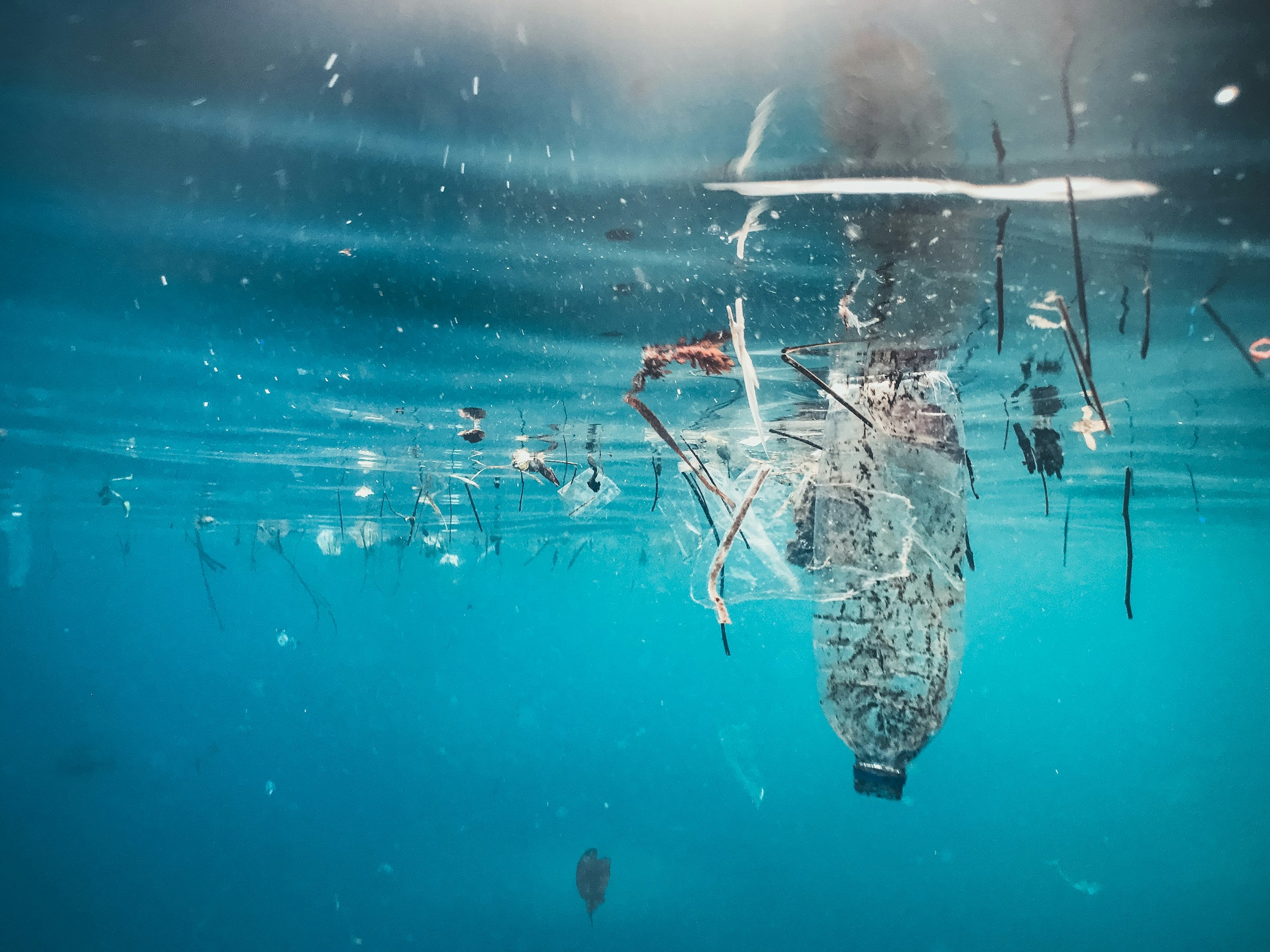
One of the most persistent myths about the Great Pacific Garbage Patch is that it is a solid island of waste on which someone could theoretically walk. Nothing could be further from the truth.
The debris is spread across a huge area and is distributed through the upper layers of the water. Some objects are visible on the surface, while countless smaller fragments are almost impossible to see without specialised equipment.
In some places, the water may look relatively clean from a passing ship. In others, floating nets, ropes, plastic containers and fragments can be encountered.
The smallest pieces are particularly worrying. Over time, sunlight, waves and mechanical forces break larger plastic objects into progressively smaller fragments. These particles are known as microplastics when they are smaller than five millimetres.
They do not simply disappear. Instead, they become increasingly difficult to collect and can enter marine food webs.
The US National Oceanic and Atmospheric Administration (NOAA) emphasises that garbage patches are not clearly defined islands. Their exact size and boundaries are difficult to establish because the debris is constantly moving and mixing with the surrounding water.
The Animals Paying the Price – And Why Whales Are Particularly Vulnerable
The Great Pacific Garbage Patch is not just an ugly accumulation of human waste. It creates serious risks for marine wildlife.
One of the most dangerous forms of pollution is discarded fishing equipment. Lost or abandoned nets can continue trapping animals long after they have stopped being used. This phenomenon is known as ghost fishing.
Turtles, seals, dolphins, seabirds and fish can become entangled in nets, ropes and plastic straps. Some are injured, while others become unable to swim, feed or reach the surface to breathe.
Whales are among the animals that can suffer particularly serious consequences. Large whales, including humpbacks and other baleen whales, can become entangled in fishing nets and lines.
Their enormous size does not protect them from the danger. Fishing gear can wrap around their bodies, flippers, tails or mouths, causing deep wounds and restricting their movement.
Some whales manage to free themselves, but others can remain entangled for months or even years. The additional drag can make swimming and feeding more difficult, while severe injuries may lead to infection, starvation or death.
There is another danger, too. Baleen whales feed by filtering enormous quantities of seawater, which means that plastic debris can become trapped in their feeding structures.
Other marine mammals may mistake plastic for food or ingest it accidentally while feeding.
Smaller marine organisms are also affected.
Fish, seabirds and other animals can swallow plastic fragments, which may cause internal injuries, blockages or a false sensation of fullness.
NOAA has documented the impacts of marine debris on more than 700 species. However, scientists point out that the remoteness of ocean garbage patches makes it difficult to observe and measure their full ecological impact directly.
The problem is not limited to individual animals. Plastic pollution can affect habitats, interfere with marine food webs and transport organisms to areas where they do not naturally belong.
Does Plastic Eventually Enter the Human Food Chain?
This is another important concern. Microplastics have been detected in a wide range of marine organisms, including fish and shellfish.
Some animals ingest them directly, while others consume smaller organisms that have already taken in plastic particles. This creates opportunities for plastic to move through marine food webs.
Plastic can also contain chemical additives, and its surfaces may interact with pollutants present in seawater. Researchers are continuing to investigate the biological consequences of these processes.
However, it is important not to oversimplify the science. The presence of microplastics in marine organisms does not automatically mean that every pollutant accumulates in a straightforward way at every level of the food chain.
The precise implications for ecosystems and human health remain an active area of research. What is already clear is that plastic pollution is no longer confined to beaches and remote ocean waters. It has become a widespread environmental problem.
Can the Great Pacific Garbage Patch Ever Be Cleaned Up?
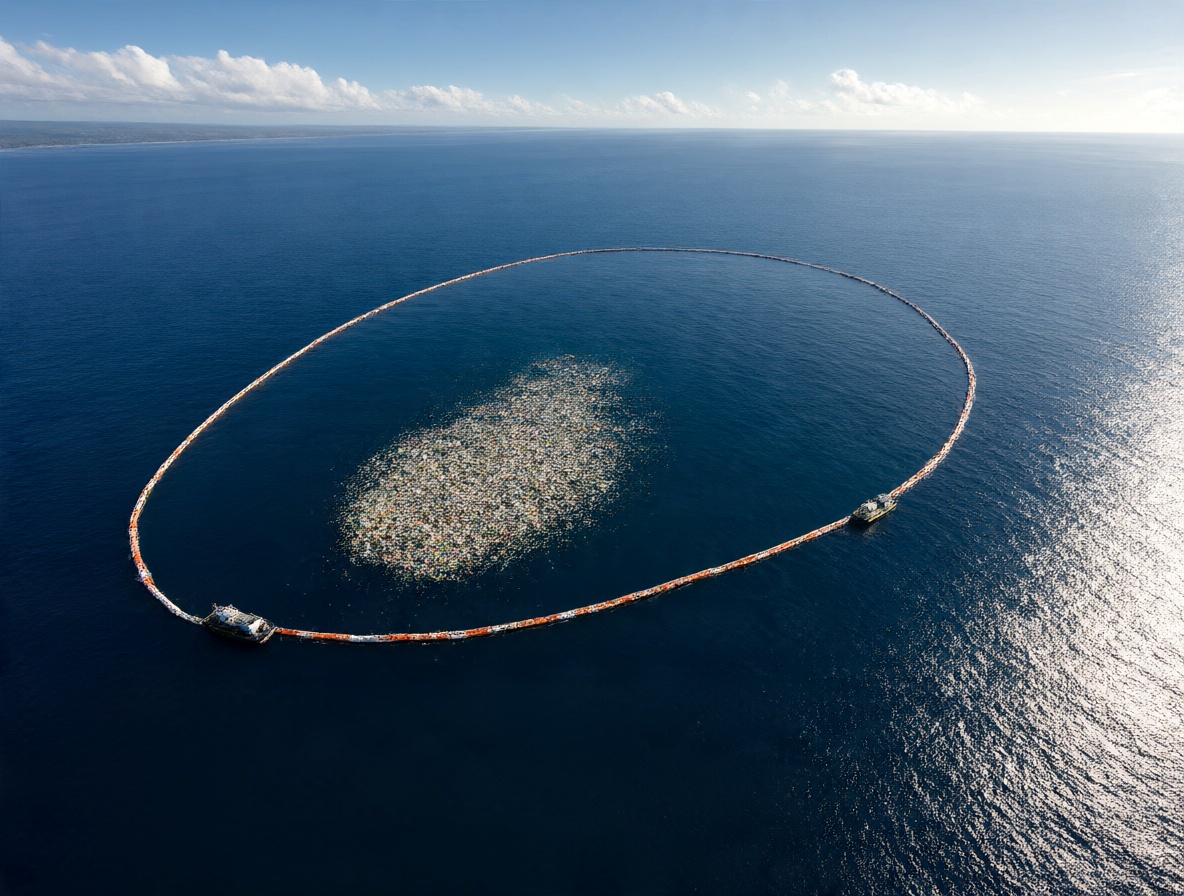
The good news is that attempts to remove plastic from the ocean are already underway. One of the best-known initiatives is The Ocean Cleanup, a project founded by Dutch inventor Boyan Slat. Its approach involves large floating systems designed to collect plastic debris as it moves through the water.
The organisation began collecting plastic from the Great Pacific Garbage Patch in 2021. Its current large-scale system, System 03, was deployed in 2023.
The basic principle is relatively straightforward: a floating barrier concentrates plastic in a controlled collection area, allowing it to be retrieved from the ocean and transported for processing.
These systems are designed to collect larger floating debris, including fishing nets and other plastic objects. They cannot simply vacuum up every microscopic particle dispersed throughout the water. And this is where the real challenge begins.
Even if large quantities of plastic are removed, new waste can continue entering the oceans. Meanwhile, existing plastic keeps breaking into smaller fragments, making it increasingly difficult to recover.
The Ocean Cleanup itself acknowledges that removing every piece of plastic from the oceans is not possible. Its stated ambition is to remove 90% of floating ocean plastic by 2040, but achieving that goal would require a substantial expansion of its operations.
Cleaning the Great Pacific Garbage Patch is therefore possible, at least in part. Completely restoring the area to a pristine condition is a much more difficult proposition.
Why Preventing Plastic Pollution Matters More Than Cleaning It Up
Perhaps the most important lesson of the Great Pacific Garbage Patch is that collecting waste from the ocean cannot be the only solution.
By the time plastic reaches the middle of the Pacific, it has already travelled a long distance and become part of a much larger environmental problem. Some objects can still be recovered, but smaller fragments are far harder to remove.
Preventing plastic from entering rivers, coastal waters and the ocean in the first place is essential.
This requires better waste collection and recycling systems, more responsible production and consumption, improved management of fishing equipment and stronger international cooperation.
The OECD has highlighted the enormous gap between the amount of plastic produced and the amount that is successfully recycled. Its 2022 report found that only around 9% of plastic waste was ultimately recycled in 2019.
That figure illustrates why the problem cannot be solved by beach clean-ups and ocean collection systems alone.
Reducing unnecessary single-use plastics, improving product design, recovering lost fishing gear and preventing waste from escaping into waterways are all part of the solution.
A Warning From the Middle of the Pacific
The Great Pacific Garbage Patch is one of the most striking examples of how human activity can transform even the most remote parts of the planet.
It took decades of expanding plastic production and inadequate waste management to create this enormous accumulation zone. It will take sustained international effort to reduce it.
There is reason for hope. New technologies are making it possible to recover some of the plastic already floating in the ocean, while scientific research and public awareness have brought the problem into the international spotlight.
But there is no simple machine that can make decades of pollution disappear overnight.
Perhaps the most disturbing aspect of the Great Pacific Garbage Patch is not its size, its estimated weight or even the number of plastic fragments it contains.
It is the fact that it represents only one of several major plastic accumulation zones in the world’s oceans. The Pacific is vast, but it is not immune to what happens on land. And the longer plastic continues to flow into the sea, the harder the problem will become to reverse.
Sources:
- Scientific Reports – Evidence that the Great Pacific Garbage Patch is rapidly accumulating plastic
- NOAA – What Is the Great Pacific Garbage Patch?
- OECD – Global Plastics Outlook
- NOAA Fisheries – Large Whale Entanglement Response
- NOAA – Ingestion of Marine Debris
- The Ocean Cleanup – Frequently Asked Questions
- Woods Hole Oceanographic Institution – A Brief History of Marine Plastics


