It began with a three-day harvest gathering in 1621 and a letter that was almost forgotten. Four centuries later, it is one of the largest travel weeks of the year in America.
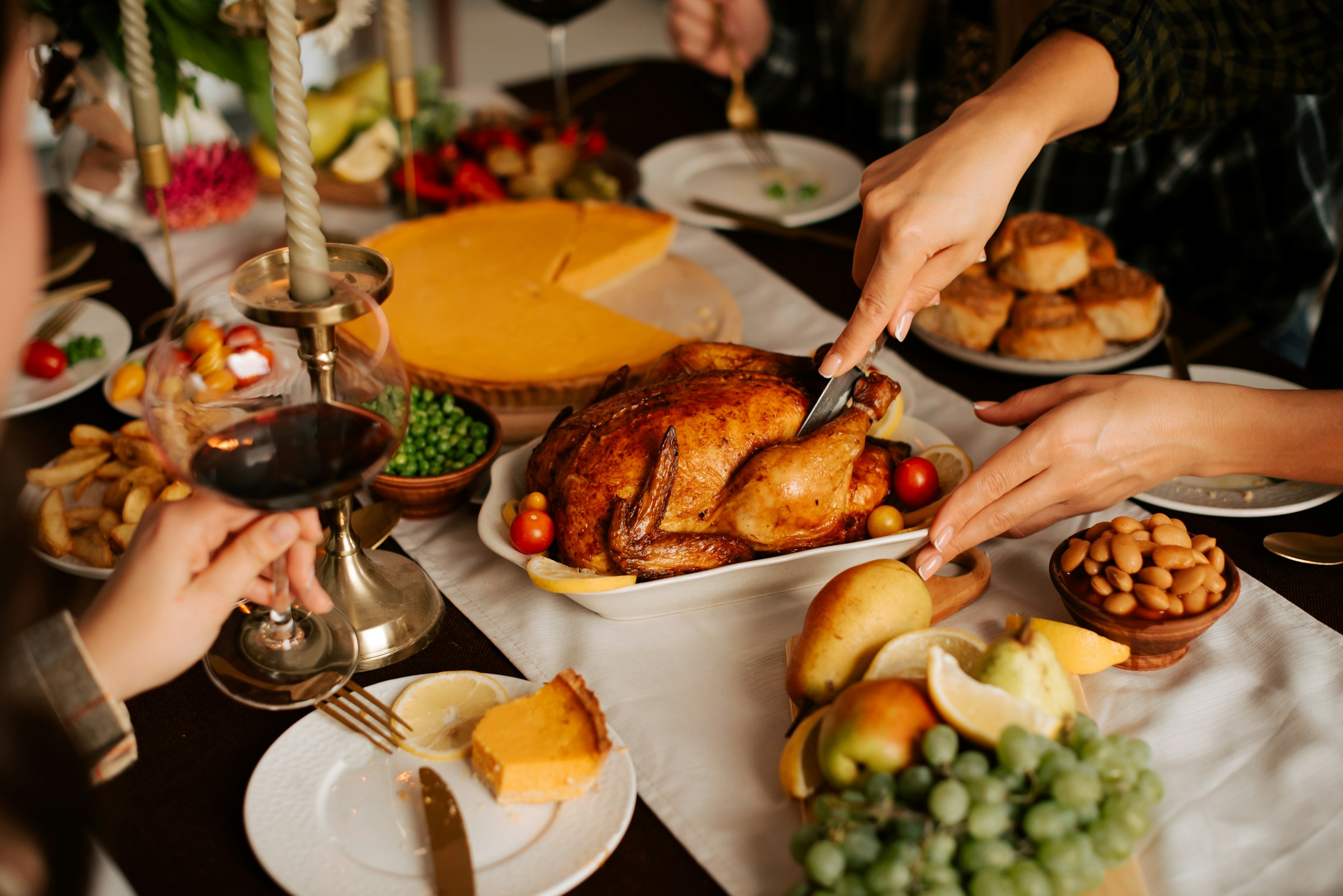
On the fourth Thursday of November, tens of millions of Americans sit down to a meal that is, in many ways, the most unified ritual in the country: turkey, family and a pause to say thanks.
This year (2026) it falls on November 26. Behind the table lies a story that is both simpler and more complicated than the one most people learned in school.
The Beginning: A Letter From 1621
The story starts in Plymouth, Massachusetts. In the autumn of 1621, a year after the Mayflower arrived, the English colonists held a harvest feast. About 50 colonists were joined by roughly 90 Wampanoag men, in what is now Massachusetts.
Almost everything we know comes from a letter written on December 11, 1621, by Edward Winslow, one of the colony’s leaders. He described a gathering that lasted three days, with fowling for the occasion, and the Wampanoag guests arriving.
There is less certainty than most Americans believe. Plimoth Patuxet Museums says the exact reason for the gathering, and what took place there, are not entirely known. The letter was printed in London in 1622 but was soon forgotten.
It was rediscovered in the 1800s, and in 1841, a Boston publisher, Alexander Young, reprinted the letter and called the feast the “First Thanksgiving.” The word, in fact, meant something different at the time.
For the New England colonies, “thanksgiving” was a religious observance of gratitude to God, called on varying dates, often after a harvest, a military victory or the end of a drought. It was not an annual holiday around a particular meal.
From Regional Custom to National Holiday
The woman who turned it into a national holiday was a magazine editor. Sarah Josepha Hale, author of the nursery rhyme “Mary Had a Little Lamb,” began campaigning in 1827 for a national day of Thanksgiving.
Over some 36 years, she petitioned governors, legislators and five presidential administrations. In September 1863, in the middle of the Civil War, she wrote to Abraham Lincoln, arguing that a shared holiday could foster unity.
On October 3, 1863, he proclaimed a national day of thanksgiving, to be held on the last Thursday of November.
The date was changed once more. In 1939, Franklin D. Roosevelt moved Thanksgiving a week earlier to give retailers a longer Christmas shopping season after the Depression, a plan critics derided as “Franksgiving.”
A presidential proclamation was only a guideline, so the states split: roughly half followed Roosevelt and half kept the traditional date, and some celebrated two Thanksgivings. He repeated the change in 1940 and 1941, and by mid-1941 even he admitted it had made no difference to retail sales.
Congress stepped in, and on December 26, 1941, Roosevelt signed a joint resolution setting Thanksgiving on the fourth Thursday of November. It has been there ever since.
The Other Story
For many Native Americans, the holiday carries a different meaning. The Wampanoag had lived in the area for about 12,000 years, according to archaeologists, and the village the English called Plymouth was known to them as Patuxet.
In 1970, a Wampanoag man, Wamsutta Frank James, was invited to speak at a dinner marking the 350th anniversary of the Pilgrims’ arrival. When organizers asked to review his speech, they objected to the content, and he did not deliver it.
Instead, on Thanksgiving Day that year, Native people and their supporters gathered on Cole’s Hill in Plymouth, calling it a National Day of Mourning.
The United American Indians of New England has held it every year since, at noon, calling the holiday a reminder of the loss of Native lives and land. Plymouth’s own museum, formerly Plimoth Plantation, has been renamed Plimoth Patuxet Museums and highlights Wampanoag perspectives.
What the Holiday Is About
The idea of the holiday has always been gratitude, and it has grown to include family, charity and the feeling of national belonging that Hale and Lincoln hoped for.
According to a Pew Research survey, 35 percent of Americans watch football on Thanksgiving and 19 percent watch a parade, while 19 percent plan to donate food or goods.
Who Else Celebrates?
America does not have the holiday to itself, but most other versions are separate traditions.
- Canada celebrates on the second Monday in October. Parliament established a national day in 1879, and in 1957 it moved the date to October.
- Grenada marks its own Thanksgiving Day on October 25, the anniversary of the 1983 joint Caribbean and American invasion of the island.
- Liberia observes it on the first Thursday of November, a tradition that came from the United States.
- Norfolk Island, an Australian territory, observes it on the last Wednesday of November, a custom introduced by visiting American whaling ships.
- Japan marks Labor Thanksgiving Day on November 23. It is derived from an ancient harvest festival that goes back to the seventh century, and took its modern form in 1948 as a celebration of workers’ rights.
And in Europe?
Not as a national holiday. There is one connection: before sailing on the Mayflower, many of the Pilgrims lived in Leiden in the Netherlands, between 1609 and 1620. Today, the city still marks the American holiday with a non-denominational church service on the morning of Thanksgiving.
Elsewhere, Europe has its own harvest festivals, and they are older than the American one. In Germany, Austria and Switzerland, Erntedankfest is held on the first Sunday of October, with church services and altars decorated with produce, and in Britain, the Harvest Festival takes place in late September.
According to one account, European harvest celebrations date back to pagan times. There is little reason for Europeans to adopt an American one. Thanksgiving, as a national holiday, is tied to the American story, with Pilgrims, Lincoln and a Civil War. Europe’s version has its own history and calendar.
The Largest Travel Week
Thanksgiving is also a holiday on the move. Last year, AAA projected a record 81.8 million Americans would travel at least 50 miles from home for the holiday, 1.6 million more than the year before. Wednesday is typically the busiest day for rental cars, with Orlando, Atlanta, Las Vegas, Los Angeles and Newark leading in demand.
The most popular domestic destinations in AAA’s booking data are Orlando, Fort Lauderdale, Miami, Anaheim/Los Angeles, Tampa, New York, San Francisco, Honolulu, Las Vegas and Atlanta. Many Americans go abroad as well: Paris, Amsterdam, Vienna, Cancun, Punta Cana, Basel, Sydney, Barcelona, Budapest and Aruba made the international list.
Cruises are also growing, with AAA projecting 21.7 million Americans cruising in 2026. In New York, the Macy’s Thanksgiving Day Parade is one of the holiday’s most famous events, and Plymouth itself fills with visitors, who can see the museums, the Mayflower II replica and the National Day of Mourning march.
Has the Tradition Changed?
In many ways, yes. The classic image is a table at home, and it remains the norm: in a Pew survey, 34 percent planned to celebrate at their own residence, and 39 percent at someone else’s, while only 3 percent planned to eat out.
But the picture varies by survey. According to the National Restaurant Association, about 4.4 percent of Americans ate Thanksgiving dinner at a restaurant four decades ago, compared with more than 10 percent in a later estimate.
A Popmenu survey found 37 percent of consumers planned to order takeout or delivery for Thanksgiving dinner, up from 32 percent the year before. And “Friendsgiving,” in which people celebrate with friends instead of family, is a growing alternative: in a 2024 Statista survey, 73 percent said they would celebrate with family and 20 percent with friends.
The numbers differ because the surveys ask different questions, and no single estimate captures everything. What they have in common is a sense that the holiday is adapting: more people traveling, more ordering in, and more flexibility about who is at the table. But the core idea, to stop and say thanks, has changed very little since Hale and Lincoln.
Sources:
- National Geographic, “Thanksgiving 2012: Facts, History” (Nov. 2012): nationalgeographic.com/news/2012/11/121120-thanksgiving-2012-dinner-recipes-pilgrims-day-parade-history-facts
- Christian Science Monitor, “Thanksgiving Time Line” (from Plimoth Plantation historians, 1996): csmonitor.com/1996/1126/112696.feat.feat.2.html
- LinguisticsGirl, “A Short History of Thanksgiving: From Pilgrim Myth to Modern Celebration”: linguisticsgirl.com/a-short-history-of-thanksgiving-from-pilgrim-myth-to-modern-celebration/
- Out & About Magazine, “Tradition on the Table”: outandaboutnow.com/tradition-on-the-table/
- Uncharted Lancaster, “Brief History of Thanksgiving’s Evolution”: unchartedlancaster.com/2023/11/23/brief-history-of-thanksgivings-evolution/
- TeacherVision, “Thanksgiving history”: teachervision.com/page/2414.html
- The Catoctin Banner, “Let’s Talk Turkey”: thecatoctinbanner.com/lets-talk-turkey/
- Fox News, “Thanksgiving history and origins”: foxnews.com/lifestyle/thanksgiving-history-holiday-traditions-origins
- Mass Moments, “First ‘National Day of Mourning’ held in Plymouth (Nov. 26, 1970)”: massmoments.org/moment-details/first-national-day-of-mourning-held-in-plymouth.html
- The Philadelphia Inquirer, “How do Native Americans celebrate Thanksgiving?” (2019): inquirer.com/news/how-do-native-american-celebrate-thanksgiving-day-of-mourning-20191128.html
- Al Jazeera, “Indigenous say ‘no thanks, no giving’ 400 years after Mayflower” (Nov. 26, 2020): aljazeera.com/news/2020/11/26/no-thanks-no-giving-natives-on-400-years-of-mayflower-landing
- Juneau Empire / AP, on the National Day of Mourning: juneauempire.com/?p=78713
- Plimoth Patuxet Museums, “National Day of Mourning Monument (1998)”: plimoth.org/yath/unit-5/national-day-of-mourning-monument-1998
- See Plymouth, “Thanksgiving Day in Plymouth”: seeplymouth.com/event/thanksgiving-day-in-plymouth/
- History.com, “8 Thanksgiving Celebrations Around the World”: history.com/news/8-thanksgiving-celebrations-around-the-world
- Mental Floss, “How 7 Other Nations Celebrate Thanksgiving”: mentalfloss.com/article/60261/how-7-other-nations-celebrate-thanksgiving
- Modern Farmer, “Countries That Celebrate Thanksgiving” (2017): modernfarmer.com/2017/11/countries-celebrate-thanksgiving/
- The Forgiveness Foundation, “Celebrating Thanksgiving Around the World”: theforgivenessfoundation.org/?p=2843
- Pew Research Center survey, via Finger Lakes 1, “Thanksgiving traditions reflect diverse activities” (Nov. 2024): fingerlakes1.com/2024/11/23/thanksgiving-traditions-reflect-diverse-activities-and-family-dynamics-across-the-u-s/
- Statista Consumer Insights, “Thanksgiving, Friendsgiving or Home Alone?”: statista.com/chart/amp/28817/thanksgiving-plans-gcs
- CBS News, “Pass the mashed potatoes and the credit card” (National Restaurant Association data): cbsnews.com/news/pass-the-mashed-potatoes-and-the-credit-card
- Restaurant Dive, “Over a third of consumers ordering out for Thanksgiving”: restaurantdive.com/news/over-third-consumers-ordering-out-thanksgiving-popmenu-survey/734095/
- ConsumerAffairs, “Ordering a Thanksgiving Day dinner is a growing trend”: consumeraffairs.com/news/ordering-a-thanksgiving-day-dinner-is-a-growing-trend-112624.html
- AAA via WRNJ, “AAA expects record 81.8 million Thanksgiving travelers”: wrnjradio.com/aaa-expects-record-81-8-million-thanksgiving-travelers-with-majority-hitting-the-road/
- AAA via Lodging Magazine: lodgingmagazine.com/aaa-81-8-million-travelers-to-head-50-miles-or-more-from-home-over-thanksgiving/
- Benzinga, on AAA’s Thanksgiving forecast: benzinga.com/z/48916564
- AAA via Western Kansas News, “Nearly 82 Million Americans Projected to Travel over Thanksgiving” (cruise forecast for 2026): westernkansasnews.com/?p=99457
- Newspapers.com, “FDR Moves Thanksgiving: November 23, 1939”: blog.newspapers.com/fdr-moves-thanksgiving/
- Sarah Sundin, “Thanksgiving in World War II”: sarahsundin.com/?p=402