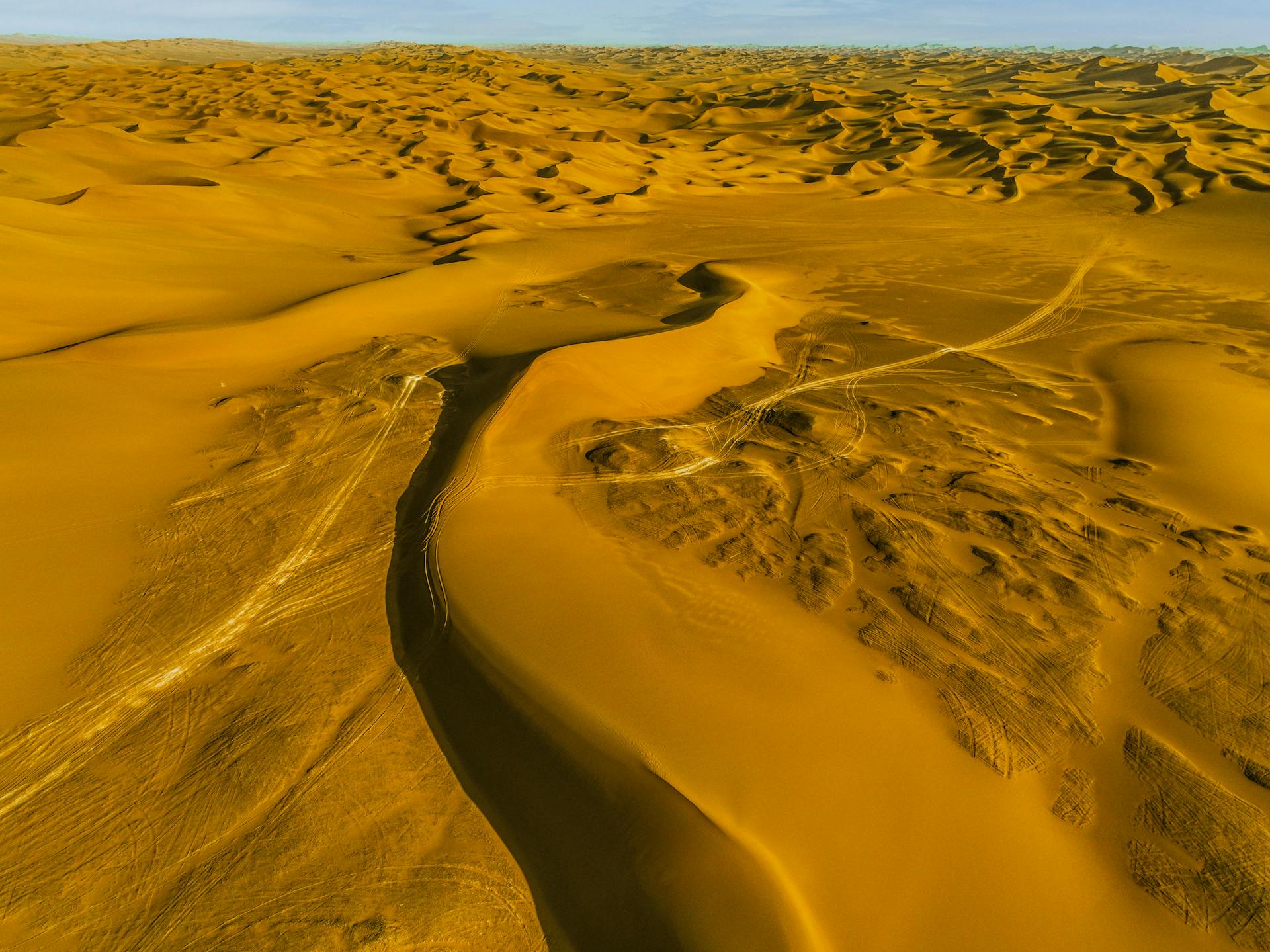
On April 17, 2026, a powerful sandstorm swept across the Xinjiang Uygur Autonomous Region in northwest China, drawing attention due to its intensity and impact on daily life.
The event is part of a broader pattern of seasonal dust storms that affect northern China, but recent reports suggest particularly strong conditions, raising concerns about environmental and public health consequences.
What Happened?
On April 17, 2026, strong winds triggered massive walls of sand and dust across several parts of Xinjiang.
In cities such as Urumqi, visibility dropped dramatically – at times to between 500 and 1,000 meters – disrupting transportation and daily activities.
Some reports described near-zero visibility in affected areas, forcing drivers to stop on roads as dense dust clouds made the air difficult to breathe.
Chinese authorities also issued weather alerts warning of blowing sand and dust across multiple northern regions, including Xinjiang, highlighting the scale of the event.
Sandstorms in Xinjiang: A Springtime Phenomenon Rooted in Nature and Geography
Sandstorms are a common springtime occurrence in China’s Xinjiang region, home to the Taklamakan Desert – one of the world’s largest and most formidable sandy deserts.
While such storms are not unusual, their intensity and frequency are shaped by a combination of natural and geographic factors.
Strong winds and cold fronts play a key role, as sudden atmospheric shifts lift vast quantities of sand into the air.
These conditions are compounded by dry soil and sparse vegetation, which allow dust particles to become airborne with ease.
The region’s arid climate and limited plant cover create an environment where sand and dust are readily mobilized by even moderate winds.
Adding to the problem is the unique geography of the Tarim Basin, a low-lying area where dust tends to accumulate.
Once settled, these particles can be re-suspended by subsequent winds, effectively turning the basin into a recurring “dust reservoir” that fuels repeated sandstorms.
According to scientists, the overwhelming majority of dust in Xinjiang originates from natural sources, including the desert itself and dried lakebeds.
Human activities, while not the primary driver, can exacerbate the issue by further reducing vegetation and disturbing fragile soil surfaces.
Impacts on Health, Society and Environment
Sandstorms significantly worsen air quality by increasing concentrations of particulate matter (PM10 and PM2.5), which can penetrate deep into the lungs. Long-term exposure is associated with respiratory and cardiovascular diseases.
Authorities advised residents to wear masks and protect their eyes and respiratory systems during the storm.
Low visibility caused dangerous driving conditions, forcing vehicles to slow down or stop entirely. Air and ground transport are often affected during such events.
In addition, sandstorms can temporarily shut down outdoor work, delay logistics, and reduce productivity in affected regions.
Regional and Global Context
Dust storms in northern China can have far-reaching effects. Historically, similar events have transported dust across East Asia and even across the Pacific Ocean.
Recent alerts show that such storms often extend beyond Xinjiang to regions like Inner Mongolia, Beijing, and other northern provinces.
Climate change, desertification, and land-use changes are believed to influence the frequency and intensity of these storms, although natural factors still dominate in Xinjiang.
The recent sandstorm from April17, 2026, in Xinjiang highlights the persistent environmental challenges posed by desert regions and extreme weather patterns.
While such events are seasonal, their intensity and impact underscore the need for improved forecasting, public health preparedness, and long-term environmental management.
Sources:
- China Daily / Xinhua – China renews blue alerts for sandstorms
- China Daily / Xinhua – Emergency response for meteorological disasters
- CGTN – Sandstorms hit Xinjiang (April 2026)
- YourWeather – Gigantic sandstorm in Xinjiang
- Newsflare – Sandstorms hit China’s Xinjiang
- Nature Scientific Reports – Air pollution and health risks in Xinjiang
- NASA Earth Observatory – Dust storms in Xinjiang and Tarim Basin
- Historical context – China dust storms and transboundary effects