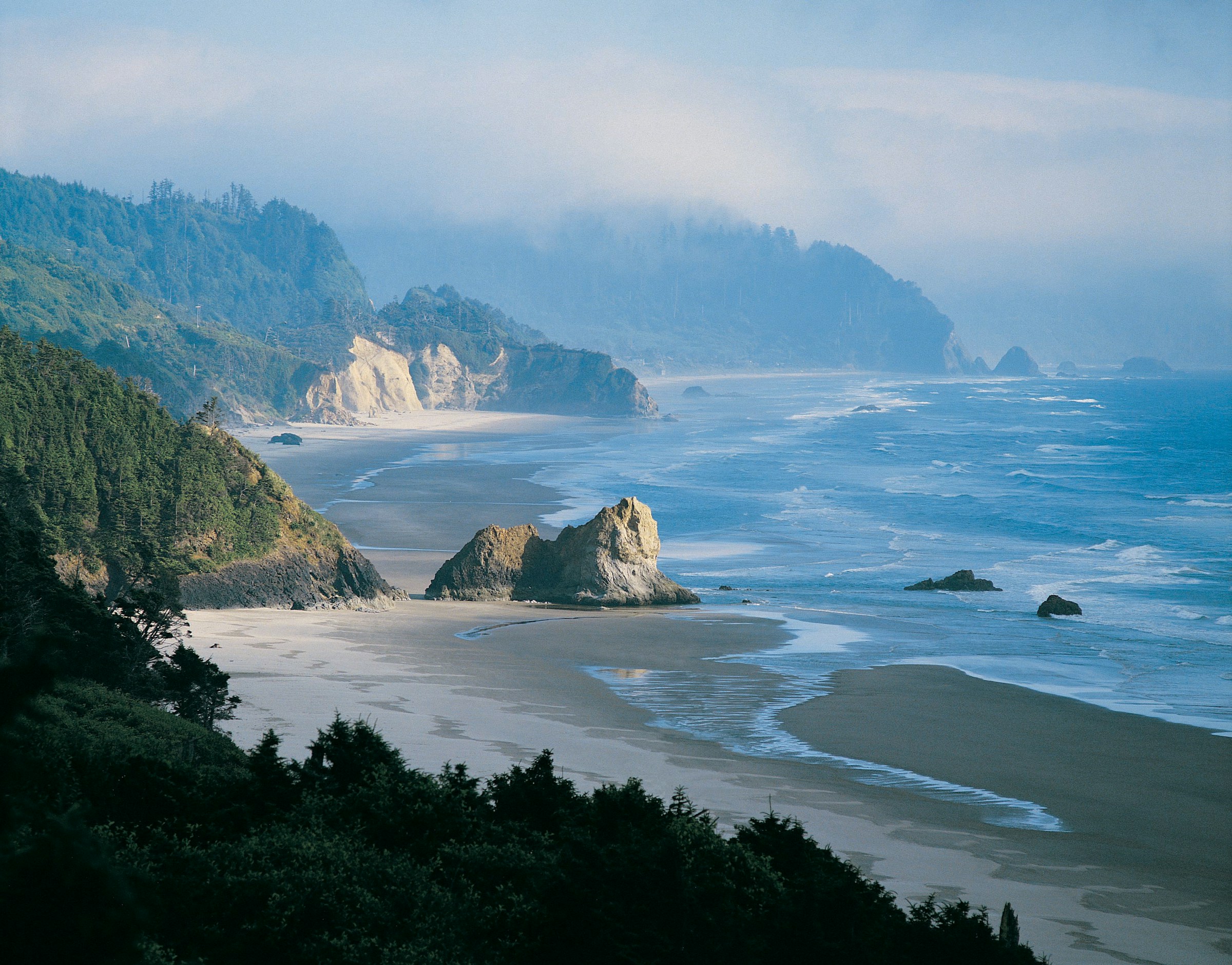
Most coastlines kill sailors by drowning them. Namibia’s Skeleton Coast does something crueler – it lets you live. Then it strands you in one of the most lethal deserts on Earth, with the ocean at your back and nothing but sand in front of you for hundreds of miles.
Fifteenth-century Portuguese sailors called it As Portas do Inferno – the Gates of Hell. The San people of the Namibian interior call it “the land God made in anger.”
Modern maps just call it the Skeleton Coast, and for centuries it has killed people the same brutal way: by throwing their ships onto a desert shoreline and leaving the survivors to die of thirst.
The First European to Find It Barely Escaped With His Life
The Western world’s introduction to this coastline came in 1486, courtesy of Portuguese navigator Diogo Cão.
At the height of Portugal’s age of exploration, Cão was pushing south along the African coast, confident he was closing in on the continent’s southern tip and the sea route to India.
Instead, his ship sailed into a wall of thick, gray fog. When it briefly cleared, his crew found themselves staring at an endless run of sand dunes collapsing straight into a freezing ocean – with no vegetation, no shelter, and no sign of anything they’d come looking for.
Cão still went ashore, at a rocky point now known as Cape Cross, and planted a stone cross – a padrão – to formally claim the land for the Portuguese crown, as was custom. But the place terrified his crew.
There was no fresh water anywhere, the air reeked of rotting seal carcasses, and the San hunter-gatherers watching from a distance looked, in the fog, like shadows.
Portugal’s sailors quickly realized there was no gold here, no spices – and worse, no way to survive if they didn’t leave immediately. Cão named the stretch As Portas do Inferno and got his ships out as fast as he could.
He didn’t get far. According to some historical accounts, Cão died not long after, further down this same coastline – one of the first recorded casualties of what would become one of the deadliest coasts in the world.
Four Centuries of “Stay Away”
After Cão, European mapmakers essentially gave up on the region, leaving it a blank space marked, at best, with warnings about deadly currents and impenetrable fog.
For nearly 400 years, Portuguese, Spanish, and British sailors deliberately steered wide around it on their way to the Cape of Good Hope.
Word spread among mariners of a “coast of death,” where the wind blew in only one direction – toward land – and no ship that got too close ever came back.
The only people who could actually survive there were the Damara and San peoples, who lived inland in the Namib Desert and came down to the shore only to scavenge whales, sharks, and blubber washed up by the sea.
The 19th Century Whaling Boom Turned It Into a Graveyard
Real carnage began in the 1800s, driven by the global whaling industry. American and British whaling ships pushed into the cold waters of the Benguela Current, chasing enormous whale populations.
Because processing whale blubber required staying close to shore, the combination of fog, brutal surf, and unmapped sandbanks began swallowing ships one after another.
That’s when the modern name was born. Sailors who managed to reach land found a shoreline littered with the bleached bones of whales and old Portuguese caravels – and, increasingly, the bones of the shipwrecked sailors themselves.
The name “Skeleton Coast” is generally traced to 1933, when a South African journalist covering the search for a missing aircraft and pilot along this same stretch of coastline used the phrase in his reporting.
It stuck – and by the time journalist John Henry Marsh published his 1944 book chronicling one of the coast’s most infamous wrecks, the name had become permanent.
The Rescue That Took a Month, Three Wrecks, and a Plane Crash

That infamous wreck was the Dunedin Star. In November 1942, the British cargo liner – carrying 85 crew, 21 passengers (among them women and children), and a hold full of wartime munitions – struck a submerged object just off the coast and began taking on water.
Her captain deliberately ran her aground to keep her from sinking outright. What followed became one of the most drawn-out rescue operations in maritime history.
Some passengers made it ashore by lifeboat, only to find the surf too violent to launch the boats back out – stranding them on the sand with no water under a relentless sun.
A rescue ship sent from Cape Town ran aground trying to reach them. A second rescue ship was damaged by the same surf.
A military aircraft sent to airdrop food and water crashed while landing on the dunes. Eventually, rescuers organized a land convoy of trucks that spent weeks crossing uncharted stretches of the Namib Desert to reach the survivors and bring them out.
The whole operation took roughly a month, cost several rescuers their lives, and claimed two more ships and an aircraft in the process – a fitting demonstration of just how unforgiving this coastline remained, even against 20th-century technology.
Where Ice Water Meets a Furnace
The root of all this danger is a brutal climate clash: the freezing Antarctic-fed Benguela Current running north along the shore, colliding with the scorching heat of the Namib Desert.
When that cold water meets the desert’s hot air, it produces an extremely dense, disorienting fog – locally called cassimbo – that blankets the coast more than 300 days a year and can drop without warning, blinding ships’ captains.
Then there’s the surf. With no natural bays or reefs to absorb the ocean’s force, waves roll in from thousands of miles of open Atlantic and slam directly into the dunes.
Even a sailor who survives the wreck and swims to shore faces surf powerful enough to capsize a lifeboat – or shatter bones against the seabed. Getting into the water here isn’t especially hard. Getting back out again, almost impossible.
Surviving the Wreck Was Just the Start of the Nightmare
This is what makes the Skeleton Coast different from almost anywhere else. In most shipwrecks, the danger is drowning. Here, plenty of sailors survived the wreck itself – only to discover they’d traded one death sentence for another.
Step onto this beach to escape the ocean, and what greets you is hundreds of kilometers of scorching, waterless desert. No food, no fresh water, no villages, no way out.
Daytime temperatures are punishing; at night, they can fall close to freezing. Historically, sailors have died of dehydration within sight of their own wrecked ships, staring back out at the ocean that put them there.
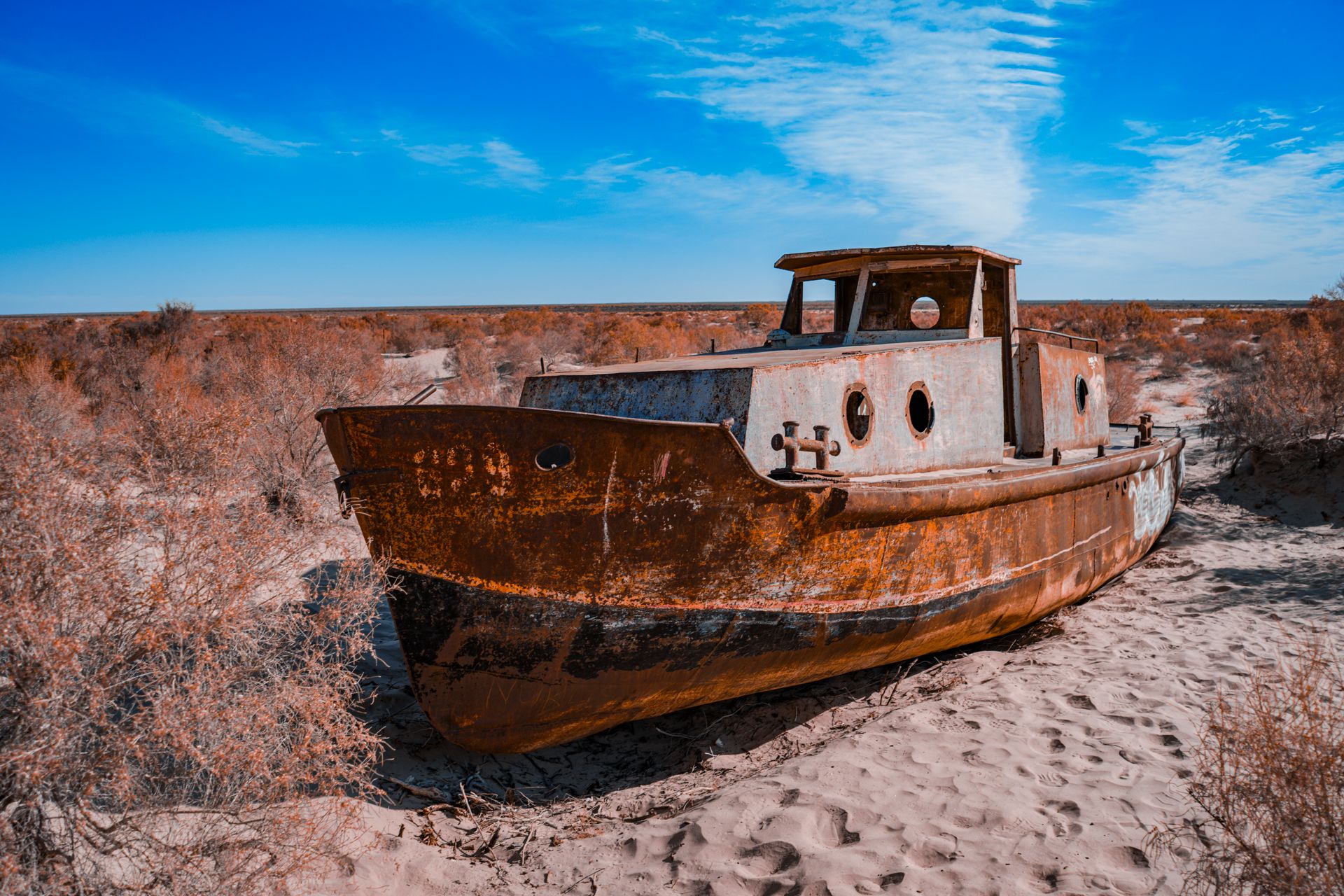
Because the desert air and sand preserve metal and wood so well, wrecked ships here don’t sink beneath the waves – they simply rust in place on the sand, sometimes ending up tens of meters, or more, inland, as the desert slowly swallows the shoreline and pushes it seaward over time.
The most famous of these ghost ships is the German cargo-passenger steamer Eduard Bohlen. She ran aground in thick fog in September 1909.
Thanks to a century of shifting dunes, her wreck now sits more than 500 meters inland, completely surrounded by sand – a ship that appears to have wrecked in the middle of nowhere.
How Cold, Exactly, Is This Water?

Despite sitting at the edge of the tropics, next to one of the hottest deserts on Earth, the ocean here is bitterly cold – typically 12-15°C / 53 – 59°F year-round, sometimes dropping under 10°C / 50°F in winter.
(For comparison, the Mediterranean runs 25-30°C / 77-86°F in summer.) The culprit is the Benguela Current, pumping icy water up from the depths of the Antarctic Ocean.
Fall into water that cold without a wetsuit, and the effect is immediate: cold shock, involuntary gasping, and hypothermia setting in fast.
A shipwreck survivor who makes it to shore is often already at the edge of physical collapse from the water alone – and that’s before the desert part of the ordeal even begins.
The currents don’t help. The Benguela Current itself runs powerfully northward, and where it interacts with the region’s relentless southwesterly winds, it creates conditions strong enough to overwhelm not just a swimmer but small boats.
Add in dangerous rip currents pulling out to sea with enormous force, and heavy surf with no bays or reefs to blunt it, and you get a coastline that generates genuinely massive kinetic energy with every wave.
Can You Even Swim There?
On the Skeleton Coast proper, essentially no. Going into the water here would be close to suicidal – even experienced surfers and thrill-seekers avoid it.
Getting in is manageable; getting back out, against that surf, generally isn’t. And if anything goes wrong – which is close to guaranteed – the nearest helicopter or rescue team could be 500 kilometers away.
The cold, nutrient-rich waters here are also home to some of the largest populations of great white sharks and Cape fur seals anywhere on Earth.
The Exceptions – And Why They Don’t Count
The only places along the Namibian coast where people regularly go into the water are much farther south.
Walvis Bay and Swakopmund have sheltered bays and real urban infrastructure. The water is still cold enough to require a wetsuit, but without the destructive surf.
Skeleton Bay is famous among professional surfers worldwide for producing one of the longest, most perfect barreling waves on the planet. Only elite surfers in thick wetsuits, fully aware of the shark and hypothermia risks, attempt it. For anyone else, it’s off-limits.
The Seals, and the Sharks That Come for Them
What most visitors actually see along this coast aren’t true seals but Cape fur seals – an eared seal species.
Cape Cross hosts one of the largest colonies on Earth: during breeding season (November-December), somewhere between 210,000 and 250,000 animals crowd onto a relatively small stretch of rocky shore. The sight and sound are overwhelming, and the smell carries for kilometers.
The reason there are so many comes back to the Benguela Current again – it hauls enormous volumes of nutrients and plankton up from the deep, sustaining massive populations of anchovy and sardine that keep the seals fed.
And where there are hundreds of thousands of calorie-rich seals, predators follow. Great white sharks patrol the shallow waters just offshore from the colonies, and feeding intensifies whenever young pups start learning to swim.
The broadnose sevengill shark – an ancient, aggressive species built for cold, murky water – hunts here too, sometimes in coordinated groups close to shore. Bronze whaler sharks are common as well, often chasing baitfish right into the surf line.
Land Predators That Hunt the Sea
Perhaps the strangest thing about this coast is something you won’t find almost anywhere else: desert predators hunting marine animals.
Because the seal colonies sit right on the sand, brown hyenas – and even desert-adapted lions – regularly come down from the dunes to hunt young seals or scavenge whales and sharks washed ashore.
Sources and further reading:
- Skeleton Coast – Wikipedia
- MV Dunedin Star – Wikipedia
- The Shipwrecks of Skeleton Coast, Namibia – Amusing Planet
- Namibia: The Skeleton Coast – Dunedin Star
- Namibia Trivia: Deadly Paradise – Overseas Adventure Travel
Note: Accounts of exactly who first coined the name “Skeleton Coast” in 1933 vary between sources – some credit a journalist reporting on a search for a downed aircraft, others trace the name’s popularization to John Henry Marsh’s 1944 book. This piece presents the general, widely corroborated version rather than a single disputed detail.