The water at Iguazu Falls is surging so violently that authorities are dismantling one of the attraction’s most spectacular walkways – and they don’t know exactly when tourists will be able to use it again.
The famous Devil’s Throat (Garganta del Diablo) walkway on the Argentine side of the falls was closed as a precaution in early August, as officials prepare for another potentially extreme rise in the Iguazu River.
The reason is simple: there is now so much water moving through the falls that protecting the infrastructure has become more important than keeping the most famous viewpoint open.
River levels have already reached extraordinary levels this year, with flows reported at around 7,300 to 8,000 cubic meters per second during the recent surge. That’s several times the river’s typical flow. And officials are worried that the worst may still be ahead.
The Big Picture
- Where: Iguazu Falls, on the Argentina-Brazil border
- What is closed: The Argentine Devil’s Throat walkway
- Why: Exceptionally high river levels and forecasts for further flooding
- When the closure began: August 3, 2026
- What is happening to the walkway: Sections of its flooring and railings are being dismantled and stored safely
- What remains open: The Argentine Upper and Lower Circuits, subject to conditions
- When it will reopen: No firm date has been announced
- Main concern: Forecasts indicate potentially extreme river flows in September and October
The Falls Are Putting Their Own Infrastructure at Risk
Iguazu Falls is one of the world’s most famous natural attractions, but its visitor infrastructure was never designed to simply sit in the path of an extreme flood.
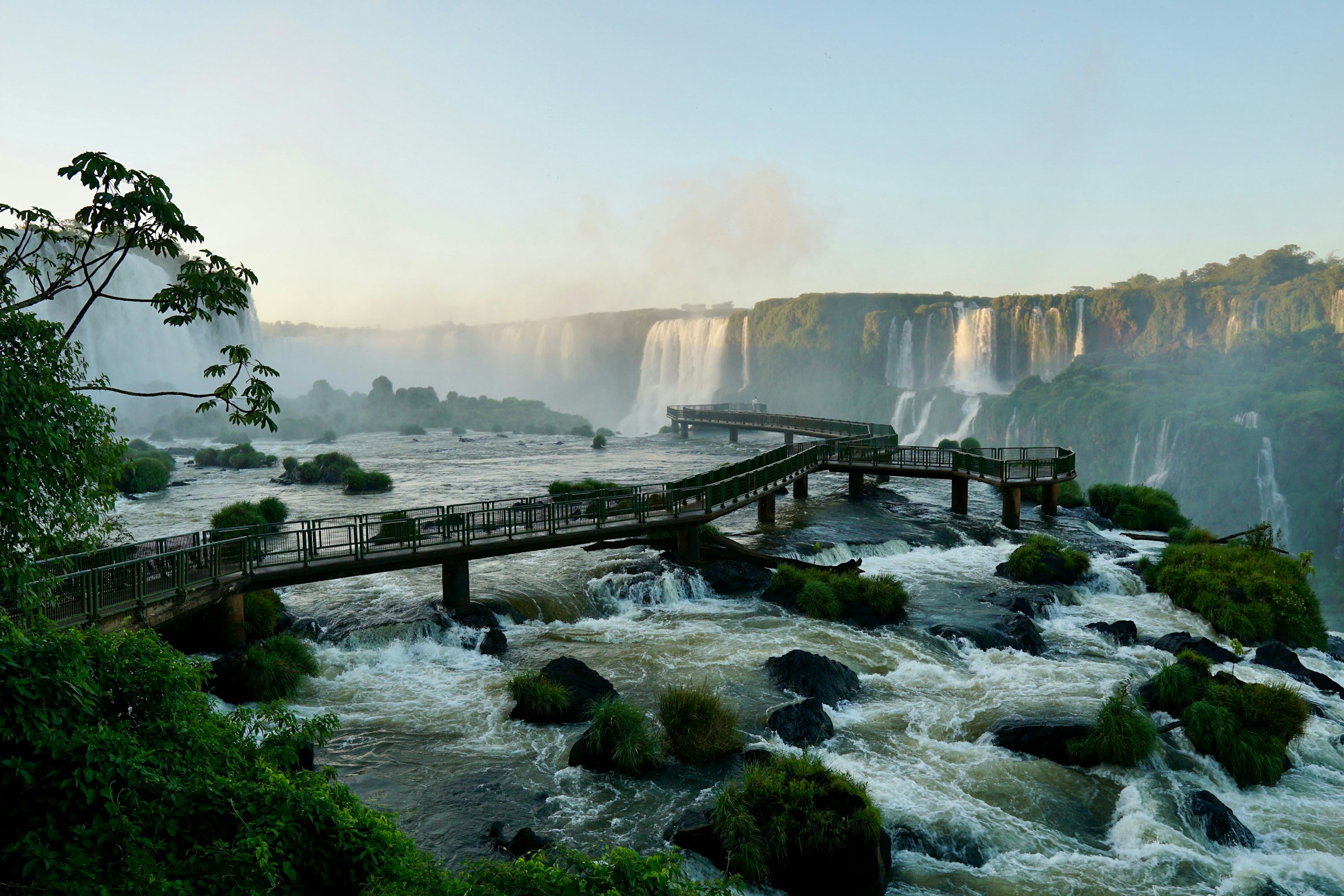
The Devil’s Throat circuit stretches out over the river toward the most dramatic section of the falls, giving visitors a close-up view of the enormous horseshoe-shaped cascade.
Normally, that is the highlight of a trip to Iguazu. Right now, it’s the part visitors can’t reach. The decision to dismantle the walkway is deliberately preventive.
Instead of waiting for floodwaters to damage or destroy the metal structure, park authorities and concessionaire Iguazú Argentina are taking it apart piece by piece and moving the components to a secure storage area. It’s a strategy that has a very practical precedent.
Previous extreme floods have damaged sections of the walkway, including the massive 2022 flood, when the river reached more than 23,000 cubic meters per second and destroyed more than half of the Devil’s Throat walkway, according to local reporting. This time, officials would rather dismantle it themselves than let the river do the job.
The Numbers Behind the Decision Are Extraordinary
The Iguazu River normally carries a fraction of the water currently moving through the falls. Recent measurements reached approximately 7,900 cubic meters per second, prompting the closure of the Devil’s Throat circuit and the suspension of some water-based activities.
To put that into perspective, that’s roughly 7.9 million liters of water every second. The result is spectacular. And intimidating.
The falls become less like a collection of individual cascades and more like an enormous wall of moving water. Spray rises above the falls.
Visibility can disappear behind thick mist. And the sound becomes almost impossible to comprehend from photographs or video.
And the Water May Get Even Higher
The most important part of this story isn’t necessarily what happened in July. It’s what could happen next.
Argentina’s National Parks Administration said the preventive measures are based on meteorological and hydrological projections indicating elevated river flows during September and October, with the potential for extraordinary flooding that could affect the Devil’s Throat infrastructure.
Those forecasts are being linked to the expected influence of El Niño, which can alter rainfall patterns across parts of South America.
That is why authorities are not simply waiting for the current water level to fall. They’re preparing for a potentially much bigger event.
This Is Not the First Time Iguazu Has Had to Fight the River
The falls themselves aren’t in danger. The infrastructure around them is. That’s an important distinction for visitors.
Iguazu Falls is an enormous natural system spread across the border between Argentina and Brazil, with hundreds of individual cascades.
The river can rise dramatically without making the entire national park inaccessible. But certain walkways sit much closer to the water and are therefore far more vulnerable.
The Devil’s Throat circuit is the obvious example. In 2022, a major flood showed just how quickly conditions can overwhelm the structures built for tourists. The current operation is essentially an attempt to avoid repeating that damage.
The Falls Are Still Open – Just Not the Way You May Have Imagined
The closure does not mean that Iguazu Falls is closed. The Argentine side continues to offer other viewing routes, including the Upper and Lower Circuits, while access remains dependent on safety conditions.
The official park information confirms that the national park itself continues operating, with the Devil’s Throat circuit treated separately because of the flood risk.
And there is a strange upside for visitors who happen to be there now. The waterfalls themselves are putting on an extraordinary show.
More water means dramatically larger cascades, huge clouds of spray and a level of raw power that is difficult to see during ordinary conditions.
The most famous viewpoint is closed, but the natural spectacle has arguably become even more impressive.
Why Officials Are Taking the Walkway Apart Instead of Just Closing It
This is perhaps the most interesting part of the story. The walkway isn’t simply being abandoned. It’s being stored.
The park’s concessionaire submitted a specific protocol for removing the flooring and railings and keeping the components in a secure location until river conditions allow the system to be rebuilt.
That makes the walkway effectively modular. When conditions eventually become safe, the components can be put back together rather than forcing the park to rebuild the entire attraction.
But officials are deliberately refusing to put a firm reopening date on the calendar. And that’s because the river gets the final say.
Tourists May Have to Wait Months
The initial dismantling operation is expected to take around 40 days, according to reports on the park’s preventive plan.
But that doesn’t mean the walkway will reopen 40 days after August 3. The structure is expected to remain dismantled through the period when hydrological forecasts indicate the greatest risk.
Local reports have suggested that November or December could become a possible reopening window if river levels return to safe conditions, but authorities have not announced a guaranteed reopening date.
That distinction matters. The schedule isn’t being determined by construction. It’s being determined by the weather.
For Travelers, This Means One Thing
If Iguazu is on your itinerary for the coming months, check the status of the Devil’s Throat circuit before you travel.
Don’t assume that because the national park is open, every walkway will be accessible.
The park can offer a full day of spectacular views without the famous final platform — but if the Devil’s Throat viewpoint is the main reason you’re going, you may want to factor the closure into your plans.
The Brazilian side also offers its own views of the falls and the Devil’s Throat area, although access and conditions can change depending on river levels.
Nature Is Setting the Schedule
There is something fitting about the situation. Iguazu Falls is one of the planet’s great demonstrations of natural power.
Tourism infrastructure has been built around it. Walkways have been engineered to bring people closer. Trains carry visitors toward the falls.
Restaurants and hotels have grown around the attraction. But when the river rises high enough, all of that infrastructure becomes secondary.
The river decides when the tourists can come close. For now, the safest thing authorities can do is take the walkway apart and wait.
The Bottom Line
The Devil’s Throat walkway isn’t closed because Iguazu Falls has become less spectacular.
It’s closed because the falls have become too powerful for the infrastructure to safely remain in place.
With river flows already reaching several times normal levels and forecasts pointing to potentially extreme conditions later in the year, officials are choosing to protect the walkway before the water can destroy it.
For visitors, that means one of the world’s most famous viewpoints is temporarily off-limits. For the falls themselves, however, it’s business as usual. There is simply a lot more water than usual.
Sources:
- Argentina.gob.ar / Administración de Parques Nacionales – official information on the preventive dismantling of the Devil’s Throat walkway and forecasts for elevated river flows in September and October.
- La Nación – reporting on the 40-day closure and the risk associated with projected El Niño-related flooding.
- El Territorio – background on previous extreme floods and the 2022 damage to the Devil’s Throat walkway.
- Misiones Online – river flow measurements approaching 7,900 cubic meters per second and the closure of the Devil’s Throat circuit.
- Argentina.gob.ar – Iguazú National Park visitor information and tariffs – official park information on visitor circuits and facilities.