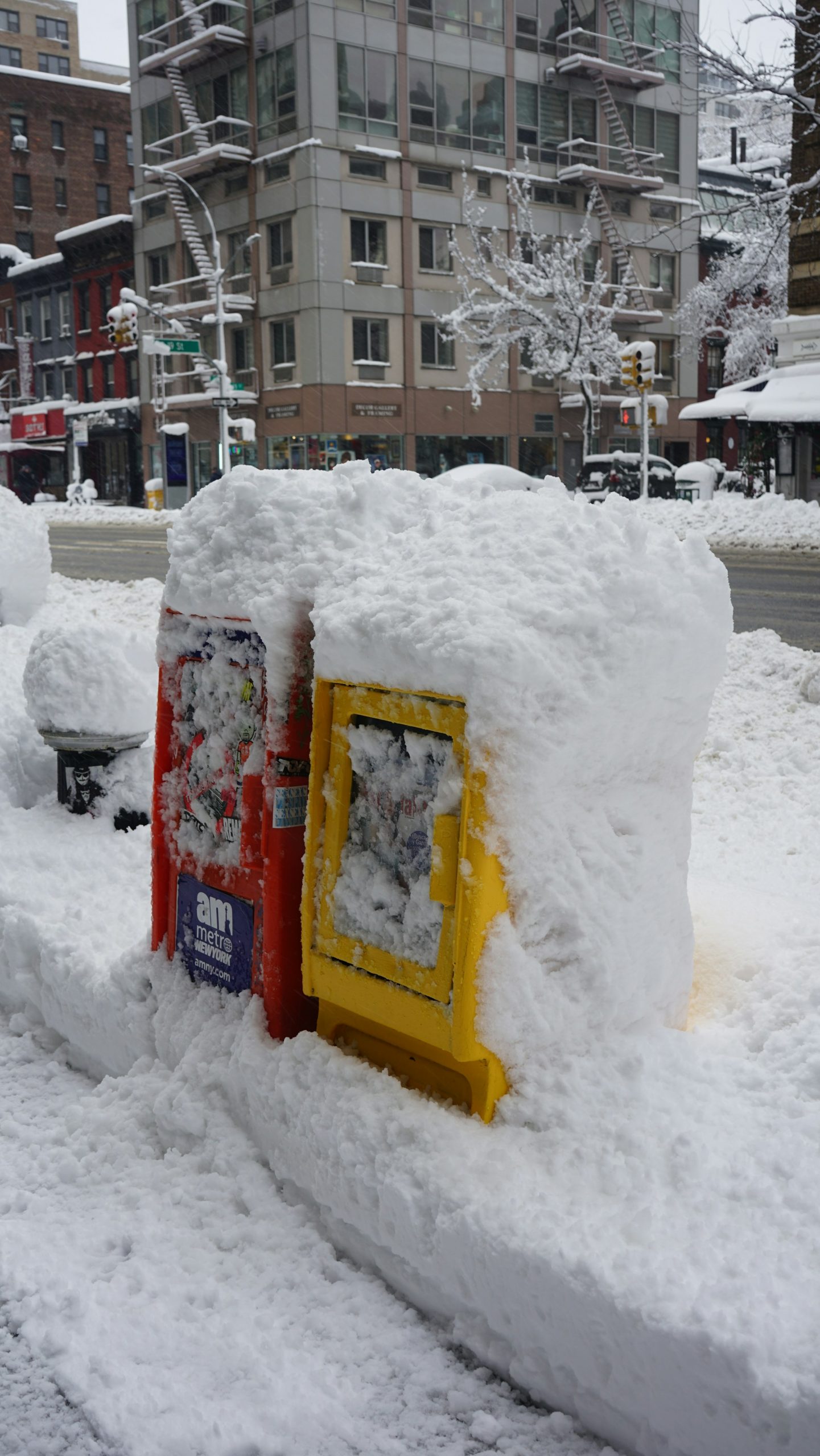
The powerful winter system dubbed “Hernando” has swept across the northeastern United States, blanketing major cities in record-breaking snowfall and paralyzing transportation networks from Delaware to Maine.
The storm, now widely referred to by meteorologists as the “Blizzard of 2026,” is already being described as one of the most significant winter events to strike the region in decades.
This comes amid a series of record-breaking storms that have already topped the charts this season, including blizzards in the U.S., a wave of cyclones that have repeatedly flooded much of Europe and California, as well as the partially frozen Baltic Sea and Lake Michigan.
Feet of Snow and Hurricane-Force Winds
According to the National Weather Service, the storm delivered between two and three feet (60–90 cm) of snow across densely populated areas of the Northeast corridor.
Major metropolitan centers including New York City, Boston, Philadelphia, as well as large portions of New Jersey and Connecticut, were brought to a near standstill.
In some localized areas, snowfall totals exceeded 90 centimeters, while wind gusts surpassed 90–100 km/h, creating whiteout conditions and towering snowdrifts.
The combination of intense snowfall and powerful winds, fueled by a rapidly intensifying “bomb cyclone” merging with Arctic air, generated blizzard conditions that made travel nearly impossible at the height of the storm.
States of Emergency and Travel Chaos
Governors in more than seven states declared states of emergency and activated the National Guard to assist with evacuations, road rescues, and the distribution of essential supplies.
Driving bans were implemented in parts of Rhode Island, New York City, New Jersey, and Massachusetts as authorities worked to clear buried highways and assist stranded motorists.
Public transportation systems faced widespread suspensions and delays. Airlines canceled more than 10,000 flights between February 22 and 24, marking one of the sharpest spikes in cancellations since the pandemic era.
Logan International Airport was particularly hard hit, reporting more than 900 canceled flights over several days.
Power Outages and Human Toll
At the peak of the storm, energy providers reported that over 650,000 homes and businesses were without electricity.
By Monday morning, roughly 380,000 customers were still waiting for power to be restored. Icy roads and frigid temperatures contributed to at least two confirmed fatalities linked to traffic accidents and cold-related incidents.
Meteorologists at The Weather Channel have described the event as the defining winter storm of 2026, underscoring the rare and dangerous convergence of meteorological factors that produced such widespread disruption.
As residents begin the long process of digging out, the Blizzard of 2026 is likely to remain etched in memory as one of the Northeast’s most formidable winter disasters in modern history.
/ Sources:
NewsDelta, Economictimes, Traveltourister, CNN, Weather.com, TravelAndTourWorld /


