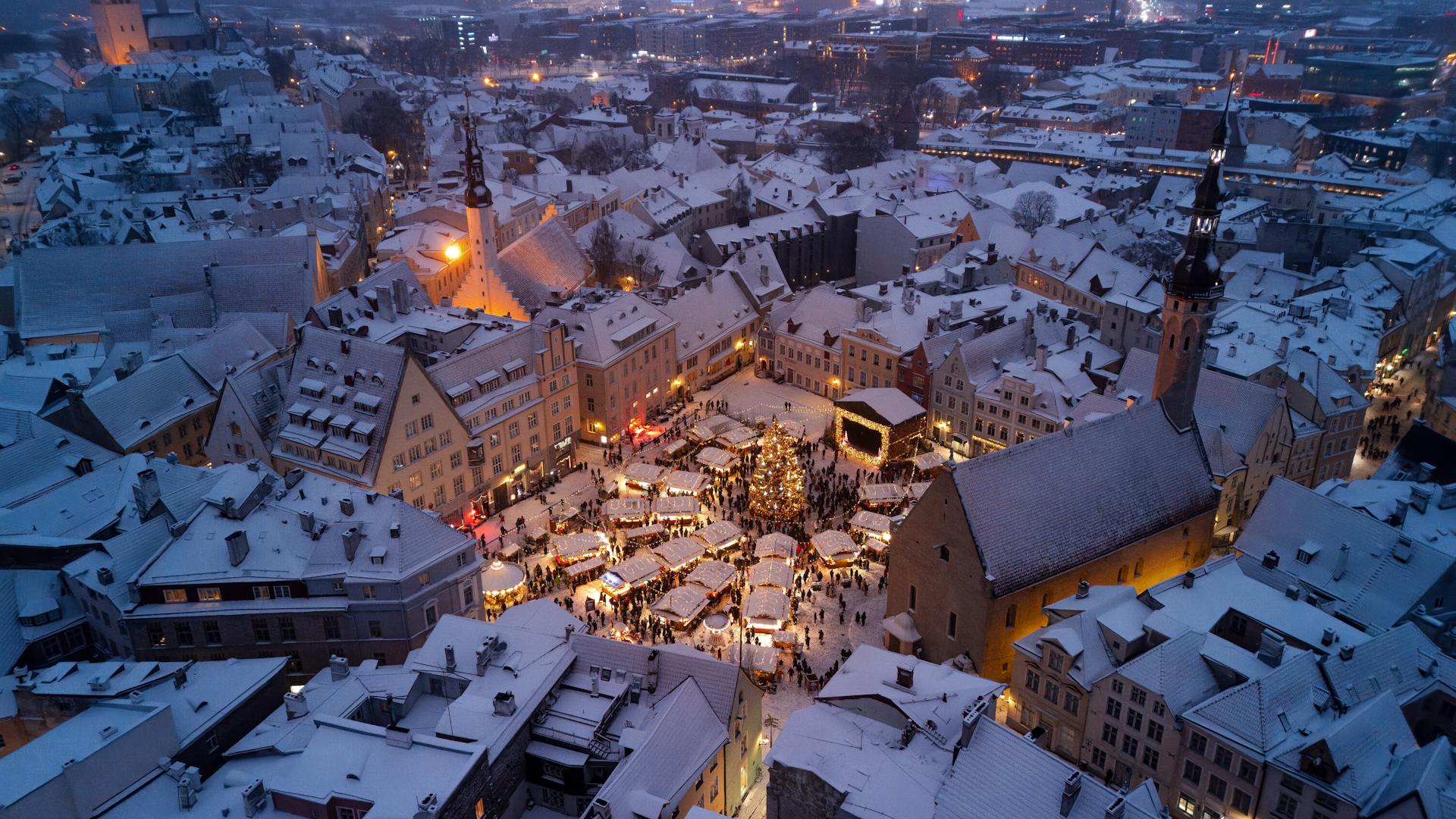
As the festive season approaches, one question looms large for winter travellers: which European cities are most likely to be blanketed in snow for Christmas 2025?
While precise Christmas Day forecasts won’t be reliable until late December, long-range weather models already hint at where snow lovers have the best chances of a true winter wonderland.
Below, we break down the science, the trends, and – most importantly – the best European cities to visit if you’re dreaming of a white Christmas.
A Quick Reality Check: Long-Range Forecasting Has Limits
Meteorologists are clear: predicting whether it will snow on December 25th is nearly impossible this early.
According to the UK Met Office, reliable Christmas Day forecasts only emerge around December 20th.
Still, seasonal models from top climate institutions such as ECMWF (European Centre for Medium-Range Weather Forecasts) and the UK Met Office provide valuable clues.
These large-scale forecasts look at atmospheric patterns, temperature anomalies, and storm tracks – not pinpoint weather – allowing us to map regions where snow is more or less likely this year.
Winter 2025/2026: What the Weather Models Suggest
Two major climate patterns are shaping Europe’s winter:
№1. A Weak La Niña
According to the U.S. National Weather Service, La Niña events often bring colder conditions to northern and northeastern Europe, increasing the odds of snow.
№2. Developing Stratospheric Warming
Meteorologists at Severe Weather Europe report signs of a Stratospheric Warming event, which can disrupt the Polar Vortex and unleash Arctic air onto Europe, especially during December.
Together, these factors make northern and central Europe the most promising regions for festive snowfall.
Where Snow Is Most Likely for Christmas 2025
Best Bets: Cities with the Highest Chances
1. Finland – Europe’s Snow Capital
Travel data from Omio places Finnish cities at the very top of the list for snow reliability.
- Rovaniemi – practically a guarantee; December averages around -8.5°C
- Turku – Finland’s “Christmas City,” decorated, festive, reliably snowy
- Helsinki – cold, wintry, and beautifully lit for the holidays
If you want near-certainty, Finland is unbeatable.
2. The Baltics – Cold, Crisp, and Often Snowy
TravelAwaits reports ~50% odds of Christmas snow across Estonia, Latvia, and Lithuania.
Top picks:
- Kaunas, Lithuania – 16 snowy days on average in December
- Tallinn, Estonia – medieval charm under regular snow cover
- Kuressaare, Estonia – cold, quiet, atmospheric
The region’s consistent subzero temperatures make snow very likely.
3. The French Alps Gateway: Grenoble
Grenoble boasts over 15 snowy days in December, and with the Alps towering around it, Christmas snow feels almost guaranteed. It’s a perfect mix of city charm and mountain scenery.
Good Prospects: Snow is Likely, But Not Guaranteed
Scandinavia (Norway & Sweden)
- Oslo, Bergen, Trondheim – cold enough for snow; storms often deliver
- Stockholm – snowy at times, though recent winters show variability
When snow does arrive in these cities, the scenery is spectacular.
Central Europe
- Nuremberg – lows around -1°C, great Christmas market, decent odds
- Munich – could go either way; snow possible, rain also likely
- Erfurt – historically good December snowfall
- Prague – stunning in the snow, though snow is less predictable today
- Krakow & Warsaw – models suggest colder-than-average conditions
These cities offer a moderate chance of snow paired with an unbeatable holiday atmosphere.
Where Snow Is Less Likely for Christmas 2025
Western Europe
Meteorological models lean toward mild, wetter conditions for:
- London
- Paris
- Amsterdam
- Brussels
Snow is possible but unlikely – rain is the more probable visitor.
Southern Europe
Almost guaranteed no snow in:
- Barcelona
- Lisbon
- Rome
- Athens
Great for festive lights and culture – but not for winter wonderlands.
What the Weather Models Actually Tell Us
Severe Weather Europe notes that December 2025 shows “mostly negative snowfall anomalies” – meaning much of Europe may see less snow than average. This is due to low precipitation, not warm temperatures.
Translation:
When storms arrive, snow is likely – but storms may come less frequently. By January-February, snowfall increases, especially in southern and southeastern Europe.
The Climate Change Angle
The Met Office confirms that climate change has lowered the chances of white Christmases across Europe, with warmer winters and fewer snow events overall. Only four widespread white Christmases have occurred in the UK since 1960.
This doesn’t eliminate snow – it just makes it less predictable. Northern Europe, however, remains reliably cold enough to preserve the tradition.
Top Picks for a White Christmas in 2025
Near-Guaranteed
- Rovaniemi, Finland
- Turku, Finland
- Helsinki, Finland
- Tallinn, Estonia
- Kaunas, Lithuania
Likely
- Grenoble, France
- Oslo, Norway
- Stockholm, Sweden
- Innsbruck, Austria
- Warsaw & Krakow, Poland
Moderate
- Nuremberg, Germany
- Prague, Czechia
- Munich, Germany
Unlikely
- London
- Paris
- Amsterdam
- Brussels
Almost Impossible
- Barcelona
- Lisbon
- Rome
- Athens
Final Advice for Travellers
If your Christmas absolutely must be snowy:
– Head to Finland or the Baltics.
– Or choose a city near the Alps and day-trip into guaranteed snow.
If you’re flexible:
– Central Europe offers great Christmas magic – with a decent snow chance.
And if you’re travelling to Western Europe:
– Enjoy the lights, the food, and the markets but don’t count on snow.
As we approach December 20th, check national forecasting services (Met Office, ECMWF, Severe Weather Europe) for the most accurate updates.
/ For the most current forecasts closer to Christmas 2025, consult official sources including the Met Office (UK), ECMWF, Severe Weather Europe, and national meteorological services for specific destinations. /


