On the South Island, a harbor town of French street names, a 19th-century cottage and a bakery that would not look out of place in Provence owes its existence to a race that France lost by about a week.
Walk down Rue Lavaud on a bright morning, and the setting could be a small port on the Mediterranean. There is a bakery with the smell of fresh croissants, an espresso on a sunny terrace and a sheltered bay a few steps away.
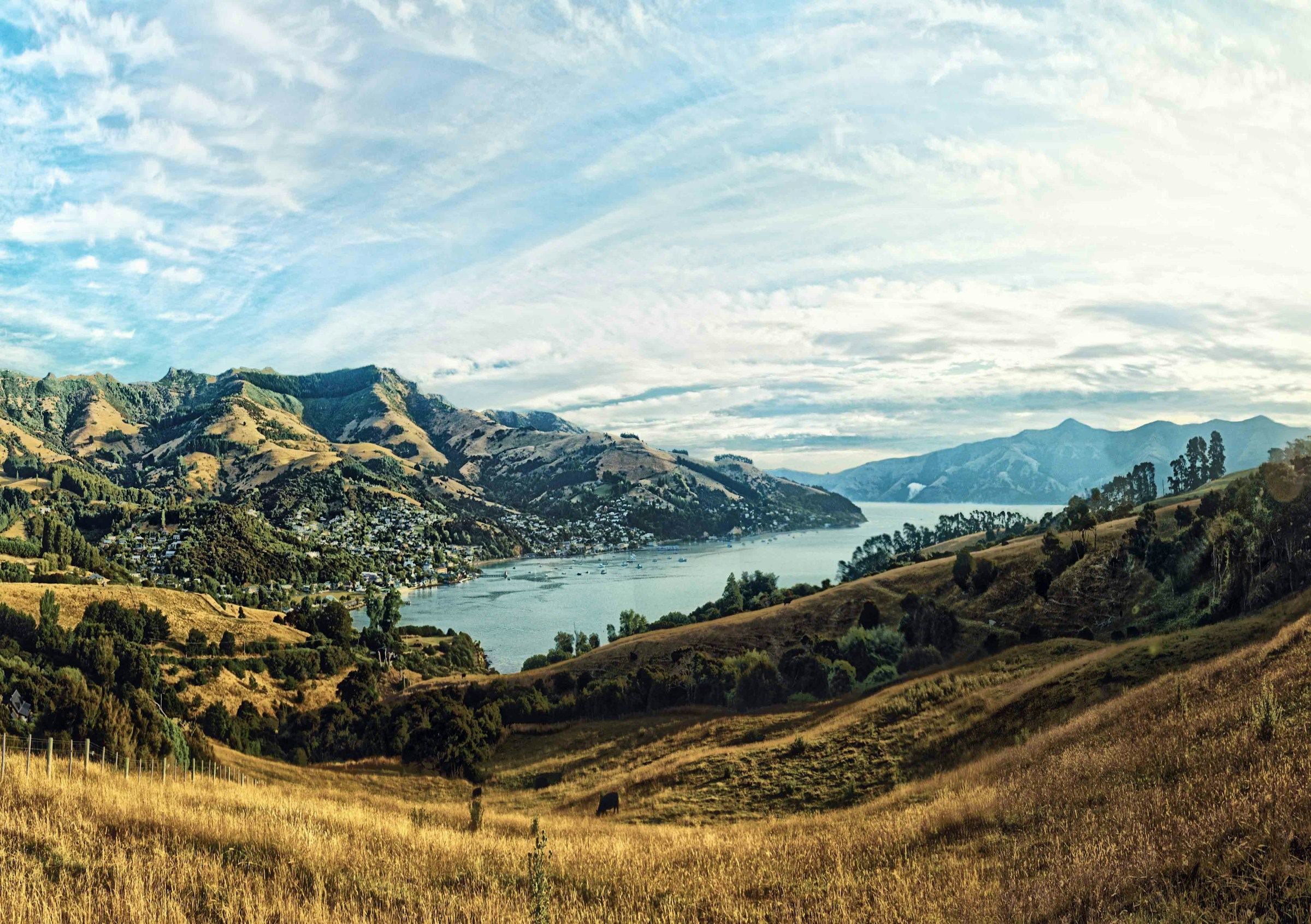
But the water is not the Côte d’Azur. Instead of cypresses and pink-stone villas, green volcanic hills rise around the harbor, and beyond them lies the South Island of New Zealand.
This is Akaroa, a town of fewer than 800 people, 84 kilometers (52 miles) by road from Christchurch. Its name comes from the Kāi Tahu Māori for “Long Harbour.” It is also, in a way that few places can claim, the product of a colonial plan that failed.
The French Plan
The story begins in 1838, when a French whaling captain, Jean-François Langlois, arrived on Banks Peninsula and negotiated what he understood to be the purchase of land from Ngāi Tahu chiefs.
According to the Christchurch Art Gallery, he came to believe that he had bought the peninsula and hoped to annex the South Island for France.
The land deal was a “dubious” one, in the words of New Zealand’s national encyclopedia Te Ara. According to Wikipedia, only a deposit of 150 francs, paid in goods, changed hands, and the balance was to be paid when Langlois returned from France with settlers.
Langlois went home and founded the Nanto-Bordelaise Company in 1839, with the support of King Louis-Philippe. The French government supplied a warship, converted to a whaler and renamed the Comte de Paris, and in March 1840, it sailed from Rochefort carrying about 60 French and German settlers, while a naval vessel, the Aube, under Commodore Charles François Lavaud, sailed ahead to represent the French crown.
The Race France Lost
What nobody on board knew was that the world had changed while they were at sea. On February 6, 1840, William Hobson, representing Britain, had signed the Treaty of Waitangi with Māori chiefs, and on May 21, he proclaimed British sovereignty over the South Island, with Britain’s claim based on the signatures of the chiefs.
British officials suspected a French move on Akaroa and sent a ship ahead. HMS Britomart arrived in Akaroa Harbour around August 10, 1840, according to several accounts, though dates vary from 10 to 16 August, and its captain, Owen Stanley, raised the Union Jack. Lavaud arrived five days later. On August 17, the Comte de Paris dropped anchor, and its passengers found that they had landed in a British colony.
It was a bitter moment, but a pragmatic one. Lavaud accepted that France could not create a colony without causing hostility, and he promised to arrange payment to the Māori owners. The settlers, reportedly offered passage to Tahiti or the Marquesas, chose to stay. On August 18, 1840, the settlement began at Akaroa, which the French named Port Louis-Philippe.
The dream that had brought them did not last. French warships stayed for a few years, but the navy left in the 1850s as whaling declined.
The Nanto-Bordelaise Company, after the British authorities dismissed its land claim, eventually sold its remaining land on the peninsula for £4,500, and by 1849, the French settlers were on their own in a British colony.
Some historians suggest that the French venture hastened Britain’s decision to annex New Zealand. Akaroa is now one of the few places where the French left a mark.
The Town Today: How French Is It?
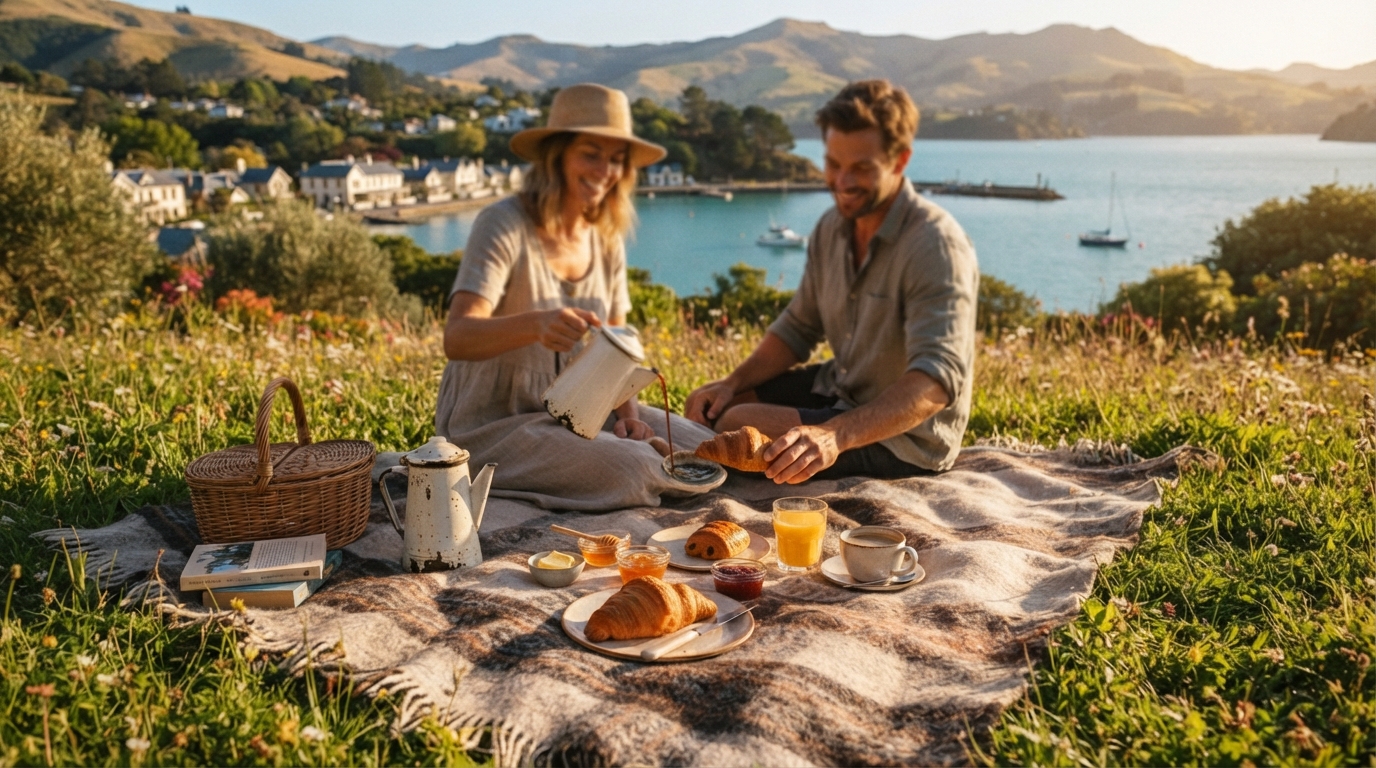
The honest answer is: partly, and in unexpected ways. The streets bear French names, among them Rue Lavaud, Rue Jolie, Rue Balguerie and Rue Benoit. Rue Lavaud is 12 meters (39 feet) wide, a French planning convention of the time.
But local sources note that many of the French street names date from a promotional program in the 1960s, which sought to attract tourists by playing on the town’s French identity.
The only real French colonial building is the Langlois-Eteveneaux cottage, built around 1841, with its outdoor shutters and hipped roof, which now forms part of the Akaroa Museum.
Heritage researchers say that most of the picturesque cottages and villas along Akaroa’s streets were built by British settlers, not French.
None of this means the French connection is a fiction. Descendants of the original settlers still live on the peninsula, and the French Festival, held every other year in October, draws visitors with parades, music and fine food.
It has even had its political moments: according to a local museum, some residents boycotted the festival after the sinking of the Rainbow Warrior in 1985.
Today, there are French-style bakeries and bistros, such as Ma Maison on Rue Balguerie, with views of Daly’s Wharf and the harbor, and visitors can sample cheese, seafood and local wine. The town has also attracted a steady flow of travelers.
Travel publications regularly feature Akaroa in lists of New Zealand’s prettiest small towns, and in 2017 it was named the top cruise destination in New Zealand and Australia in the Cruise Critic Cruisers’ Choice Awards.
A Town Inside a Volcano
The setting is as unusual as the history. Akaroa sits on the rim of a drowned volcanic crater. Banks Peninsula, which covers 1,165 square kilometers (450 square miles), was born when volcanoes erupted between about 11 and 6 million years ago, and two overlapping cones, Lyttelton and Akaroa, formed what was once an island.
Later, the cones eroded to less than half their original height, and today’s harbors are valleys that were flooded when the sea rose, a process that reached its present level about 6,000 years ago. The highest point, Mount Herbert, is 919 meters (3,015 feet).
Smallest Dolphins, Smallest Penguins
The harbor is home to one of the planet’s rarest marine mammals. The Hector’s dolphin, found only in New Zealand, is the world’s smallest marine dolphin, growing to a maximum of 145 centimeters (4 feet 9 inches).
Adults weigh 40 to 60 kilograms (88 to 132 pounds), and the species is classified as endangered.
Estimates vary, and a NIWA study put the population at fewer than 8,000, perhaps less than a third of its original size.
In 1988, the waters around Banks Peninsula became New Zealand’s first marine mammal sanctuary, created to protect the dolphins from entanglement in set nets.
The area is also the stronghold of the world’s smallest penguin, the little penguin, or kororā. It stands about 33 centimeters (13 inches) tall and weighs about 1 kilogram (2.2 pounds).
On the peninsula’s south coast, the Pōhatu/Flea Bay colony is thought to be the largest little penguin colony on mainland New Zealand, and its birds are mostly the white-flippered variety found only in Canterbury, which is classified as endangered. Visitors to Akaroa can also see fur seals on harbor cruises.
A Place Between Two Cultures
Akaroa has never been French, though it has never been entirely English either. It is a small town where the layers of its history are easy to see: a Māori name and a Māori history that came first, a French colonial attempt that failed, and a British town that adopted the French story as its own.
It is no accident that a sleepy harbor on the far side of the world has become one of New Zealand’s most visited places. A town that looks like France, sits inside a volcano and shares its waters with the smallest dolphins and penguins on Earth is a place where time seems to slow down.
Sources:
- Te Ara: The Encyclopedia of New Zealand, “French: The Akaroa settlement”: teara.govt.nz/en/french/print
- Te Ara, “Akaroa, French settlement at” (1966 Encyclopaedia of New Zealand): teara.govt.nz/en/1966/akaroa-french-settlement-at
- Te Ara, “Banks Peninsula” (Canterbury places): teara.govt.nz/en/canterbury-places/page-13
- Te Ara, “Canterbury region: Geology”: teara.govt.nz/en/canterbury-region/page-2
- Te Ara, “Banks Peninsula: extinct volcanoes”: teara.govt.nz/en/photograph/8382/banks-peninsula-extinct-volcanoes
- Wikipedia, “Akaroa”: en.wikipedia.org/wiki/Akaroa
- Wikipedia, “Comte de Paris (ship)”: en.wikipedia.org/wiki/Comte_de_Paris_(ship)
- Wikipedia, “Banks Peninsula”: en.wikipedia.org/wiki/Banks_Peninsula
- Christchurch Art Gallery, on Charles Meryon’s Nouvelle-Zélande, presqu’île de Banks (Langlois and the French settlement): christchurchartgallery.org.nz/collection/86-25/charles-meryon/nouvelle-zelande-presquile-de-banks-etat-de-la-pet
- Otago Daily Times, “Akaroa’s French connection”: odt.co.nz/life-and-style/akaroas-french-connection-kxfte0cr
- Bayleys Waterfront, “Akaroa’s French connection” (2023): bayleys.co.nz/waterfront/articles/akaroas-french-connection
- Heritage New Zealand Pouhere Taonga, “Akaroa Historic Area”: heritage.org.nz/list-details/7443/Akaroa%20Historic%20Area
- Scoop, “Akaroa celebrates 175 years” (2015): scoop.co.nz/stories/AK1507/S00181/akaroa-celebrates-175-years.htm
- Christchurch City Council Newsline, “Akaroa named top cruise destination” (Aug. 1, 2017): newsline.ccc.govt.nz/news/story/akaroa-named-top-cruise-destination
- Scoop, “Akaroa among Australasia’s best cruise destinations” (July 25, 2018): scoop.co.nz/stories/BU1807/S00621/akaroa-among-australasias-best-cruise-destinations.htm
- TravelMag, “The 20 most charming towns & small cities in New Zealand” (2020): travelmag.com/?p=20599
- WorldAtlas, “9 Prettiest Small Towns in New Zealand”: worldatlas.com/cities/9-prettiest-small-towns-in-new-zealand.html
- New Zealand Department of Conservation, “Banks Peninsula Marine Mammal Sanctuary”: doc.govt.nz/nature/habitats/marine/other-marine-protection/banks-peninsula/
- NIWA, “Balancing act: Hector’s dolphins” (2010): niwa.co.nz/water-atmosphere/water-atmosphere-1-july-2010/balancing-act-hectors-dolphins
- New Zealand Birds Online, “Little penguin | kororā”: nzbirdsonline.org.nz/species/little-penguin
- RNZ, “Canterbury farmers help protect endangered kororā in penguin colony” (Nov. 27, 2023): rnz.co.nz/news/country/503334/canterbury-farmers-help-protect-endangered-korora-in-penguin-colony
- Pōhatu Penguins, “Supporting research”: pohatu.co.nz/what-we-do/supporting-research
- Tourism New Zealand, “Akaroa”: newzealand.com/au/akaroa