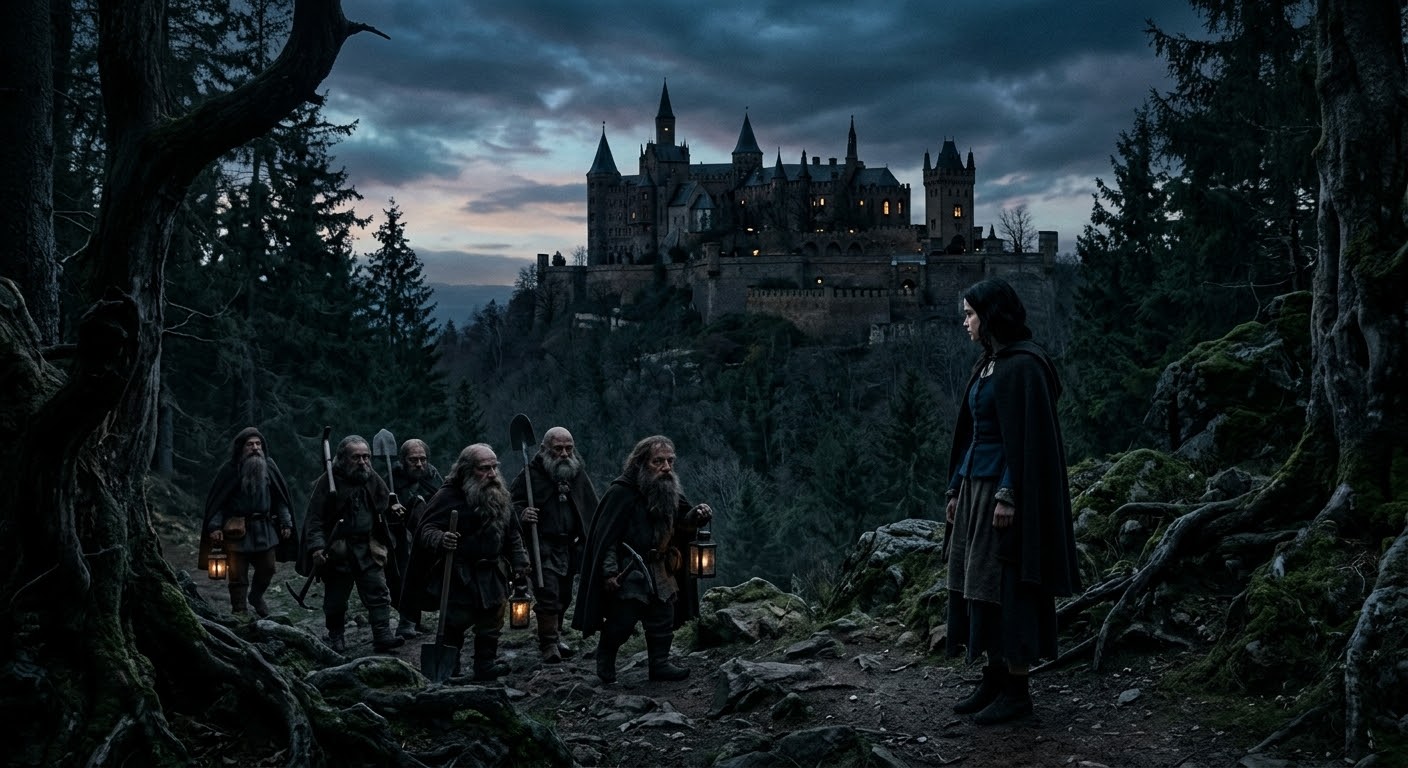
From a Sicilian hilltop to the coal country of Pennsylvania, from Bulgaria’s villages to the atolls of the Pacific, places are being left behind. It is a story of loss, but also an older and more complicated one: how towns are born, flourish, and sometimes fade away.
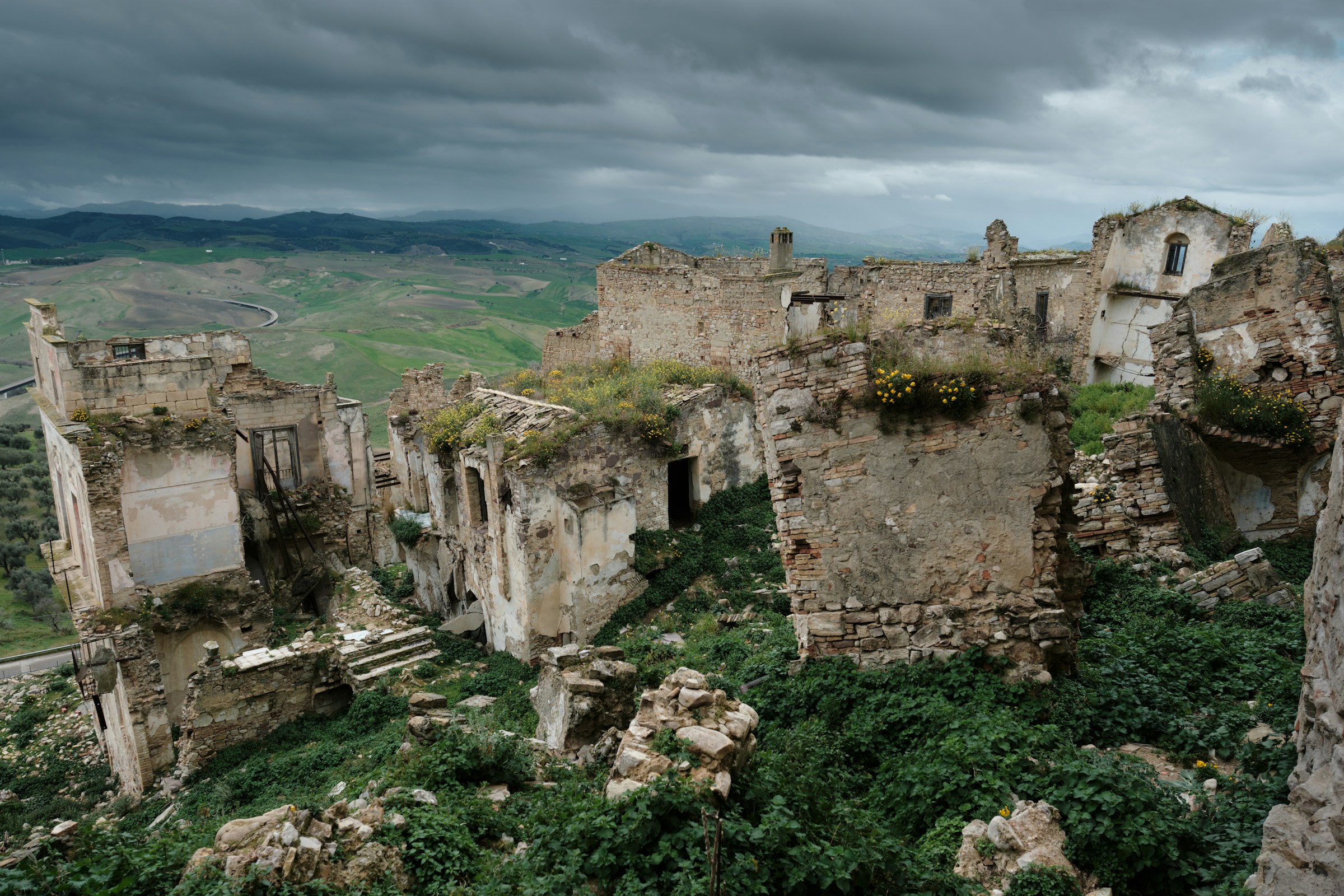
On a clifftop in southern Italy, a medieval town stands empty. Craco, in the region of Basilicata, began to be evacuated in 1963 after a series of landslides, which seem to have been provoked in part by the town’s own water and sewage works.
A flood in 1972 made repopulation impossible, and after the 1980 earthquake, the old town was left entirely. Today it is a tourist attraction and a popular filming location, with film crews more common than residents.
Across the Atlantic, in the Pennsylvania coal country, the borough of Centralia has gone the same way for different reasons. It had 1,012 residents in 1980. An underground mine fire has been burning beneath it since 1962, and by 2020, five people were left.
These are dramatic cases, but they are not exceptions. Towns, like people, have life spans. The idea that a place, once founded, should last forever is a relatively modern assumption. The more useful question is why a place exists in the first place, and what happens when that reason goes away.
When the Industry Leaves
The most familiar story is economic. Detroit peaked at 1,849,568 residents in 1950 and counted 639,111 in the 2020 census. After 2020, Census Bureau estimates showed the city shrinking further, to 631,366 in 2022.
Then something unexpected happened: the 2023 estimate rose by 1,852 people, to 633,218, the first annual increase in decades, and the 2024 estimate rose again, to 645,705, edging above the 2020 count.
The city, which removed more than 25,000 blighted houses after 2014, argues that demolishing abandoned homes had been wrongly counted as lost residents, and it has disputed the Census figures.
The estimates and the census come from different Census Bureau products, and later estimates can revise earlier ones. The bigger lesson is that a shrinking city is not necessarily a dead one.
Russia offers a more extreme version. The Soviet planned economy created hundreds of “monotowns,” often in very inhospitable areas, entirely dependent on a single factory or industry.
As of 2018, the official list included 319 places, and in late 2017, about 14 million Russians lived in them. When a plant closes, there is often nothing else.
When the People Leave
The demographic version is quieter and more widespread. Bulgaria is the clearest example. Its population has fallen from almost 9 million around 1989 to 6,519,789 in the 2021 census, a decline of nearly a quarter, driven by low birth rates, high mortality and emigration.
The UN projects about 5.4 million by 2050. According to the national statistical institute, 199 settlements were left without a single inhabitant between the 2011 and 2021 censuses.
One village, Tyurkmen, had more than 1,200 residents; today it has fewer than 200, and the post office is one of the last institutions still open.
Italy has been losing its small towns since the 1950s. In Ollolai, in Sardinia, the population dropped from 2,250 in 1925 to about 1,146 in 2025.
Japan has the same story with different numbers: the country had around 9 million vacant homes in 2023, a record 13.8 percent of all housing.
It is an effect of an aging, shrinking population and a pull toward the big cities. Tokyo’s population is about 14 million, and the greater Tokyo area is home to more than 37 million people, roughly 30 percent of the entire country.
When the Land Says No
A third cause is geography. Craco’s landslides are one case. In Namibia, the diamond-mining town of Kolmanskop was abandoned when the diamonds ran out, and the desert sand returned.
The most acute example is the sea. Tuvalu, a Pacific nation of about 10,600 people, has an average elevation of just two meters. Under a 2023 treaty with Australia, the Falepili Union, Australia offers 280 permanent-residency places a year to Tuvaluans through a ballot.
In the first round, about 3,100 people entered, and with family members the figure was about 4,000. Experts note that this is not technically a “climate visa,” and Tuvalu’s prime minister has said he believes most people will stay.
Trying to Bring a Place Back
Governments rarely accept a decline quietly. Italy’s most famous remedy is the “one-euro house,” which began around 2016, when small towns started selling abandoned homes for a symbolic price.
Sambuca di Sicilia is widely cited as the most successful: according to The Local, the town has enjoyed a “Renaissance” since it began in 2019.
But the price is a headline, not a bill. Renovations typically run to tens of thousands of euros, and some buyers use the homes as holiday retreats rather than moving in. Sardinia has gone further, committing €360 million for 2022 to 2025 to measures that include support for families in small towns.
Japan pays people to leave the capital. According to reports, the government offers up to 1 million yen (about $7,700) per child for families who move out of Tokyo’s 23 wards, and some rural towns add their own incentives, such as subsidies for renovating an empty house.
So far, results are mixed. Programs like these can revive a village, but they rarely reverse a national trend.
Is It Really “Natural”?
The cycle framing has a lot going for it, but it needs a caveat. The situation in Bulgaria accelerated after the country joined the EU in 2007, and many people headed west in search of a decent living in Central and Western Europe.
Craco’s landslides were provoked by human infrastructure. Russia’s monotowns were a Soviet design. For the people who remain, mostly the elderly, a “natural process” is an uncomfortable phrase for the closing of the last shop.
Ecologists see something more ambiguous. As farmland is abandoned, forests regrow: in Europe, they returned at about 2.2 million hectares a year between 2010 and 2015, and Spain has tripled its forest area since 1900. Wildlife follows.
In Bulgaria, Gergana Daskalova, an ecologist, studies abandoned villages and says that brambles are suffocating the old gardens and orchards, and that flower-filled meadows can turn into less diverse scrub.
Another researcher, Henrique Pereira, saw roe deer and wild boar arrive after farming stopped in northern Portugal and argues it is an opportunity. Both can be true.
What Comes Next
Some places do not die, but change. Madeira’s Ponta do Sol launched the world’s first “digital nomad village” in 2021, offering remote workers co-working space and help with accommodation.
Portugal as a whole is a more complicated story. The 2021 census counted 10,347,892 people, 2 percent fewer than in 2011, with population concentrating along the coast and around the capital.
The interior is still emptying, and nomads have been entangled in the country’s housing crisis. Remote workers can help a place, but they cannot save every place. The most useful lesson is perhaps the simplest.
A town does not have to last forever to have mattered, and what replaces it is not always what we expect: a rewilded valley, a village of strangers, a ruin that draws visitors. The cycle is real. What we do at each stage of it is a choice.
Sources:
- Wikipedia, “Craco”: en.wikipedia.org/wiki/Craco
- Wikipedia, “Centralia, Pennsylvania”: en.wikipedia.org/wiki/Centralia,_Pennsylvania
- Metro Times, “Detroit’s population is growing again” (population by year): metrotimes.com/?p=5480
- Crain’s Detroit, “Detroit population rises for the first time since 1950”: https://www.crainsdetroit.com/politics-policy/detroit-population-rises-first-time-1950/
- Bridge Michigan, “Detroit gains residents for first time in decades”: bridgemi.com/michigan-government/detroit-gains-residents-first-time-decades-check-your-citys-change
- Wikipedia, “Monotown”: en.wikipedia.org/wiki/Monotown
- Bulgarian National Statistical Institute (NSI), 2021 census final results: nsi.bg/en/node/19807
- BNT, “The population of Bulgaria is just over 6.5 million, census”: bnt.bg/news/the-population-of-bulgaria-is-just-over-65-million-census-310333news.html
- Associated Press, “Bulgaria sees its population decline by 11.5% in a decade” (via Infonews): infonews.ca/?p=2353639
- The Guardian Weekly, Tess McClure, “The call of nature” (Dec. 6, 2024): magzter.com/stories/newspaper/The-Guardian-Weekly/THE-CALL-OF-NATURE
- NPR, Dan Charles, “Abandoned farmland is having a profound impact on ecosystems in Europe” (Jan. 2, 2025): npr.org/2025/01/02/nx-s1-5239982/abandoned-farmland-is-having-a-profound-impact-on-ecosystems-in-europe
- The Conversation, “Rewilding as farmland and villages are abandoned”: theconversation.com/rewilding-as-farmland-and-villages-are-abandoned-forests-wolves-and-bears-are-returning-to-europe-119316
- Far & Wide, “10 small towns in Italy selling homes for €1”: farandwide.com/s/italy-small-towns-homes
- Life in Italy, “1 euro homes in Italy: success, challenges, and opportunities”: lifeinitaly.com/?p=101117
- The Local Italy, “How bargain homes made one Italian town €100 million in two years”: thelocal.it/20220429/how-bargain-homes-made-one-italian-town-e100-million-in-two-years
- Il Sole 24 Ore, “From 1 euro houses to new start-ups”: en.ilsole24ore.com/art/from-1-euro-houses-new-start-up-field-initiatives-save-small-villages-depopulation-AHym4ysB
- Asia Media Centre, “On the radar: Japan’s abandoned houses” (2023 survey): asiamediacentre.org.nz/news/on-the-radar-japans-abandoned-houses
- CNBC, “Japanese families reportedly set to receive 1 million yen per child for moving out of Tokyo” (Jan. 3, 2023): cnbc.com/2023/01/03/japanese-families-reportedly-set-to-receive-1-million-yen-per-child-for-moving-out-of-tokyo.html
- Akiya Japan, “What is an akiya?”: akiyajapan.com/what-is-akiya
- Smithsonian Magazine, “More than one-third of Tuvalu’s population has applied for a climate visa”: smithsonianmag.com/smart-news/more-than-one-third-of-tuvalus-population-has-applied-for-a-climate-visa-to-relocate-to-australia-180986902/
- SBS News, “Half of this country wants to move to Australia” and “Why over a third of this nation’s citizens want to migrate to Australia”: sbs.com.au/news/article/australia-tuvalu-falepili-union-climate-security-visa-280-permanent-residency/gs30ircu0
- South China Morning Post, “Australia’s landmark climate visa attracts thousands”: scmp.com/week-asia/health-environment/article/3316097/australias-landmark-climate-visa-attracts-thousands-seeking-refuge-rising-seas
- Shepparton News / AAP, on the Falepili Union: sheppnews.com.au/?p=270809
- Inkl / Daily Mail, “Stories behind world’s weirdest abandoned towns” (Kolmanskop, Centralia): inkl.com/news/stories-behind-world-s-weirdest-abandoned-towns-are-stranger-than-fiction
- EcoNews Portugal, “Population loss worrying, Portugal needs immigrants” (2021 census): econews.pt/?p=30017
- Daily Maverick, “Remote Portuguese island to house world’s first ‘digital nomad village’” (Jan. 26, 2021): dailymaverick.co.za/article/2021-01-26-remote-portuguese-island-to-house-worlds-first-digital-nomad-village
- RICS Modus, “Digital nomads and commercial real estate” (Nov. 2023): ww3.rics.org/uk/en/modus/built-environment/commercial-real-estate/digital-nomads-commercial-real-estate.html
- Michigan Public / AP, “Census Bureau estimates: Detroit population rises after decades of decline”: michiganpublic.org/economy/2024-05-16/census-bureau-estimates-detroit-population-rises-after-decades-of-decline-south-dominates-growth
- The Boston Globe, “Census estimates show Detroit’s population rises after decades of decline”: bostonglobe.com/2024/05/16/nation/census-estimates-detroit-population-rises-after-decades-decline-south-still-dominates-us-growth/